Radhika Sharma last heard from her parents shortly after they entered Tibet from Nepal. Ramesh Sharma, 65, and Neelam Sharma, 64, both U.S. citizens residing in New York, were on a religious pilgrimage to Mount Kailash. This mountain in Tibet holds sacred significance for Hindus, Buddhists, and several other faiths.
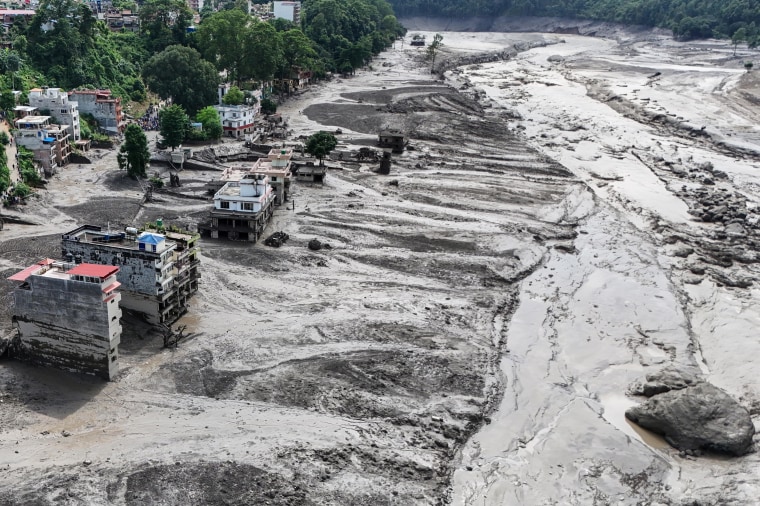
After their border crossing on Wednesday, a torrent of water, rock, and mud swept through the Himalayan corridor they traveled. Videos from affected regions depicted a torrent of debris engulfing structures, vehicles, and disrupting roads, power, and communication. What likely caused this was the collapse of a melting glacier, which shook the ground violently enough to mimic a magnitude-4.4 earthquake.
In Mailung, within Nepal’s Rasuwa region, a striking video showed construction workers escaping a fast-approaching wave of brown debris. They retreated uphill, with one worker initially capturing the event before comprehending the danger. In the chaos, an individual shouted in Nepali, Oh, my God, the flood is getting so big! Let’s run—run fast, guys! Oh, my God, get back quickly!
The aftermath by Thursday afternoon revealed that 289 bodies were recovered in Nepal, alongside three confirmed deaths in Tibet. Many are still missing. Nepal’s Tourism Board reported 644 unaccounted travelers, including 65 Americans. The Sharmas were part of a seven-member group trekking to Mount Kailash, a destination for thousands annually.
Dr. Radhika Sharma, 32, a doctor based in North Carolina, expressed the anguish of waiting for news. She reached out to U.S. embassies in both Nepal and China. I haven’t heard anything back,
she mentioned. On social media, Radhika requested assistance and connected with people in Nepal attempting to locate her parents. I’ve given them my parents’ information, their photos. I’m on the phone now, just waiting to hear someone say that they’ve even seen them.
Similar stories abound with others in search of missing loved ones. The State Department confirmed working with local authorities to aid U.S. citizens and advised families to use its emergency contact line. This region’s limited communication and travel even before the disaster have now worsened. Floods ruined roads and dismantled power and phone networks, leaving many disconnected from basic news.
Shova Shrestha, in Baidur, Nepal, has spent over a day waiting for updates on her husband, Rajan Shrestha, as rescue efforts proceed. I keep looking at each helicopter, hoping he will step out of it,
she shared with The Associated Press.
Sagar Pandey from a tour company transporting tourists from various countries described the devastation from a helicopter. There are no human-made things, no human settlement left. Everything is just flat,
he said. So anyone in the hotel, the restaurant or the car, I believe that everybody is gone.
Syed Sadique anxiously awaited news about 57 travelers with his agency, including his son, Sayed Umar Farook. The group was traveling on three buses in Nepal,
he told Reuters. Only one bus with around 20 individuals successfully bypassed the disaster, as others watched a bus plunge into a gorge.
Amidst the tragedy and her search for assistance, Radhika left a heartfelt message for her parents. I love you. I am looking for you. I will keep looking for you. I just hope you’re OK.
She added, I know that wherever they are, they’re probably a lot more worried about my brother and I, because that’s just the type of people they are.
 Family Shares Tragic Loss of Son to Online Threats
  Indiana University’s Strong Military Ties and Traditions
  Trump Criticizes Zelensky Over Resumed Strikes on Russian Oil Facilities
  Barn Owls Nesting in Manhattan: A Rare Sight Draws Crowds
  Katie Wiles’ Controversial Visit to Republika Srpska
  Democracy Under Threat: The Rise of Politically Charged Messaging