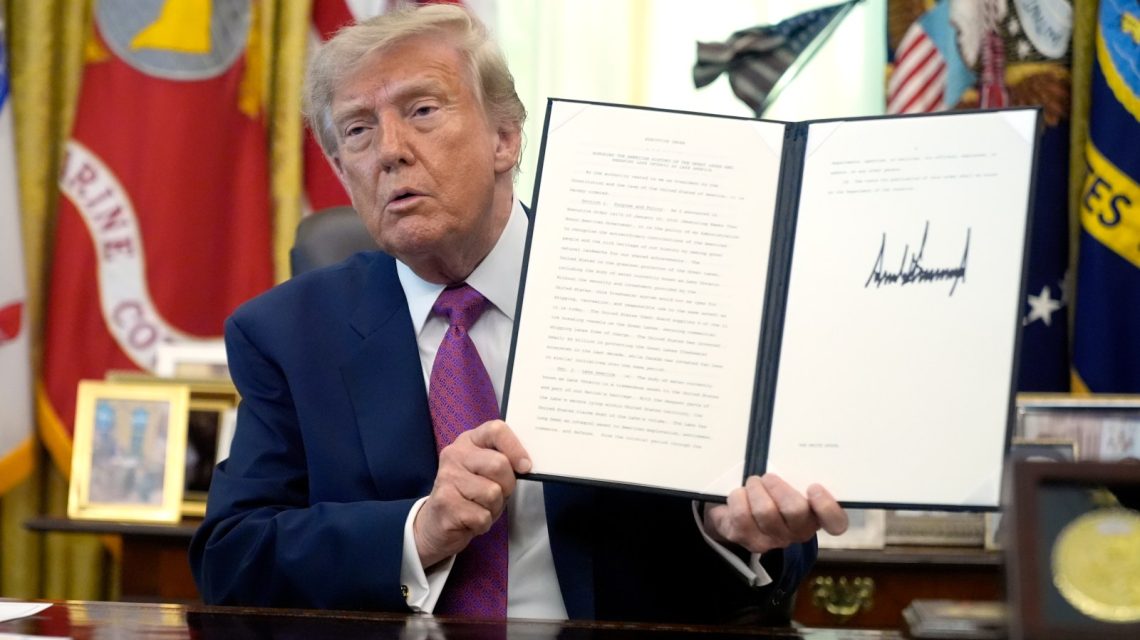
The Trump administration is attempting to further narrow the criteria for the Public Service Loan Forgiveness (PSLF) program. This federal initiative allows employees of government and certain nonprofit sectors to have their remaining student loans forgiven after a decade of qualifying payments.
Department of Education’s Appeal
On Thursday, the Department of Education challenged a federal court’s decision that blocked a regulation. This regulation was meant to limit which employers qualify for PSLF. The administration argues these changes are necessary to ensure benefits go only to organizations engaged in genuine public service activities.
Undersecretary of Education Nicholas Kent stated that the rule aims to ensure federal benefits support teachers, first responders, and civil servants who diligently serve their communities.
Newsweek reached out to the Education Department for further comments.
Importance of PSLF
PSLF stands as a critical student loan forgiveness program for federal borrowers. Established by Congress in 2007, it provides relief for public servants such as teachers, firefighters, nurses, and government employees. Participants can have their remaining loan balances forgiven after 120 qualifying monthly payments.
The Department of Education’s new appeal introduces uncertainty for millions pursuing this forgiveness. By altering the definition of qualifying employers, some public service workers might lose access to relief that Congress intended for them.
Proposed Rule Changes
The Department proposed a rule to allow the education secretary to determine if certain employers are ineligible for PSLF. Organizations with a “substantial illegal purpose” might be excluded. Examples include those perceived to support illegal immigration, terrorism, or gender-affirming care.
If successful, the administration could disqualify years of service for many borrowers, noted Kevin Thompson, CEO of 9i Capital Group.
This introduces ambiguity by injecting outside beliefs into eligibility criteria, a potential slippery slope.
Two federal judges blocked the regulation earlier this year. U.S. District Judge Amir Ali emphasized that Congress did not authorize the Education Department to independently redefine eligible employers. The Education Department is appealing these decisions to revive the rule.
Applying for Student Loan Forgiveness
Borrowers seeking PSLF must work full-time for qualifying government or nonprofit employers and have eligible federal Direct Loans. They may need to consolidate into the Direct Loan program if necessary.
Then, they must enroll in a qualifying repayment plan and make 120 qualifying payments while employed by an eligible public-service organization. Despite ongoing litigation, the PSLF application process remains available under federal law.
Factors Affecting Loan Balances
Several factors can cause student loan balances to grow over time:
- Accruing interest, particularly when payments don’t cover all interest owed.
- Forbearance or deferment periods allowing interest accumulation.
- Capitalized interest, where unpaid interest adds to the principal balance.
- Extended repayment periods that increase total interest paid.
The PSLF program remains valuable for borrowers in public service, forgiving remaining balances after required payments are made.
If the administration succeeds, borrowers with certain nonprofit employers might see promised forgiveness jeopardized, Thompson warns.
Further, they could increase defaults among borrowers by removing aspects they disagree with.
The Future of PSLF
Currently, there is no immediate change to the PSLF program. The Trump administration’s appeal seeks to limit eligibility, but the program’s fundamental structure, created by Congress, stays intact. Even if the appeal succeeds, the focus remains on employer eligibility.
Borrowers must continue making 120 qualifying payments with eligible employers as the legal process unfolds.
The courts have thus far determined that Congress set categories for public-service employment. Current officials may not impose additional criteria on eligible organizations.
What’s Next
The Education Department’s appeal will proceed to a higher court, where judges will review if the proposed restrictions can advance. Until a decision is reached, the rule is not enforced. Borrowers are advised to continue adhering to existing PSLF requirements.
While outcomes remain uncertain, borrowers should monitor litigation. The results could significantly impact future loan repayments, suggests Alex Beene, a financial literacy instructor at the University of Tennessee at Martin.
This story is by Jason Lemon and Gray R. Thomas.
 Weekly Political Discussion: Trade Wars, Mail-in Ballots, and Public Sentiment
  New York’s Ban on Local Immigration-Enforcement Agreements Sparks Legal Challenge
  The Growing Interest in National Parks and Emerging Challenges
  Discussion on Politics: Trade Wars, Legal Battles, and Public Backlash
  President Trump to Attend Pentagon Ceremony for 9/11 Anniversary
  Michelle Obama Faces Criticism Over Remarks About Her Daughters