Few have heard of the Cap Arcona, a German ship resembling the Titanic in luxury but later transformed into a vessel of tragedy. Initially a cruise ship for affluent travelers, it was repurposed by the Nazis during World War II into a floating concentration camp.
Bill Niven: It’s so calm, so peaceful. And yet out there is a graveyard. You can come to a place like this and just feel the weight of the history.
British historian Bill Niven investigates the haunting past of the Cap Arcona at Lübeck Bay, Germany, where it was bombed on May 3, 1945, killing thousands of concentration camp prisoners.
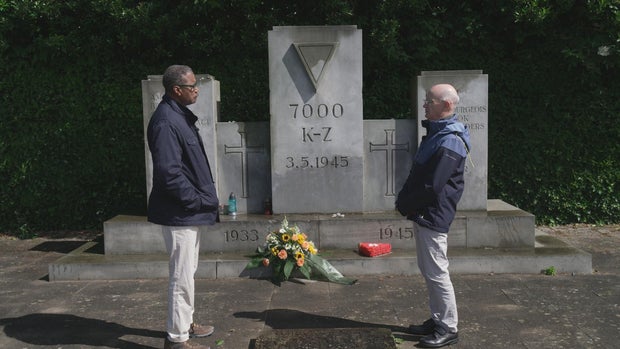
Historian Bill Niven and journalist Bill Whitaker discussed at a memorial dedicated to those who perished in the sinking of the Cap Arcona and another smaller ship.
Bruno Neurath-Wilson, whose father survived the sinking, shares the emotional impact of visiting the site.
Bruno Neurath-Wilson: When we go to the place where the Cap Arcona sank, I try to imagine what happened. I really cannot imagine what happened on the ship.
The Cap Arcona was launched in 1927, known as the “Queen of the Atlantic,” but by 1939, the Nazis had commandeered the ship for military use. Manfred Goldberg, a Jewish survivor from Kassel, experienced suffering in several concentration camps and recalls losing personal identification and enduring extreme hardship, including the disappearance of his brother Hermann.
Another survivor, George Schwab, recounts the brutality faced by his father during the Nazi invasion in Latvia.
Bruno Neurath-Wilson’s father, Willi, was a political prisoner opposed to the Nazi regime, forced to work at Neuengamme concentration camp.
Bill Niven: It feels like a factory of death. You can sense what went on in this place.
Thousands of prisoners were packed onto the Cap Arcona, far exceeding its intended capacity. In a desperate attempt to deny evidence of atrocities, Heinrich Himmler ordered the evacuation of camps.
Manfred Goldberg shares the dire conditions faced by the prisoners transported via barges.
Manfred Goldberg: People kept speculating that they would just sink us at sea to get rid of us.
George Schwab recalls creating makeshift sails to reach land, despite being a “walking skeleton.”
By April 14, 1945, the Cap Arcona had become a floating death trap. SS guards had packed more than 4,000 prisoners onto the ship. Tragically, British Typhoon fighters mistakenly targeted and bombed the ship, believing it to be carrying escaping Nazis.
Historian Bill Niven details the tragic sequence of events, revealing the prisoners’ hopes for survival, ultimately becoming a horror tale.
Bill Niven: Thousands of prisoners were packed together like herrings. They cried out, “I want out.”
Bruno Neurath-Wilson’s father survived by staying on the less burning part of the ship.
Bruno Neurath-Wilson: My father managed to go to the back of the ship, where it was not burning. And there he survived because he couldn’t swim.
Close to 7,000 prisoners lost their lives in the bombing, with only around 400 surviving. Mistakenly attacked by the British, the tragedy of the Cap Arcona remains a dark chapter in history.
George Schwab turned his survival into a successful career and contributed to Latvia’s NATO accession. Manfred Goldberg settled in London, dedicating his life to sharing wartime experiences and defeating Nazi intentions.
The physical remnants of the Cap Arcona were dismantled, but its story lives on as a cautionary tale. Families continue to commemorate the tragic history each year.
Goldberg’s passing at age 95 marked the end of a life dedicated to memory and education.
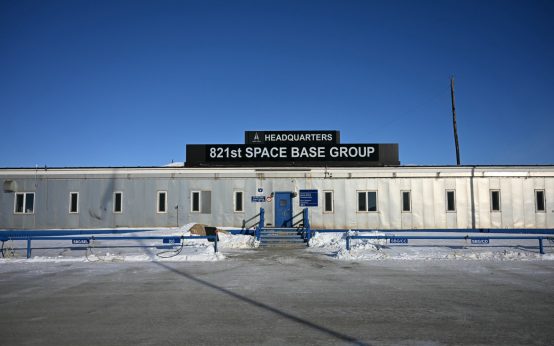 New U.S. Military Bases Planned in Greenland Amid Strategic Security Deal
 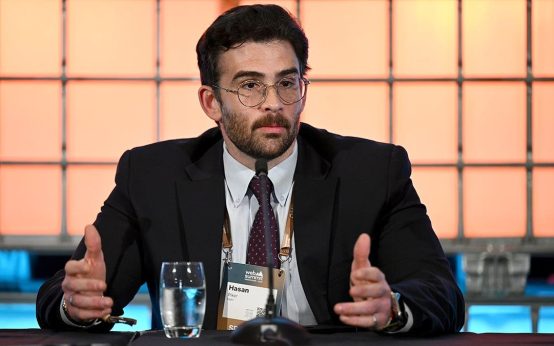 Twitch Streamer Hasan Piker Discusses Controversial Commentary
  A Shifting Political Landscape: The Decline of Autocratic Power
  Trump Delivers Warning to Iran, Cuba at UN General Assembly
  Lukashenko and Putin’s Unique Relationship and Belarus’ Strategic Role
  Alan Ritchson Faces Backlash Over Political Remarks