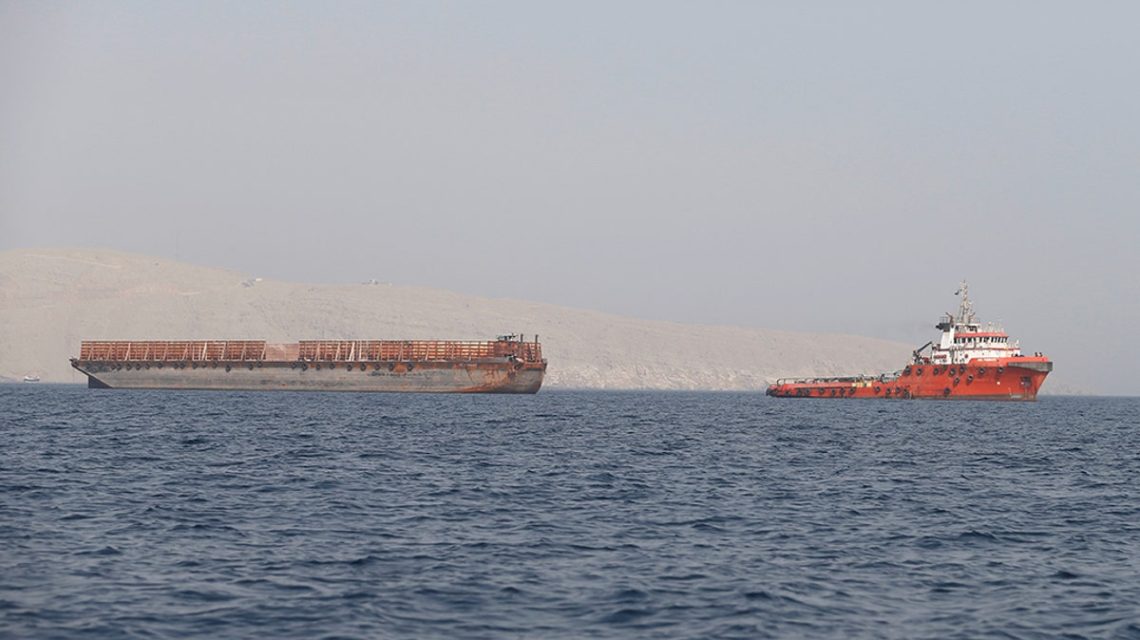
The United States has taken significant steps to ensure safer passage through the Strait of Hormuz. Recently, President Donald Trump announced the removal or detonation of mines in international waters within the strait. Now, the head of U.S. Central Command has detailed the complex operation that led to this achievement.
Clearing the Waters
The U.S. military embarked on an extensive mission to address threats in one of the world’s vital waterways. Mines, placed by Iran’s Islamic Revolutionary Guard Corps, were removed from well-established international shipping lanes. Despite these efforts, threats persist, keeping the Strait classified at a “SEVERE” threat level. Recent attacks have targeted tankers near Oman, leading to reduced oil flows in the region.
We have successfully cleared sea mines in the Strait’s international shipping lanes, thanks to the incredible work of the U.S. military.— Adm. Brad Cooper, CENTCOM Commander
The Strategic Importance of the Strait
The Strait of Hormuz, at its narrowest, spans 21 miles and serves as a crucial passageway for oil producers to the Indian Ocean. With two-mile-wide shipping lanes in each direction, ensuring the safety of these paths is essential. The cleared lanes are part of the Traffic Separation Scheme, a system guiding vessels through these waters.
Adm. Cooper described how Navy divers, SEALs, and air power collaborated to remove the sea mine threats. This endeavor was part of a strategic update to mine-warfare tactics, following the retirement of older mine countermeasure ships.
Advanced Mine Warfare Techniques
Modern mine-clearance operations rely on new technology. Previous Vice Adm. Kevin Donegan highlighted the use of unmanned systems to map seabeds and identify potential threats. The U.S. military employed divers and SEALs alongside these technologies to neutralize identified threats.
During such operations, different parts of the waterway are at various stages, with continual monitoring to ensure safety. Donegan noted that this comprehensive strategy requires multiple sweeps to guarantee a nearly 100% detection rate.
The Navy has honed these skills through years of practice, participating in regular training exercises.
Challenges and Ongoing Concerns
The broader maritime-security environment hasn’t fully stabilized. The Joint Maritime Information Center maintains the “SEVERE” threat level, highlighting the possibility of uncharted mines.
Recent incidents further demonstrate the precarious situation. Tankers near Oman were recently hit by projectiles, leading to fires that were later extinguished. The flow of oil through the Strait remains erratic, with numbers significantly lower than prewar levels.
Regional discussions between Iran and Oman about joint navigation and mine-clearance efforts underscore the complexity of the situation.
Despite U.S. efforts to secure recognized commercial lanes, the ongoing threats serve as a reminder of the region’s instability. The recent developments point to progress but also emphasize the need for vigilance as the U.S. continues to support commercial and military operations in the area.
 Russia Launches Massive Attack Near Kyiv
  Spanish Prime Minister Addresses Disinformation in Migration Crisis
  WNBA Faces Cultural Challenges Amid Global Competitions
  Intense Russian Bombardment Hits Kyiv and Surrounding Areas
  Rescuers Race Against Time as Deadly Floods Devastate Nepal
  U.S. Plans Global Health Funding Cuts for Developing Countries