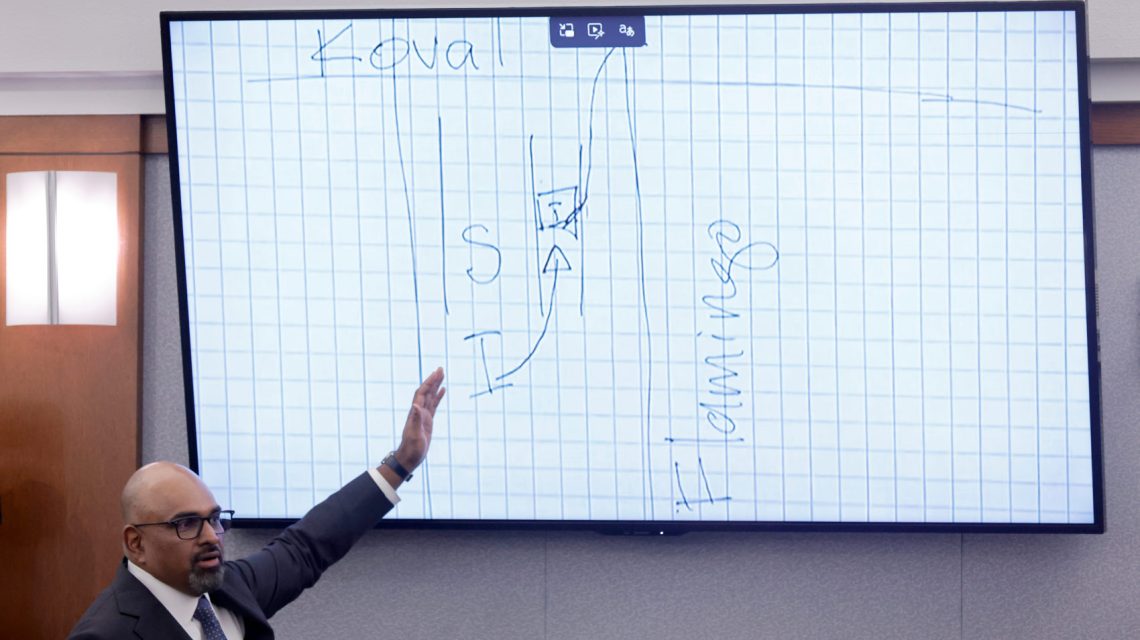
A prosecutor has called for the conviction of Duane ‘Keffe D’ Davis for the first-degree murder of Tupac Shakur in 1996. Chief Deputy District Attorney Binu Palal presented a case filled with circumstantial evidence, asserting that Davis orchestrated the drive-by shooting.
Palal told the jury that Davis obtained a gun and actively sought Shakur and Death Row Records’ co-founder Marion ‘Suge’ Knight, following a confrontation where Davis’ nephew was beaten. Although Davis’ versions of events have changed, Palal argued these changes were attempts to protect himself, while the core details remained the same. Davis consistently placed himself as a passenger in the white Cadillac from which the shots were fired.
Palal stressed that Davis’ statements do not require extra corroboration if believed by the jury. He highlighted the rivalry between South Side Compton Crips and Mob Piru, along with the fight involving Orlando ‘Baby Lane’ Anderson. Members of Shakur’s circle identified Anderson and Davis as suspects on the night of the shooting. The prosecution is not claiming Davis pulled the trigger but argues he was responsible by providing the gun and ordering the attack.
Binu Palal emphasized during closing arguments that Davis had planned the attack, stating, “It’s a plan, not an impulse.”
Davis, now 63, faces charges of murder with a deadly weapon intended to aid a criminal gang. Over nine days, jurors heard testimonies from 24 prosecution witnesses and three for the defense. The trial, initially expected to involve more witnesses, examines the claim that Davis orchestrated Shakur’s attack based on statements from Davis’ book and interviews.
Shakur, deemed one of hip-hop’s most influential figures, was in Las Vegas on September 7, 1996, when he was shot at a red light. He succumbed to his injuries six days later. Knight, also in the vehicle, was injured but survived. The case has long fascinated hip-hop fans and crime experts.
Davis admitted in public statements to his presence during the shooting, claiming retaliation for an earlier assault on his nephew. Under Nevada law, accomplices can be convicted if they aid in murder. Currently, Davis is the only surviving person who was in the Cadillac that night.
Palal underscored Davis’ own admissions, citing his 2019 memoir, ‘Compton Street Legend.’ Palal rejected the defense’s portrayal of Davis’ accounts as fictional monetary pursuits.
In his closing argument, Davis’ defense attorney, Michael Sanft, referred to Davis’ memoir, claiming his words were exaggerated for financial gain, not factual admissions. Sanft emphasized the absence of phone records and bills directly linking Davis to the crime, arguing there is no concrete physical evidence against Davis.
Sanft noted that the case’s age impacts the available evidence. While investigators found a Las Vegas hotel bill at Davis’ home during a search, its relevance to the case remains unclear.
The prosecution reminded jurors that evidence collected in the 1990s differs from current law enforcement practices and techniques, leaving certain records less comprehensive than if collected today.