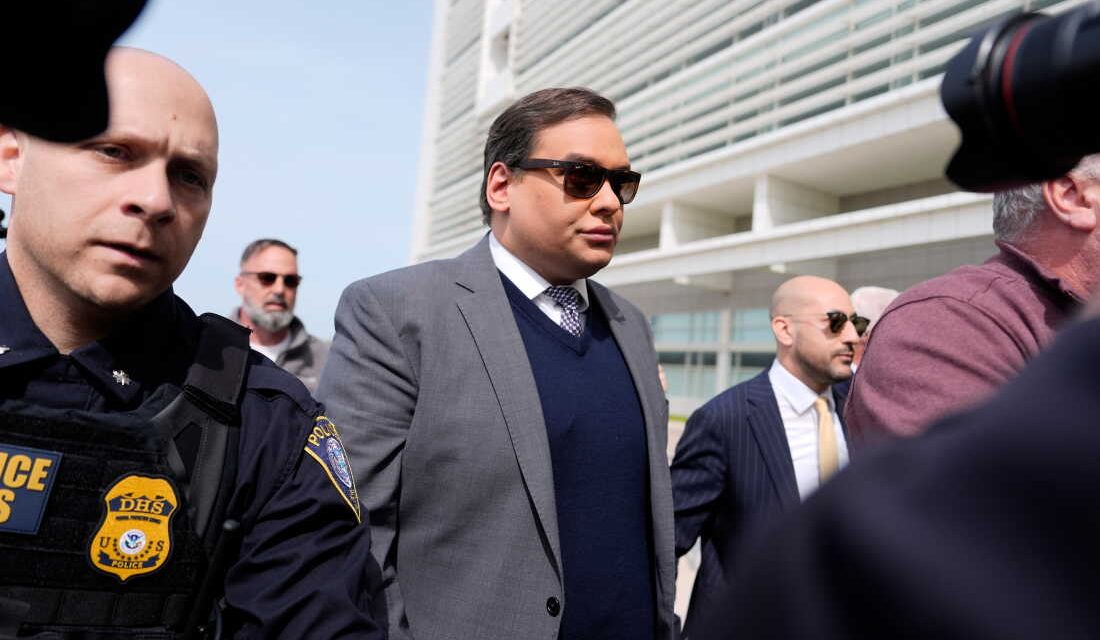
Former Congressman George Santos has been permanently banned from the prediction market platform Kalshi. This decision follows an investigation into allegations of insider trading related to his presence at President Trump’s State of the Union address.
Kalshi has accused Santos of misleading the public with false claims about attending the address to profit from betting markets on the site. He was fined $71,356 by Kalshi, which can impose financial penalties under its federal license. The former congressman responded on social media, challenging Kalshi’s future viability.
NPR reported in June about federal authorities investigating Santos’s trades linked to whether he would appear at the State of the Union. Previously, Santos had posted that he would be present, only to later reveal he was watching from an airport. Santos had already placed bets on Kalshi favoring his absence, earning him over $17,000. The Commodity Futures Trading Commission ordered him to return these profits and imposed a $17,500 fine.
Santos, who was expelled from Congress in 2023 and has a history of fabricating personal details, did not respond to NPR’s comments request. His prison sentence for wire fraud and identity theft was commuted by President Trump. Santos also made threats against the NPR reporter covering his Kalshi bets.
Kalshi noted several other political figures have faced penalties for similar activities. The company disciplined other candidates for betting on their own political campaigns, including Laurie Buckhout, a Republican Congressional candidate in North Carolina, who was fined and suspended for three years.
Stephen Cloobeck, a billionaire and previous candidate for governor of California, also faced a three-year suspension after betting on his own race. Similarly, Ben Midgley, who ran for governor in Maine, received a suspension and financial penalty for betting on his candidacy.
These bans are part of broader regulatory actions against individuals exploiting insider information for profit. Gabriel Perez, Trump’s former teleprompter operator, was penalized for using preparatory knowledge of presidential speeches to make profitable bets. He returned over $100,000 in profits as part of a settlement.
Although the prediction market industry witnesses few regulations, platforms like Kalshi and Polymarket self-police to curb such activities. The Commodity Futures Trading Commission has litigated against states attempting to classify prediction markets as gambling. This legal debate continues, affecting how prediction markets are regulated.
The 9th Circuit Court of Appeals ruled against Kalshi by upholding Nevada’s ban on the site as a gambling operation. This decision conflicts with a previous ruling by the 3rd Circuit Court of Appeals supporting Kalshi. The final resolution likely rests with the Supreme Court.
A letter from 44 states to the Trump administration warned of the impacts of prediction markets on young people and those susceptible to gambling addiction. The states argue these platforms exploit individuals, likening the markets to casinos, and call for regulation under state law enforcement powers.
 Concerns Over Military Resource Strain in the Iran Conflict
  President Trump Addresses Military Action Against Iran
  Debate Over Voter ID and Citizenship Verification Intensifies
  Concerns Arise Over Changes to Commerce Department’s Scientific Integrity Policy
  Army Secretary Driscoll Resigns Amid Military Leadership Changes
  Kansas Cities Battle Over Data Center Petitions in Court