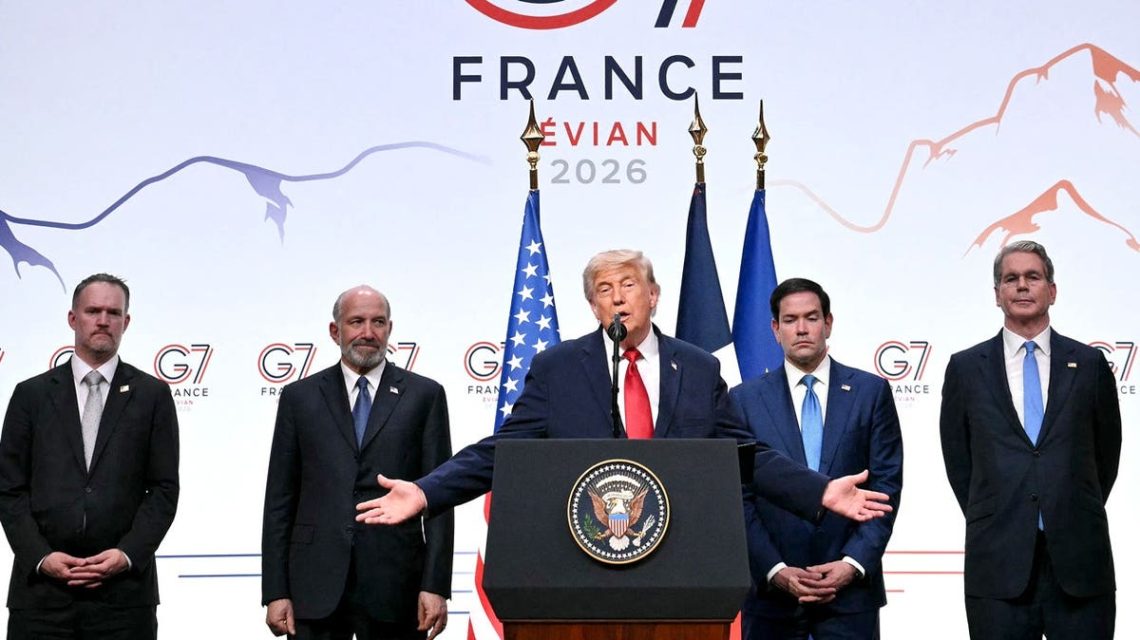
The Iran nuclear deal has hit significant hurdles as former President Trump issues warnings to negotiators. Lisa Daftari, editor-in-chief at The Foreign Desk, discussed the reopening of the Strait of Hormuz and the critical issue of uranium enrichment on ‘Fox News Live.’ She expressed concerns over an assertive Iran and the regime’s untrustworthy history following the U.S. withdrawal. Daftari emphasized the necessity of maintaining pressure to deter any retaliation.
The Trump administration’s memorandum of understanding (MOU) with Iran is not a final agreement, but a framework. The distinction between a framework and a final deal could mean the difference between lasting success and failure. The key question remains: Does the final deal fully dismantle Iran’s nuclear program and remove enriched uranium, or does it merely manage Iran’s path to a nuclear weapon as the JCPOA did? There is no other option.
Anything short of dismantlement is akin to the 2015 deal on a new letterhead, potentially misusing the leverage gained by the Trump administration. President Trump’s focus on nonproliferation aligns with strategic goals. The Iranian regime is weaker today than at any time since 1979, and maximum pressure was effective. Internal tensions reached a boiling point, bringing Iran to negotiations out of necessity, which is leverage the U.S. risks losing.
A final deal that ensures dismantlement, stages sanction relief based on compliance, and retains snapback measures would be more prudent than a repeat of the JCPOA. The JCPOA provided Iran with roughly $100 billion in unfrozen assets and direct payments, which funded regional proxy networks rather than domestic programs. Front-loaded sanctions relief thus facilitated further instability.
The JCPOA’s sunset clauses allowed Iran to slowly advance its nuclear capabilities. By 2030, many restrictions from the deal could lift. Iran used the delay period to enhance its enrichment capabilities and missile capacity, contradicting the agreement’s intentions. Iranian officials have indicated their readiness to rebuild and strengthen nuclear facilities targeted by the U.S. by 2025.
The MOU must reverse this approach. Permanent restrictions and stringent verification are essential. Iran must physically remove enrichment capabilities. Furthermore, consequences for noncompliance should be clear and unavoidable, underscoring that only agreements with penalties for violations compel adherence. This includes military options and economic measures that are ready to deploy.
The primary goal of the agreement is preventing Iran from obtaining nuclear weapons. However, securing the Strait of Hormuz and reducing regional tensions should be managed through separate strategies. The JCPOA’s failure resulted from its attempt to address too many issues simultaneously, ultimately achieving none.
“The Iranian populace must not be overlooked in this negotiation,” said Daftari. With the regime known for internal repression, any deal must consider the broader moral and strategic context, including the regime’s history of executing political prisoners.
Now is the time for the administration to avoid a poor deal and focus on a beneficial agreement. This includes verifiable dismantlement, permanent restrictions, staged sanctions tied to compliance, effective snapback mechanisms, and transferring control of enriched uranium away from Iran’s regime. Leverage brought Iran to the table, and maintaining it is crucial.
Lisa Daftari is a recognized foreign policy analyst and the editor-in-chief at The Foreign Desk.
 Increasing Number of Americans Seek Luxembourg Citizenship Amid Political Tensions
  Jack Keane Defends Israel Amid UN Criticism, Pillay’s Nobel Victory
  Empire State Building Honors Fox News’ 30th Anniversary
  Investigating the Far-Left Influence Behind France’s Student Protests
  Navigating Complexities in the Strait of Hormuz Conflict
  Nobel Peace Prize Awarded