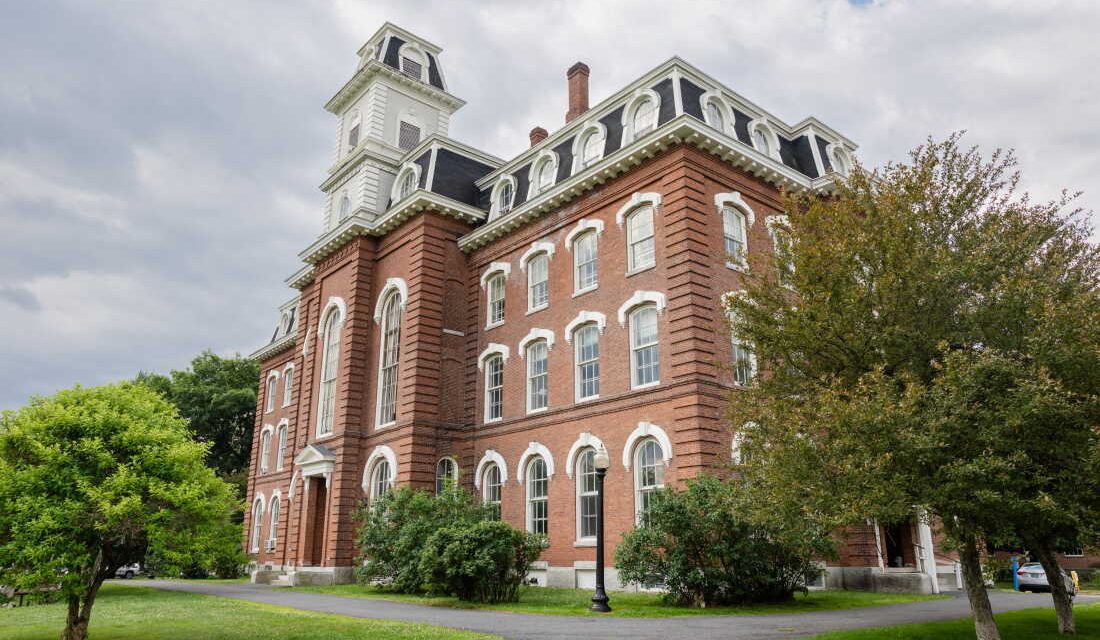
Greenway Institute is revitalizing a former college campus in Montpelier, Vermont, aiming to revolutionize higher education for the 21st century. Located amidst historic red brick and white-trimmed buildings, Greenway plans to alter how education is delivered and priced.
The initiative responds to the decline in traditional college models. Since 2016, 152 colleges and universities have closed or merged; another 442 are at risk, underscoring the need for change. Innovators argue that tackling entrenched educational issues requires starting anew.
Greenway Institute intends to eliminate costly nonacademic amenities and administrative layers while emphasizing practical training under faculty mentorship. Founding president Mark Somerville describes Greenway as a place fostering meaningful faculty-student relationships without extravagance.
“We need new models in higher education,” Somerville asserts.
The timing of this startup is noteworthy, given recent college closures. In Vermont, seven private colleges have shut down in the last decade. Somerville, formerly of Olin College of Engineering in Massachusetts, views this “moment of mass extinction” as a catalyst for creating innovative educational models.
Greenway is part of the Future Universities Alliance, organized by Duke University. Similar projects include Project Polymath, which plans to mentor students through diverse academic paths and apprenticeships.
Brian Rosenberg, former president of Macalester College and an advocate for educational reform, highlights the difficulty of altering existing institutions.
Greenway acquired its campus from Vermont College of Fine Arts in 2023, planning to open in fall 2027. Renovations include the creation of shop rooms for real-world project work under faculty supervision. The plan also includes raising $30 million by 2031, with $4.5 million already secured, including a National Science Foundation grant.
The institute’s founders span tech executives, CEOs, educators, and former university administrators. The curriculum will focus solely on engineering. Early testing involved four college sophomores working on projects like wind turbines and solar-powered traffic signals.
Research supports the effectiveness of work-based learning, showing improved employment outcomes and earning potential for students who participate in such experiences.
Greenway’s educational strategy requires students to live on campus for two years and then engage with real-world workplaces while maintaining faculty mentorship. This communal living aims to increase retention rates among students.
The institute’s approach reduces reliance on traditional amenities for cost-effectiveness. Students will manage their own food preparation and extracurricular activities, prioritizing practical life skills alongside education.
Without noninstructional spending, projected tuition is $25,000 or less annually, offset by paid work—co-op jobs—during students’ third and fourth years.
Challenges include accreditation, which takes four years post-opening, delaying access to federal grants and loans. Greenway founders expect fundraising to bridge this gap until accreditation is retroactively applied.
Greenway’s goal is to expand to 500 students locally, with plans for nationwide locations. The concept appeals to students with clear career goals, says Rep. Rebecca Holcombe, a former Vermont secretary of education and Greenway co-founder.
“We’re ready to start saying, ‘OK, if not this, then what?'” Holcombe remarks.
This article was produced by The Hechinger Report, dedicated to addressing inequality and innovation in education.
 Trump Administration’s Campaign Against Antisemitism on Campuses
  Readers’ Perspectives on Education and Community
  Educators Confront AI’s Limits in Human Creativity
  Tuskegee University President Defends Dress Code Initiative
  UCLA Disciplinary Case Sheds Light on Campus Protest Controversy
  Helping Kids Transition Back to School