
The recent U.S.-Venezuela oil agreement represents a significant geopolitical achievement for the United States. The deal grants access to over 65 billion barrels of oil, boosting American energy dominance, lowering gas prices, aiding Venezuela’s economic recovery, and eliminating foreign adversary influence in the Western Hemisphere.
Historically, Venezuela played a pivotal role in the formation of the Organization of the Petroleum Exporting Countries in 1960. Now, it threatens the alliance, challenging the cartel that has long controlled global oil prices.
In a post on Truth Social, President Trump described the agreement as “The biggest oil deal in world history!” He noted that the deal “MORE THAN DOUBLES American Oil Reserves, greatly increases our Oil supply, and will substantially lower Gas Prices for all Americans, long into the future, while helping to continue to set Venezuela on a course toward Tremendous Success and Great Prosperity.”
Caracas has allocated 100-year concessions to North American Blue Energy Partners, a private oil firm, for 17 oil fields with proven reserves of approximately 65 billion barrels. Secretary of State Marco Rubio emphasized the agreement as evidence of President Trump’s “America First” foreign policy driving domestic victories, including securing stable reserves and affordable oil in the Hemisphere, as well as reducing local gas prices.
Rubio highlighted the economic benefits, predicting nearly $100 billion in private investment, support for thousands of high-paying jobs, and the revitalization of Venezuela’s economy.
Previously, most of these resources were under the control of Russian and Chinese firms or corrupt associates of the Chavista regime. For over 25 years, countries like Cuba, Russia, China, and Iran exploited Venezuela’s resources at the expense of American interests. This era has ended. Economic security ties directly to national security, aligning with the 2025 National Security Strategy that emphasizes the need to restore energy dominance in oil, gas, coal, and nuclear, and reshore essential energy components.
The strategy document explains that cheap and plentiful energy will generate lucrative jobs in the U.S., lower expenses for consumers and companies, drive reindustrialization, and uphold advantages in advanced technologies.
The oil agreement does not contradict Venezuela’s democratic transition. The United States remains committed to democracy, advocating for reforms to the Supreme Court and National Electoral Council, the release of political prisoners, and the establishment of credible institutions. Interim leader Delcy Rodríguez’s role is not permanent.
The agreement, signed by Rubio and Secretary of Defense Pete Hegseth, underscores energy security as a key national security concern. It marks a mutually beneficial arrangement, securing investments and revitalizing the oil sector in Venezuela while ensuring U.S. energy security and competitive market prices.
Venezuela continues to face challenges post-Chavista socialism, such as the destruction of democracy, institutions, and the oil industry. Through the new Monroe Doctrine, the U.S. aims to rebuild Venezuela’s economic framework and democratic structures. Following Operation Absolute Resolve, leading to Nicolás Maduro’s capture, Venezuela continues its transformation with significant achievements, including uranium seizure, arresting Hezbollah terrorists, disrupting organized crime, restoring consular ties with Israel, and freeing political prisoners.
Under the comprehensive plan for stabilization, reconstruction, and democratic transition, this oil deal is strategically aligned, reflecting monumental times of transformational change that strengthen security, freedom, and prosperity in the Americas.
Arturo McFields, an exiled journalist, former Nicaraguan ambassador to the Organization of American States, and a participant in the Norwegian Peace Corps, remarks on these developments. He is a graduate of the National Defense University’s Security and Defense Seminar and the Harvard Leadership course.
©2026 Nexstar Media Inc. All rights reserved. This material may not be published, broadcast, rewritten, or redistributed.
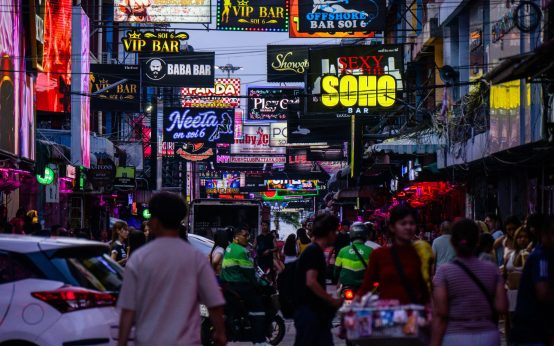 USS Abraham Lincoln’s Impactful Visit to Pattaya, Thailand
 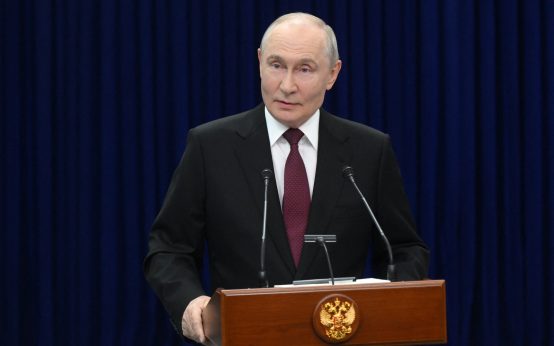 Tensions Rise as Putin Accuses Ukraine of ‘State Terrorism’
 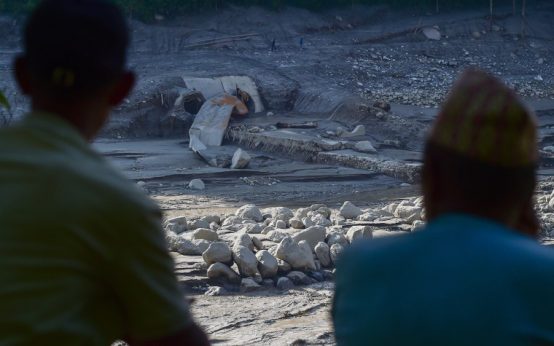 Rescue Efforts Continue in Nepal After Devastating Flash Floods
  Inferno Erupts at Bali Restaurant Following Balloon Explosion
  Royal Family Faces New Challenges with Sussexes’ Return
  Ongoing Iran-U.S. Conflict: Recent Developments