
The Supreme Court might hear a case that could significantly impact the prediction markets industry. This sector has facilitated billions in betting on nearly all aspects of life. New Jersey has petitioned the court to intervene in the ongoing legal debates involving numerous states and the prediction market sector, which has received support from the Trump administration.
The central issue is the proper regulatory authority over sports betting on platforms like Kalshi. The debate is whether federal commodities regulators should oversee these markets, as Kalshi asserts, or if state gambling bodies hold that responsibility. Although prediction market platforms cover diverse topics, sports betting dominates, accounting for over 80% of their weekly activity.
New Jersey’s request arises after contradictory rulings from federal appeals courts. In April, the Third Circuit determined that the Commodity Futures Trading Commission (CFTC) has exclusive authority over the prediction market industry. This decision originated from a case Kalshi brought against New Jersey. Recently, the Ninth Circuit offered a differing opinion, supporting state regulation of the industry in a case from Nevada.
Lawyers from New Jersey’s Attorney General’s Office argue in their petition that the Commodity Exchange Act does not permit prediction market operators to bypass state laws. They emphasize that states traditionally control health and safety issues, including gambling. According to them, the Act does not grant the CFTC unprecedented regulatory power over sports gambling, nor does it allow companies to sidestep state laws by self-certifying on a CFTC-registered market.
Kalshi, however, maintains that federal financial investment regulations apply, superseding state laws. Kalshi’s spokeswoman, Dani Lever, stated, “Kalshi is an open, nationwide financial exchange; it cannot be regulated by 50 different regulators.” She expressed confidence in the previous court decisions, suggesting New Jersey’s filing hasn’t altered their stance.
Companies like FanDuel and DraftKings, which pay substantial state taxes, have viewed prediction market sites as quickly growing competitors perceived to be circumventing regulations. Should the Supreme Court decide to consider New Jersey’s petition, the arguments might occur this fall. A decision is anticipated by next summer.
 Jury Deliberates Lindsay Clancy Murder Trial
 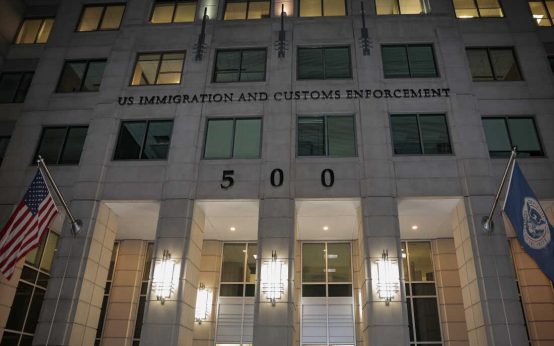 Deaths Among Immigrant Detainees Spark Concerns
  Legal Challenges in High-Profile Cases: Kohberger and Shirilla
  Understanding Deadlocked Juries and the Tuey-Rodriguez Instruction in Massachusetts Trials
  Pennsylvania Police Officer Charged in Fatal Shooting Incident
  Massachusetts Jury Struggles to Reach Verdict in Lindsay Clancy Trial