House Debate on Supreme Court Size
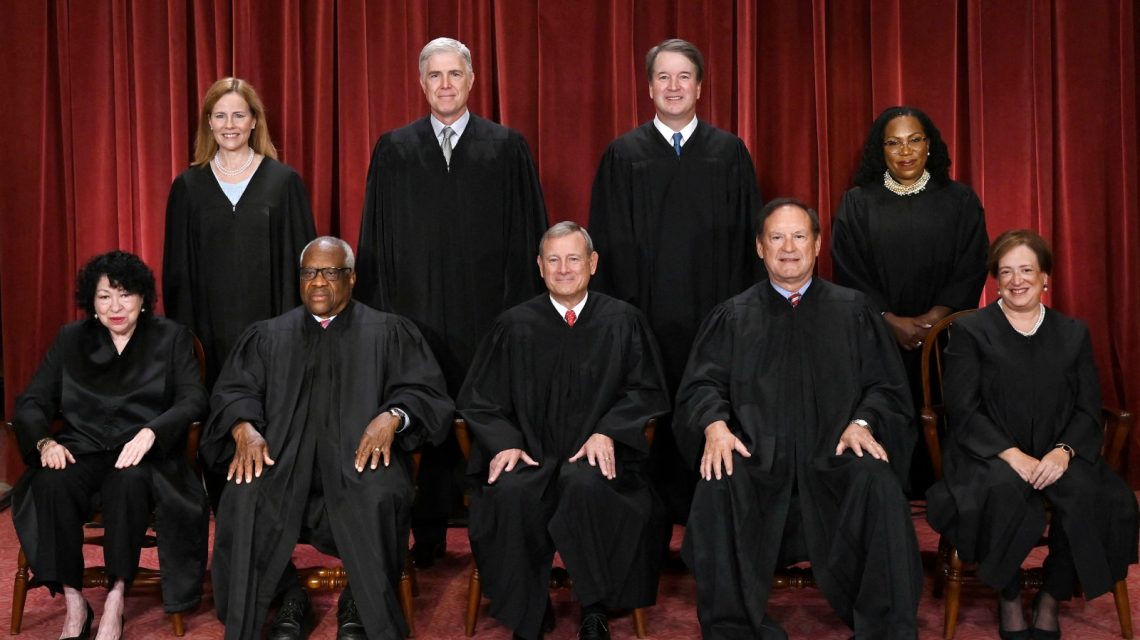
The House of Representatives held a pivotal vote on Wednesday concerning a proposed constitutional amendment. The amendment aimed to permanently set the number of U.S. Supreme Court justices at nine. This would force legislators to publicly declare their stance on an ongoing debate.
Named the “Keep Nine Amendment,” the proposal sought to enshrine the current court size in the Constitution rather than leave it subject to standard federal legislation. The initiative served to highlight positions amid discussions led by Republicans to challenge proposals for expanding the court. In the vote, Republicans unanimously supported the amendment. However, the measure fell short of the two-thirds majority needed for approval. Only one Democrat, Representative Don Davis of North Carolina, joined in favor.
Arguments for and Against the Amendment
Supporters of the amendment, primarily Republicans, claimed it was crucial to ward off future attempts to enlarge, or “pack,” the Supreme Court. They argued that fixing the number at nine would shield the institution from political interference and retain a structure established over 150 years ago.
Democrats contested this perspective. Representative Jamie Raskin criticized the effort by indicating that Republicans and former President Donald Trump had already skewed the court’s balance. The House required a two-thirds majority to pass the amendment. Ultimately, the vote secured 212 votes in favor, falling short of the necessary 290.
History of the Supreme Court’s Composition
The U.S. Constitution creates the Supreme Court but does not specify the number of justices. Instead, Congress determines the size through legislative action. Historically, the court has fluctuated in size, from as few as five to as many as ten justices.
The current composition dates back to the Judiciary Act of 1869, consisting of one chief justice and eight associate justices. This nine-member structure has provided stability. Supporters argue any changes could provoke political retribution when government control shifts.
Despite this amendment’s push for constitutional protection, Congress still holds the authority to change the court’s size by law.
Calls to Expand the Court
The debate over court expansion has intensified, particularly with high-profile decisions resulting in a 6-3 conservative majority. Advocates for expansion argue it could counter partisanship and rebuild public trust in the judiciary.
Beyond expanding the court, other proposed reforms include instituting a formal ethics code, setting term limits for justices, and updating recusal rules. Reform proponents claim these steps are needed given the court’s vast influence over national policy.
On the contrary, critics warn increasing the number of justices could lead to perpetual political manipulation, harming judicial independence. According to Representative Mary Gay Scanlon, a Democrat from Pennsylvania, the amendment would harm the system of checks and balances.
Process of Constitutional Amendments
Passing a constitutional amendment involves complex procedures. Under Article V, it requires approval by a two-thirds majority in both the House and Senate before state ratification. Three-fourths of states, or 38, must ratify the amendment for it to be adopted.
These hurdles render constitutional amendments challenging, making this vote largely symbolic. As midterm elections near, Republicans seek to place Democrats on record regarding the court’s size.
 Trump Allies Strive for Voter Turnout Amid Economic and Political Challenges
  Democrats in Massachusetts Support Incumbent Ed Markey in Congressional Race
  Whistleblower Raises Alarm Over USPS Mail-In Ballot System
  Trump Administration Threatens Smithsonian Support
  Alexandria Ocasio-Cortez Endorses Angie Nixon in Florida Senate Race
  Alabama Democrat Proposes Bill to Reverse Graduate Loan Restrictions