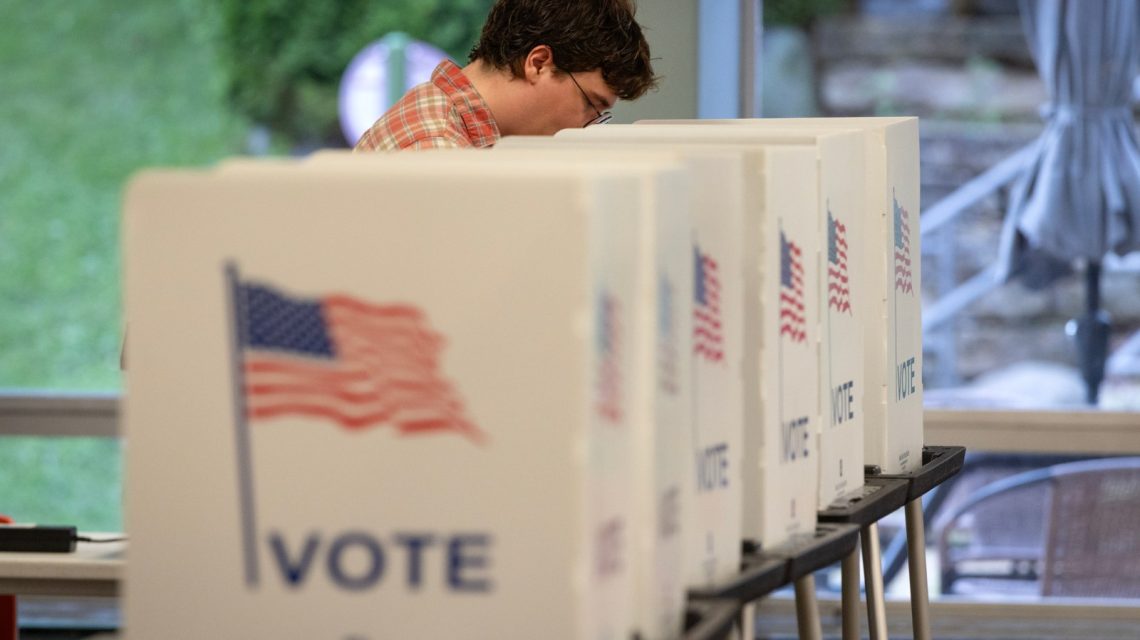
The Department of Homeland Security (DHS) is reallocating several federal agents to examine voter rolls nationwide, targeting immigrants ineligible to vote before the midterm elections. This plan came to light through internal documents and testimonies from DHS staff reviewed by The New York Times. Agents aim to compare state voter rolls with federal databases to identify potential voter fraud.
While the purpose of these findings remains unclear, a former official suggested that such actions might discourage people from voting. Part of the initiative includes agents verifying personal details through state election websites.
Charles H Stewart III, director of the MIT Election Data and Science Lab, expressed concern over the federal government’s tactics, saying, “This is evidence that the federal government isn’t using highly sophisticated techniques in its investigations.”
The Trump administration has consistently claimed widespread voting by both legal and illegal immigrants despite evidence suggesting such instances are minimal. Critics argue that redirecting agents for these efforts means less attention to major criminal investigations. Tim Harper, project lead for elections and democracy at the Center for Democracy and Technology, criticized the diversion of government resources, stating, “Pulling federal agents off of ongoing investigations into human trafficking and terrorism for a fishing expedition for voter fraud is a galling misuse of government resources.”
The administration’s focus on noncitizen voting has been characterized as attempting to create a crisis where none exists. Federal probes into this matter have resulted in few criminal cases. ProPublica reported that the extensive efforts yielded only a few dozen noncitizen voting prosecutions.
Data on Noncitizen Voting
Two contrasting perspectives dominate the debate over noncitizen voting: verifiable yet rare cases compared to the overall number of votes cast. Research by the Brennan Center for Justice indicates noncitizen voting is “vanishingly rare.” In 2016, only an estimated 30 of 23.5 million votes were referred for noncitizen voting investigation or prosecution. In contrast, the conservative Heritage Foundation documented 23 instances of noncitizens voting between 2003 and 2022.
Federal verification systems have reviewed 67 million voter registrations, flagging thousands for further scrutiny. Yet, civil rights groups caution that naturalized citizens could be mistakenly tagged as noncitizens due to outdated records. Despite intense federal efforts, few convictions have emerged.
Notable Cases of Alleged Noncitizen Voting
Several cases have underscored concerns about election integrity:
- New Jersey Registration Error: A software issue registered around 6,600 non-citizens to vote, though fewer than 400 voted. This incident revealed system vulnerabilities, although it did not affect election outcomes.
- Kansas Mayor’s Guilty Plea: Former Coldwater Mayor Joe Ceballos, a lawful permanent resident, pleaded guilty to voting illegally. His case highlighted the potential risks of insufficient citizenship verification.
- Massachusetts Identity Misuse: A case involved a man registering and voting under another’s identity without permission, focusing on identity misuse rather than mistaken voting.
- Pennsylvania Multiple Voting: A Mauritian man was charged with voting multiple times despite lacking citizenship, demonstrating potential for repeat offenses.
- Recent Federal Prosecutions: Michigan and Texas saw federal cases of alleged improper voting among lawful residents.
Controversy Over Federal Crackdown
Advocates for rigorous verification argue that even minimal illegal votes weaken public trust in elections. The Trump administration has focused on executive measures to enhance citizenship verification and state collaboration to identify ineligible voters.
Opponents, including voting-rights groups and privacy advocates, warn that large-scale reviews may wrongly flag naturalized citizens, leading to incorrect voter removals. “The problem is that many people whose citizenship was derived from their parents’ naturalization are not known to DHS,” said Stewart.
As DHS intensifies actions before the 2026 midterms, the debate will likely focus on whether identified cases warrant such an extensive federal search.
 Governor Spencer Cox’s Reflection on Political Polarization and Change
  Pentagon Implements Mandatory Testosterone Screening for Service Members
  Trump Campaigns for GOP as Musk’s PAC Invests in Key Races
  Trump’s Approval Rating Declines Among White Voters
  Trump’s Favorability Ratings Show Political Polarization Across Party Lines
  Pentagon’s Operation Epic Fury and Its Aftermath