
President Donald Trump announced the proclamation of ‘Anti-Communism Week,’ stating that the week from November 1 to November 7 is dedicated to protecting liberty against the threats of communism. This announcement occurs amidst political tensions, following the Democrats’ recent control of Congress after the midterm elections.
The proclamation reiterates Trump’s campaign rhetoric warning against the dangers of socialist and communist ideologies, associating these threats with the Democratic Party. Trump emphasizes that under his leadership, the United States will not succumb to such ideologies, affirming the country will never become a communist nation.
Following the Democrats’ victory in the Senate, Trump’s ability to appoint judges to the Supreme Court and federal judiciary may face significant challenges. The Senate control by Democrats could impact future judicial appointments if vacancies arise before the 2028 presidential election.
In the aftermath of a disappointing performance for Republicans in the midterms, Vice President JD Vance begins contemplating his political future, including a possible presidential run in 2028. Meanwhile, the president continues to appeal the dismissal of his lawsuit against the Wall Street Journal over a contentious issue involving Jeffrey Epstein.
The Mississippi Senate race edges towards a possible recount, with Democrat Scott Colom leading GOP incumbent Cindy Hyde-Smith by a slim margin. As more votes are counted, the outcome remains uncertain, illustrating heightened voter engagement and close races in historically Republican strongholds.
In legislative developments, Rep. Robert Garcia of California detailed potential oversight investigations targeting alleged corruption involving Trump’s family and allies. His plans include probes into the Department of Homeland Security’s practices and potential corporate corruption related to Trump’s business projects.
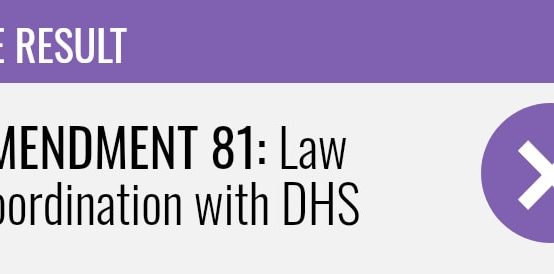
Amendment 81, concerning law enforcement coordination with the Department of Homeland Security, was rejected by Colorado voters, reflecting skepticism towards federal involvement in local affairs.
GOP gains in the 2026 elections were limited, with notable races still unfolding and yielding unexpected wins for Democrats in redrawn districts. Despite attempts at strategic redistricting, the GOP plans faced setbacks in delivering anticipated majorities.
The Democratic Party continues to secure broader victories, electing a record number of female governors and achieving key wins in battleground states. The results signal a renewed confidence in Democratic agendas addressing affordability and transparency.
Overall, the election outcomes indicate a transformation in the U.S. political landscape, with Democrats gaining control of both legislative chambers and promising significant oversight of the current administration.
 Democrats Gain Control After Midterms
 Congress Extends Funding for Mass Deportation Campaign
 Potential Revitalization of Student Loan Proposals After Midterm Elections
 Democrats Win Control of Congress, Leading to Internal Party Debate
 Democrats Debate Focus After 2026 Midterm Successes
 Challenges Facing Republicans After the 2026 Midterm Elections