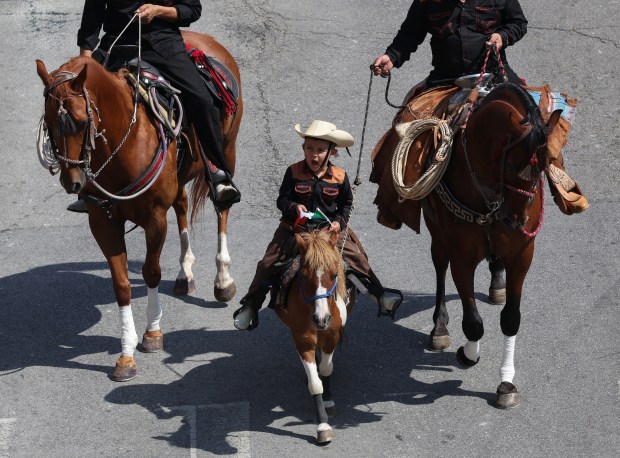
Mario Perez cheered enthusiastically from the curb as dancers donned in vivid costumes twirled along the street in the bright Saturday afternoon sun. Amidst the festive scene, he almost missed a face gazing down from an apartment window above. ‘They’re still afraid to celebrate,’ said Perez, 54. ‘People want to come out, but they’re fearful of being arrested.’
Perez was among the many immigrants drawn to Pilsen for the neighborhood’s 25th annual Mexican Independence Day Parade. This tradition fills 18th Street with vintage cars, folk dancers, and vibrant musicians heading towards Harrison Park. The event is a staple of the historic Latino neighborhood, where Mexican American culture thrives in local restaurants, shops, and colorful murals lining the route.
However, attendees noticed the crowd was notably smaller compared to previous years, reminiscent of last year’s parade that coincided with the Department of Homeland Security’s Operation Midway Blitz. This 64-day immigration enforcement surge impacted Chicago and its suburbs. As Edwin Barrera observed from a bench outside an ornate antique shop, the atmosphere seemed similar to when the Trump administration had threatened to send federal agents into Chicago. ‘Usually, there would already be chairs set up and people gathering,’ said Barrera, 50, a Pilsen resident of 20 years. ‘But I guess it’s not surprising that many people are missing.’
Despite El Grito, a downtown Mexican Independence Day festival, being postponed last year due to heightened immigration enforcement threats, the organizers of the 2025 Pilsen parade decided to proceed. Following the event, Vicky Lugo, Secretary of the United Merchants of Pilsen Chamber of Commerce, confirmed no reports of federal immigration agents were registered at the parade. However, some locals recalled differently. Ramon Lopez, 61, watched dancers from his apartment doorway, a lifelong Pilsen resident who has attended the parade since its inception. Lopez pointed to a nearby intersection, recalling federal agents in full armor with large weapons stationed there during the previous year’s parade. This time, their absence was notable. ‘It’s more comfortable now,’ Lopez remarked. ‘You see police officers, but you don’t see ICE.’ Still, some neighbors remained home, fearing undercover federal agents might be present among the crowd.
Although the blitz has ended, immigration enforcement arrests have persisted over the past year. Esmeralda Velasco noted the continued fear among residents, some hesitant to even take their children to school. Her social media channels have reported frequent sightings of ICE activity across Chicago, particularly on the Northwest and Southwest sides. Videos showing federal agents detaining individuals during traffic stops and outside courthouses have circulated since June, causing alarm in immigrant communities and concern among local officials. ‘We’re still standing up for them,’ Velasco, 42, said about those too frightened to join the parade. ‘We’re their voice, even though they can’t be here.’
Velasco’s determination to participate grew stronger amid these fears, underscoring the importance of celebrating her culture. Mexican Independence Day is commemorated each year on September 16. She hopes that Mexican Americans who stayed away will see the parade’s photos and videos on social media and recognize that their community’s pride endures. As her friends laughed and gestured towards a toddler riding a miniature horse, followed by three Xoloitzcuintles, Mexican hairless dogs walk with the parade. The animals captivated children along the route, including Liliana Baiman’s son, who watched awestruck.
Baiman and her family recently moved to Pilsen from Ohio, where her son rarely encountered Mexican cultural experiences. ‘We don’t get to see this where we’re from,’ Baiman, 40, expressed. ‘It’s refreshing to be in a neighborhood where people resemble me.’ Baiman noted Pilsen residents have created an online watch group to warn peers of potential ICE activity, providing some locals with a sense of security.
Saturday’s festivities attracted attendees of all ages, with older spectators waving Mexican flags from their wheelchairs. Benjamin Raya, an immigrant from Mexico who came to the U.S. as a teenager, enjoyed the parade with his children. As drummers passed by, Raya, 29, noted the music is his favorite element of the event. ‘When I close my eyes, I transport myself back home,’ he reflected. ‘This makes me feel like I’m back in Mexico.’
 The Transformation of American Social Life in the Digital Age
  The Importance of Third Places in Modern Society
  The Impact of Lost Social Spaces on Democracy
  Tributes Pour In for Gloria Steinem After Her Passing
  Thursday’s Spotlight: College Football Returns and More
 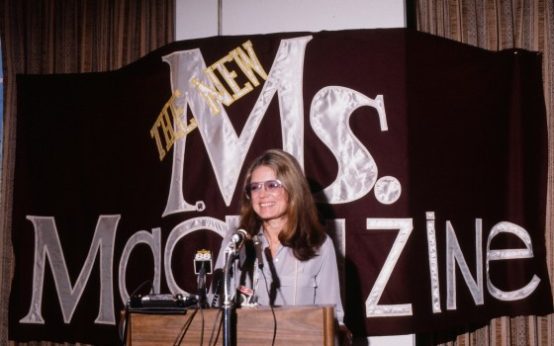 Ms. Magazine: A Feminist Trailblazer in Media