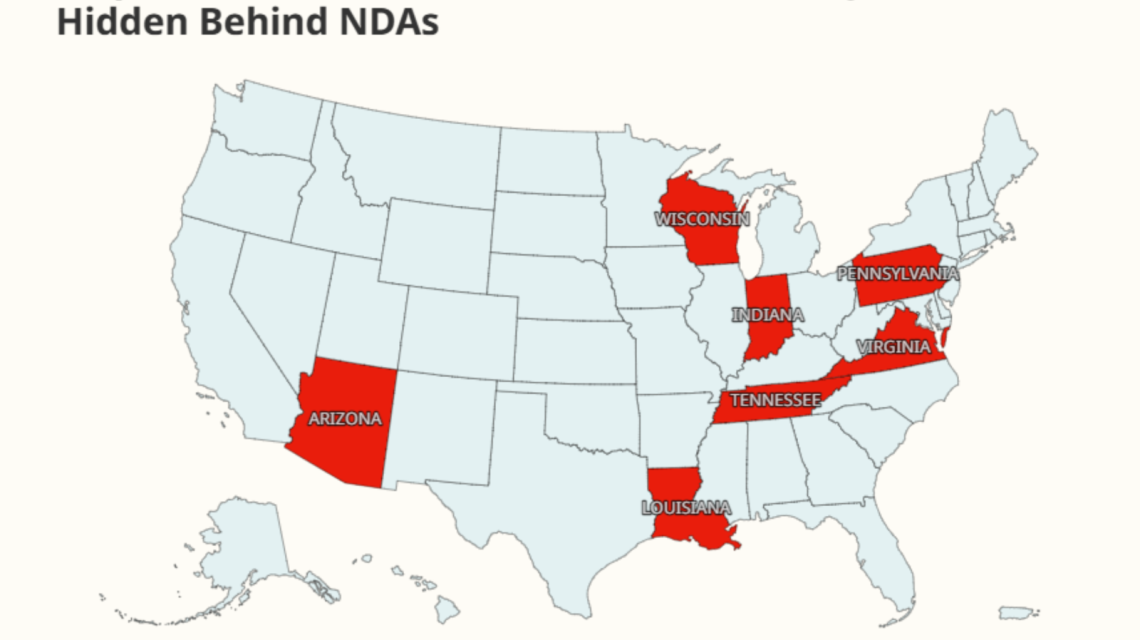
Artificial intelligence is driving an expansion of data centers in the United States. This growth has led to scrutiny over local governments signing nondisclosure agreements (NDAs) that limit public information about these projects.
Critics argue that these NDAs reduce transparency concerning developments that could significantly impact energy consumption, water use, and community well-being. Supporters believe that such agreements are crucial for safeguarding sensitive business negotiations.
Pennsylvania and the National Discourse
Pennsylvania is now central to the national debate. Recent investigations highlighted that four out of nine data center projects featured in Governor Josh Shapiro’s former “Fast Track” permitting program were linked to municipalities with signed NDAs. These agreements involved firms including Amazon, Quality Technology Services, and Oracle America. Shapiro has since altered his stance, issuing an executive order that removed data centers from the fast-track program and prohibited future NDA use by agencies under his jurisdiction.
Comparative Studies in Other States
Virginia, the largest data center hub, also faces scrutiny. Researchers noted that 25 of 31 localities with active or proposed centers have signed NDAs. This suggests confidentiality agreements are becoming routine in major data center dealings.
Arizona has drawn attention from Senator Richard Blumenthal over Amazon’s attempts to limit public disclosures in Pima County. This $3.6 billion project is part of a broader Senate inquiry into data center secrecy.
In Louisiana, NPR highlighted concerns in Rapides Parish, where residents felt crucial information was withheld during the NDA-governed negotiations over a large Applied Digital center.
Questions have arisen in Tennessee regarding confidentiality around xAI’s “Colossus” facility near Memphis. Public Citizen reported that residents learned little about the project until operations began. Wisconsin, too, is part of this ongoing debate, with investigations revealing at least four communities engaged in NDA-backed negotiations.
Indiana witnessed similar transparency issues. In Posey County, officials admitted to signing an NDA with a potential data center developer, and in Indianapolis, council member Michael-Paul Hart spoke of confidentiality in a proposed large-scale facility.
Implications and Public Sentiment
Opponents of NDAs argue they reflect a tension between swift AI infrastructure development and public accountability. Critics point out that data centers can have substantial effects on electricity use, water supply, noise levels, and land use changes. They insist that residents should receive detailed project insights before permit approval and public incentives are granted.
Senator Blumenthal recently initiated a national investigation into NDAs and other restrictions. He contends that communities deserve transparency concerning projects with potential impacts on infrastructure and utility costs.
Conversely, proponents assert that NDAs are standard in commercial talks, instrumental in protecting proprietary information, land acquisition tactics, and competitive plans.
Confidentiality Versus Transparency
This NDAs trend is emblematic of the challenges communities face amid the rapid construction of data centers prompted by AI demands. While technology entities view these centers as vital for AI’s future, critics perceive their confidentiality as exclusionary to residents affected by these long-term projects.
As construction accelerates, the balance between transparency and confidentiality is set to be as pivotal as the data centers themselves.
 Evaluating Trump’s Promises to Lower Costs
  Navigating Artificial Intelligence in Schools
  President Trump Proposes Renaming New Mexico
  Political Insights on Future Elections and Current Campaigns
  Political Analysis with Tamara Keith and Amy Walter
  Progressive Politicians and Their Religious Appeals in U.S. Senate Races