The Practice of Public Flogging by the Taliban
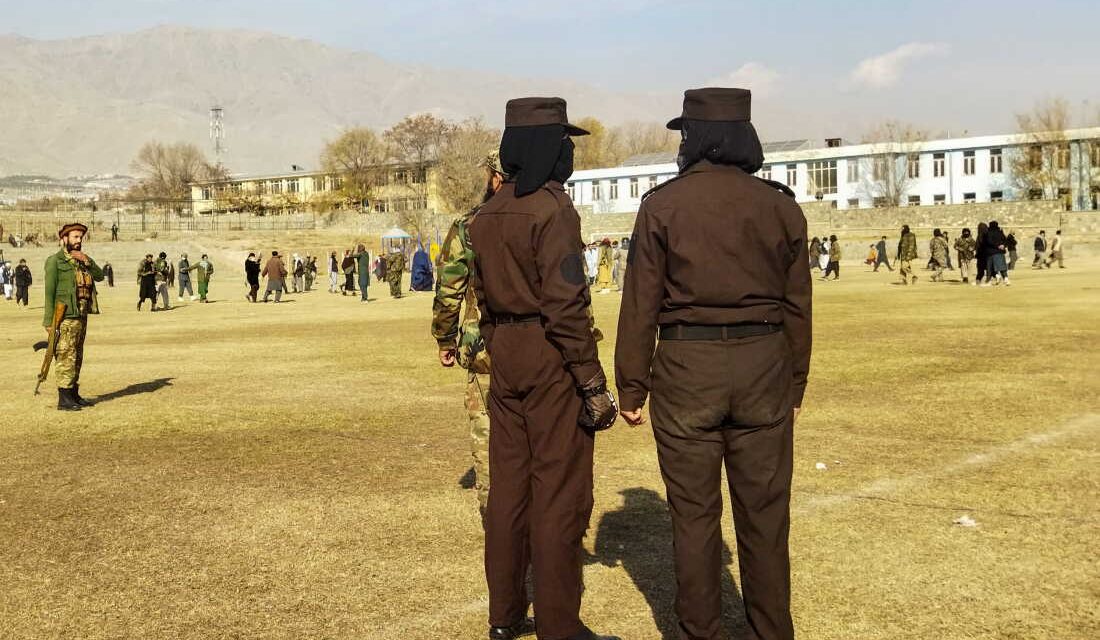
Taliban security personnel are maintaining vigilance in Charikar city of Parwan province, ahead of a public flogging event. The flogging of 27 individuals—both men and women—occurred on December 8, 2022, within a football stadium, drawing a large crowd. This action follows previous reports on the Taliban’s stance regarding corporal punishments, including stoning and flogging. Such punishments are deemed suitable for violating specific precepts like educating girls despite the prohibition on female secondary education, and engaging in adulterous relationships.
Implementation of Corporal Punishments
In March 2024, NPR highlighted the Taliban’s usually elusive supreme leader Hibatullah Akhundzada’s statement announcing the return of corporal punishment. He stated in an audio message, ‘We will flog the women … we will stone them to death in public [for crimes].’ Over time, the Taliban has increased the prevalence of public and violent punishment.
A report from the Afghanistan Human Rights and Democracy Organization (AHRDO) states 2,745 individuals endured corporal punishment between February and April. These figures stemmed from the Taliban’s public records.
The United Nations shared similar findings in a March 2026 report. It noted 1,110 flogging cases last year, indicating more instances of public flogging in 2025 than in previous years combined. These counts derive from cases shared by the Taliban’s Supreme Court online and across various press releases.
Documentation and Impact
Several advocates suggest undocumented cases may exist, as Taliban confrontations often result in on-the-spot floggings, particularly for women breaching Taliban’s dress code. MA, an Afghan activist, shared a video with NPR showing a woman’s public flogging in Kandahar province. Given potential repercussions from the Taliban, MA chose to be identified by initials only.
The Taliban restrict public filming during flogging events, but opponents discreetly record these happenings, subsequently sharing footage on social media. NPR could not independently verify the videos’ content. The Taliban did not respond when contacted for a comment.
Flogging as Justice and Control
Executive director of Rawadari, an Afghan human rights group, Shaharzad Akbar explains that public flogging is central to the Taliban’s perception of justice. It serves as a mechanism for controlling and repressing citizens.
Amnesty International’s South Asia regional campaigner, Samira Hamidi, suggests public floggings and other corporal punishments function not only as penalties but also as social intimidation tools.
Violations of International Commitments
Legal experts assert these punishments breach Afghanistan’s international commitments. Afghanistan remains a member of several human rights treaties despite the Taliban’s takeover, obligating the nation to protect these rights.
Haydee Dijkstal, a UK-based lawyer specializing in international human rights law, clarifies that these commitments outlaw cruel and inhuman treatment. Accordingly, punishments that infringe human rights cannot be legally justified.
Disproportionate Impact on Marginalized Groups
The AHRDO report emphasizes that women and marginalized groups, such as the LGBT community, face disproportional effects from floggings. Taliban officials often base such charges on discriminatory grounds.
These charges—like women appearing without a mahram or engaging in same-sex relationships—contradict international fundamental human rights protections.
Hamidi notes women face heightened risks due to various discriminatory restrictions on their movement, attire, behavior, and public participation. Since their inception, the Taliban has enacted several decrees limiting women’s access to education, employment, political, and public activities.
The Changing Legal Landscape
The commitment to flogging coincides with the Taliban’s alterations to Afghanistan’s legal environment. Corporal punishment’s rise correlates with a diluted judiciary, imposing fear and control over the populace.
Dijkstal emphasizes the absence of a fair trial in documented cases, as no defendant received legal representation or could prepare a defense.
Akbar points to significant restrictions barring women from participating in the justice system. Since 2021, nearly 270 female judges and around 1,500 women registered with Afghanistan’s Bar Association have been dismissed.
Women now find themselves unable to seek legal recourse or negotiate punishment mitigation.
Cases Illustrating the Flogging Practice
In one documented case, identified as PF003, a woman was detained for wearing a coat instead of a burqa. Taliban questioned her appearance in the shop, leading to her arrest, a beating, and a sentence of 15 lashes.
According to Akbar, the legal system neither serves nor safeguards the populace. Rather, it subjects women and children to increased violence and trauma.
Several case studies reveal women penalized for approaching Taliban courts regarding domestic abuse or violence. In an instance labeled PF006, a victim with intellectual disabilities endured rape by a Taliban member, yet authorities arrested her and issued corporal punishment.
Consequences of Public Flogging
Public flogging instigates social ostracization and harms victims’ reputations, hindering reintegration into family or community, according to Akbar.
Akbar raises concerns regarding spectators of these events, pondering the societal impact on those approving such violence.
Hamidi shares similar worries, stating that normalizing violence undermines justice systems and breeds fear.
Long-term Effects on Society
Akbar foresees enduring trauma and resentment stemming from these punitive practices, emphasizing the struggle communities face in breaking free from this cycle.
Ruchi Kumar, a journalist, reports on conflict, politics, and culture across India and Afghanistan.
 Canada’s Retaliatory Tariffs Impact U.S. Trade
  Finland Strengthens Border Security with Russia
  UK Trade Ban on Israeli Settlements
  Britain to Ban Import of Goods from Israeli Settlements
  Midair Collision Between Russian Fighter Jets
  Australia, Solomon Islands Treaty Poses Challenge to China’s Influence