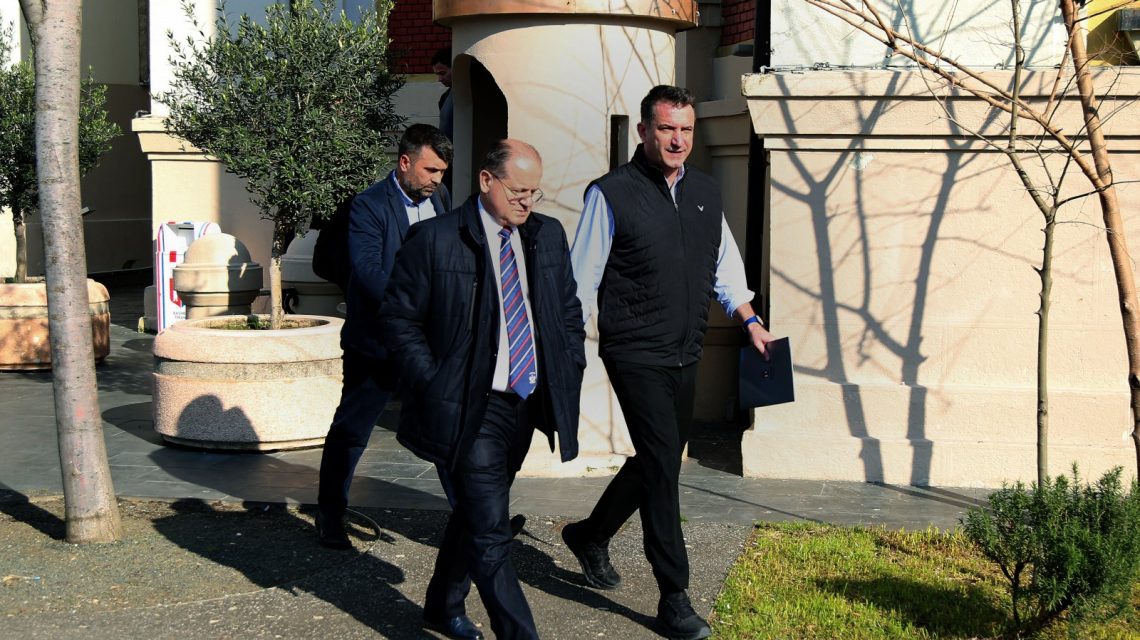
In February 2025, Albanian authorities arrested Erion Veliaj, the long-serving mayor of Tirana. Despite having yet to be convicted, he remains imprisoned as legal debates continue over the validity of his detention. This scenario raises concerns as Tirana, the capital of a NATO ally, operates without the elected leader its residents repeatedly endorsed.
Americans often refer to such situations as lawfare, where legal systems are used to displace political adversaries. While this has been observed in various countries, Albania offers a notable instance. What’s striking about Albania’s situation is the source of the problem: the Special Structure against Corruption and Organized Crime, or SPAK. Established in 2016 with support from the United States and Europe, SPAK aimed to reform justice in Albania, where corruption and weak institutions posed significant challenges. The goal was straightforward: strengthen the judicial system to enhance governance, public trust, investment, and Albania’s path to EU membership. However, SPAK now raises critical questions about the rule of law it sought to protect.
Over the years, results have been hard to defend. Representative Keith Self from Texas highlighted that Albania’s judicial backlog has surged from around 16,000 cases to roughly 200,000. Citizens face wait times of up to 15 years for final decisions, and over half of the prison population is held awaiting trial, marking one of Europe’s highest rates. The European Convention on Human Rights considers pretrial detention exceptional, requiring specific justification such as flight risk, witness interference, or potential new offenses. In Albania, it has become routine practice.
The Venice Commission of the Council of Europe assessed this pretrial detention practice across member states, concluding that when mayors are jailed before trial, resulting in automatic suspension or replacement, it undermines the presumption of innocence and diminishes political diversity. Such actions deprive citizens of their chosen representation. Veliaj’s detention order, absent a conviction, prevents him from fulfilling his role as Tirana’s mayor.
Prosecutors should pursue credible evidence of misconduct but must also adhere to the law. An anti-corruption initiative retains legitimacy only with due process, and the extended detention without a verdict fails to meet this standard. Albania’s Constitutional Court has twice ruled in Veliaj’s favor, first protecting his electoral mandate and later advocating a review of his detention’s justification.
From personal experience, prolonged legal battles reflect a broader pattern. Having worked closely with President Donald Trump, I observed similar tactics used in attempts to resolve political disputes outside the electoral process. Other countries experience similar challenges. In Israel, debates surround Prime Minister Netanyahu’s prosecution. Argentina deals with investigations against President Javier Milei. France faced questions about Marine Le Pen’s eligibility for presidential candidacy, and Brazil grapples with former President Jair Bolsonaro’s imprisonment. While each case is unique, the underlying pattern—using legal charges as political tools against elected leaders—is concerning.
The West holds a stake in Albania’s situation, having contributed to SPAK’s formation and its apparent endorsement of its actions. Holding an elected official for extended periods without a conviction fuels arguments from autocrats that Western commitment to the rule of law is selective.
The implications are economic as much as political. As companies evaluate Albania’s business environment, headlines about extended detention without verdict highlight concerns. According to the State Department’s 2025 investment climate report, despite economic potential, Albania faces challenges with judicial corruption, weak contract enforcement, money laundering, and fluctuating regulations. Potential investors are deterred, opting for more predictable environments, resulting in lost opportunities for Albanian citizens in employment and wages.
Albania can both combat corruption and uphold the rule of law. Successful countries integrate both, as each is vital to the other’s success. A decade ago, Albania aimed to restrain unchecked powers held by the corrupt. Today, the detention of Tirana’s mayor points to a power shift into the prosecutor’s office. Reform should conclude with accountability on all fronts, including those fighting corruption.
Jason D. Greenblatt previously served as the White House Middle East envoy during Trump’s administration. He authored “In the Path of Abraham: How Donald Trump Made Peace in the Middle East—and How to Stop Joe Biden From Unmaking It,” founded Abraham Venture LLC, and publishes the Substack “How to Watch.” Follow him on X: @GreenblattJD.
The opinions expressed in the article belong solely to the author.
 Cacique Cobra Coral Agreement and Weather Concerns in Brazil
  15-Year-Old Rescued After Boat Capsizes Near Alaska
  US Military Strikes Near Iran’s Kharg Island
  Drone Incident Brings New Concerns for Zelenskyy
  Spanish Opposition Leader Criticizes Prime Minister Over Migrant Situation
  Uganda Withdraws from Invictus Games to Support UK Monarchy