Experts suggest that Africa might soon become a crucial region for data centers and Artificial Intelligence (AI). The Trump administration has been supporting American companies to establish a stronghold in AI development, labeling it as ‘the gold standard.’ With environmental restrictions affecting U.S. data center growth, Africa presents new business opportunities.
Why Africa?
Abhishek Goyal from Arizton Advisory & Intelligence notes that Africa is becoming an attractive location for AI infrastructure. Mature markets face challenges like power and environmental constraints. Africa’s underdeveloped infrastructure is seen as an opportunity.
“Africa’s potential for AI development is significant as mature markets struggle with power scarcity, grid congestion, and permitting issues,” Goyal said.
U.S. Investment in Africa
The U.S. is actively pursuing business in Africa, competing with China. In the Ivory Coast, a $170 million data center project is underway, facilitated by the U.S. Embassy. American companies have secured a $6.2 billion deal in Lesotho for a data center and hydropower plant. In Gabon, the U.S. Embassy helped American companies gain $600 million in business for 2025. These efforts signify U.S. interest in nurturing African markets.
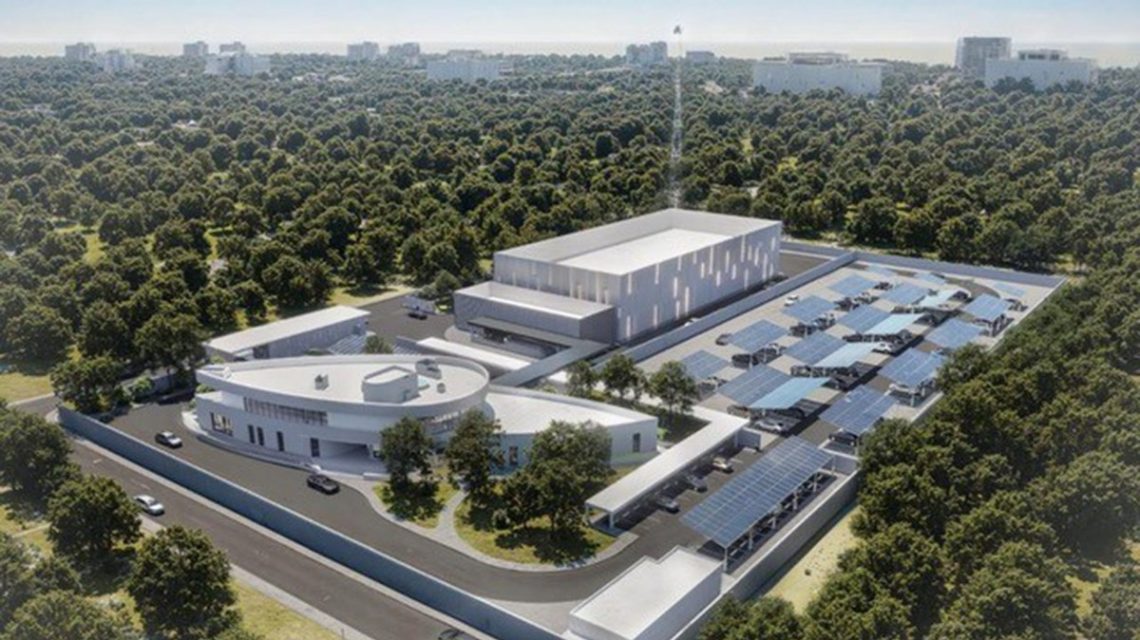
An image rendering of a U.S. company’s planned data center in Ivory Coast supports these efforts, demonstrating the practical steps being taken.
Assistant Secretary of State Frank Garcia noted, “Under Trump, we’ve helped U.S. companies find new markets in Africa.” Despite the continent’s data center growth starting from a smaller base, it’s rapidly progressing.
Challenges and Opportunities
Arthur Goldstuck, CEO of World Wide Worx, explained that Africa won’t become the center of global computing. Still, its market offers growth potential to serve local needs. American companies gain access to underserved AI markets and can develop computing and energy infrastructure in collaboration with African partners.
“The local demand for cloud and AI services is growing as governments, banks, and businesses seek localized solutions,” Goldstuck stated.
States like South Africa, Kenya, and Egypt are key targets for AI projects. The U.S. offers solutions combining public and private investments to make telecommunications networks secure.
Regulatory Landscape
Despite growth, Africa lacks regulation, akin to a ‘wild west’ environment. South Africa, which hosts 70% of Africa’s data center capacity, lacks public disclosure of resource use. No public register exists for data center facilities, leading to uninformed communities and operators.
Pitso Tsibolane from the University of Cape Town highlighted these issues, stressing the need for transparency.
“Communities deserve a clear view of what is being traded in their name,” Tsibolane remarked.
Improved transparency and predictable regulatory measures could enhance Africa’s attractiveness to long-term investors.
Renewable Energy Potential
Arizton’s Goyal projects a positive future for Africa, citing vast renewable energy resources and a growing digital economy. Countries are positioned to take advantage of solar, wind, hydro, and geothermal energy, offering a foundation for sustainable expansion.
The developments indicate a burgeoning horizon for AI and data centers across Africa, attracting global attention from investors and technology firms alike.
 King Charles III to Convene Meeting on A.I. in Scotland
  Democrats Criticize Administration’s AI Regulation Stance
  Anthropic CEO on the Risks and Regulation of AI
  U.S. Military Arsenal: Challenges and Advancements
  Challenges Facing Nike: Market Woes and Competition
  Tuya Smart’s Doova Robot: Enhancing Senior Care at Home