Laura Ingraham explores how artificial intelligence (AI) might transform healthcare, considering if AI will eventually replace doctors. A CEO of a major public hospital system has a plan to replace radiologists with AI for breast cancer screening to cut costs. Dr. Marc Siegel from Fox News advocates that AI should enhance rather than replace human doctors. The personal connection and doctor oversight are irreplaceable in diagnoses.
Microsoft’s AI Approach
Microsoft claims its AI system could solve complex diagnostic issues in medicine. A study from October 22 in Science shows Microsoft’s AI system correctly diagnosed 83% of challenging medical cases, compared with 36% accuracy for generalist doctors with reference materials. But it’s crucial to note these tests were simulations where doctors weren’t specialists.
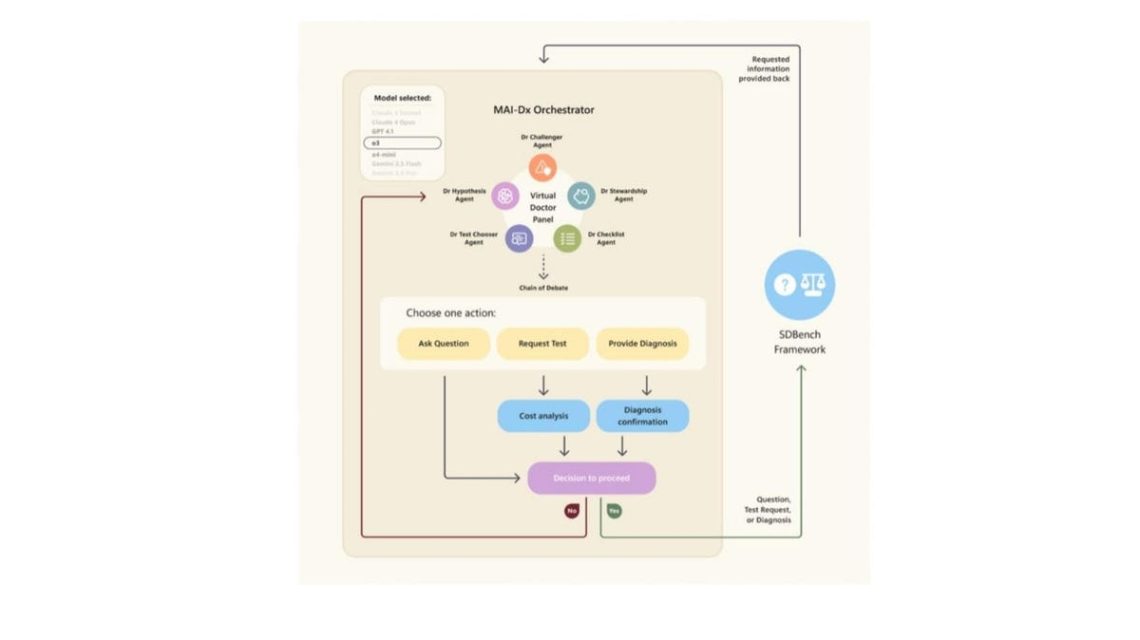
Microsoft’s AI system, MAI-DxO, uses multiple AI agents working together similar to a team of doctors. It begins with limited data, asking questions and suggesting tests to refine diagnoses. The system re-evaluates as new information arises.
Study Limitations and Real-World Applicability
The comparison often involved generalist physicians without specialist input or collaborative evidence review. Specialists usually engage with complex medical problems. The study involved 304 cases, but doctors assessed only 56 cases outside the development process. This affects the interpretation of comparison accuracy figures.
The study relied on existing medical cases, not real-time treatments. Clinical care involves unpredictable scenarios such as incomplete records and nuanced symptom descriptions. Yet, AI reaching the correct diagnosis is just one part of comprehensive patient care.
Improving Healthcare Economics
Microsoft tested cost-effectiveness by estimating test costs, aiming to maintain diagnostic accuracy while minimizing unnecessary procedures. AI accuracy was 81% with roughly $2,241 per case in diagnostic costs. The generalist doctors generated about $4,725 per case. These are simulated estimates, not real hospital data.
Real-world accuracy and cost savings depend on further clinical trials to see if Microsoft’s AI can provide similar benefits outside controlled conditions.
Future Prospects and Ethical Considerations
Microsoft aims to test its AI system in real hospitals like Beth Israel Deaconess Medical Center in Boston. Planned research involves patients continuing standard care while interacting with the AI. Doctors will oversee treatments while comparing AI’s guidance.
The study should clarify AI’s practical performance in unpredictable hospital situations. Competing technology companies, like Google with its AMIE system, also explore integrating AI with medical consultations.
For now, Microsoft’s AI remains in research. It can’t replace medical appointments but suggests a direction for future healthcare advancements.
AI might someday act as a powerful assistant to doctors for solving complex cases or efficiently evaluating tests. Still, hospitals should use AI cautiously, ensuring data protection and maintaining patient involvement in care decisions. Patients should use AI as a tool for discussion rather than confirmed diagnoses.
 AI Boom Drives Demand for Electricians, Creates Lucrative Opportunities in Virginia
 Breaking New Ground in Treating Sanfilippo Syndrome
 Cyberattacks on South Korean Banks Expose Thousands
 Impact of GLP-1 Drugs on Marriages
 FBI Accuses North Korea in $6 Billion Binance Crypto Theft
 Health and Environmental Impact Assessment of Paper Straws