The Defense Department’s inspector general has revealed a significant ammunition shortfall in the United States due to the high costs associated with the military engagement in Iran. This disclosure came in an unprecedented report to Congress. The inspector noted that Operation Epic Fury (OEF) incurred expenses of approximately $33.4 billion between February 28 and June 30, with $22.3 billion needed for munitions alone.
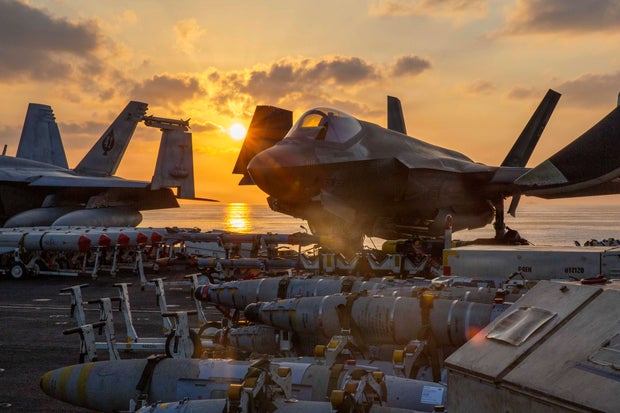
The inspector’s report highlighted, “The munitions expenditure on OEF has resulted in strategic inventory shortfalls and uncovered industrial base limitations for munitions resupply.” In support of Operation Epic Fury, an F-35C Lightning II was prepared for operations on the USS Abraham Lincoln’s flight deck on March 2, 2026.
The report also documented the loss of American military assets, including four F-15 fighter jets destroyed, one F-35 damaged, seven KC-135 tanker aircraft damaged, and up to 30 MQ-9 Reaper drones destroyed.
President Trump has dismissed concerns about depleted weapon stores during the six-month conflict in the Middle East. He recently stated that the United States possesses “virtually unlimited” ammunition. On Monday, Trump reiterated on his Truth Social platform that the U.S. is producing “more Exquisite and Elite Weapons than at any time in our History.”
On the conflict’s first day, U.S. forces attacked over 1,000 targets, according to U.S. Central Command (CENTCOM). Such large-scale attacks have not been repeated in recent months.
The inspector’s report also noted that “Iranian strikes damaged and destroyed numerous buildings and structures at U.S. bases in Kuwait, Bahrain, Qatar, UAE, Saudi Arabia, Iraq, Oman, and Jordan during the conflict.” However, the costs related to these damages remain unclear, and it is uncertain who will bear the rebuilding expenses.
Recently, CBS Sunday Morning gained access to Lockheed Martin’s production facility in Arkansas. There, they observed the production of the latest Patriot air defense missiles, which are designed to intercept incoming ballistic threats. Each missile costs around $4 million, and Lockheed Martin currently produces 750 annually.
When asked about the sufficiency of U.S. weapons through the war, Mark Cancian, from the Center for Strategic and International Studies, stated, “For a war against Iran, the answer is yes. The challenge arises in case of a conflict with China, where munitions might only suffice for up to a month.”
Although the Pentagon has refuted claims of munitions shortages, Defense Secretary Pete Hegseth has urged the defense industry to boost weapon production. Lockheed Martin’s missile division head, Tim Cahill, described the situation as “controlled chaos,” emphasizing the need for rapid problem-solving and optimization.
 Washington, D.C. Intensifies Search for Missing Woman
 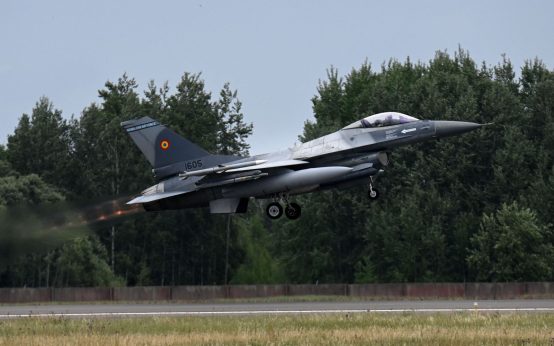 NATO Fighter Jets Neutralize Drone in Lithuanian Airspace Amid Rising Tensions
  Potential Democratic Plan to Tackle Rising Healthcare Costs
  Connecting with the Latin Community in Los Angeles
 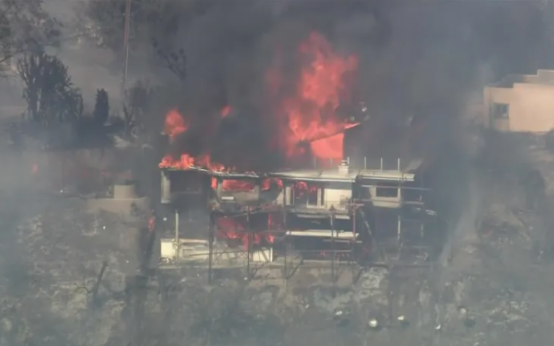 Evacuations as Brush Fire Threatens La Habra Heights
  Tragic Ferry Incident in Vanuatu: Search for Missing Passengers Continues