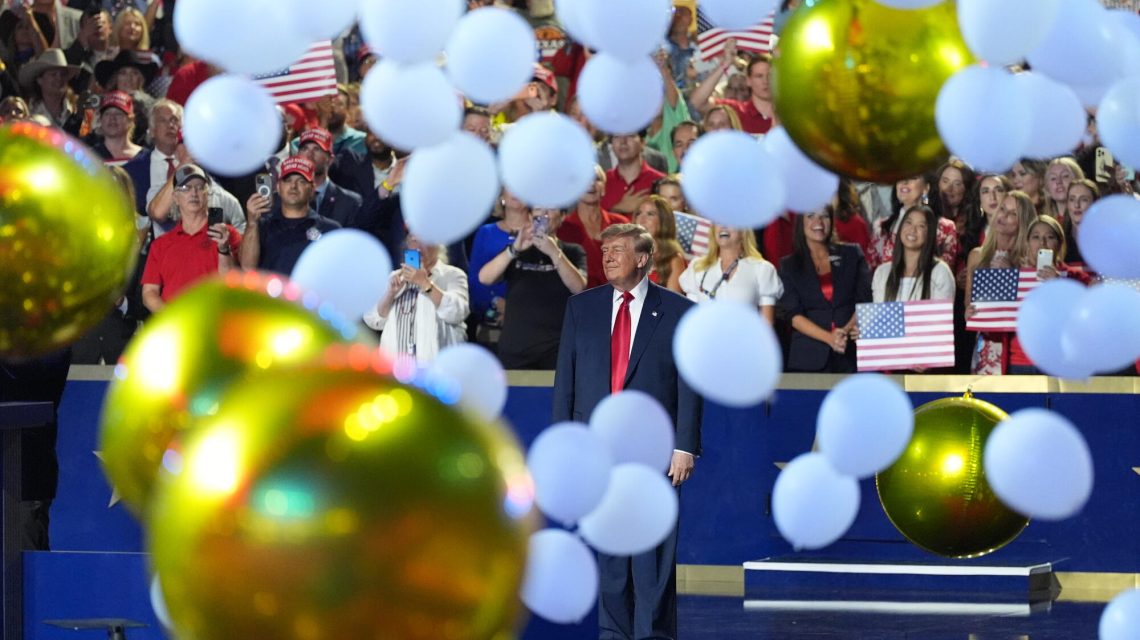
WASHINGTON — As President Trump urges supporters to vote in the upcoming November elections as if he were personally on the ballot, California Republicans in competitive congressional races are conveying a different message. The four Republicans vying for the state’s most contested U.S. House races and a fifth challenging a fellow Republican appear to be maintaining some distance from Trump as they campaign for the November 3 election.
These candidates skipped the president’s midterm convention in Dallas. Two of them have removed mentions of Trump from their campaign websites. Instead, their focus is predominantly on local and state matters, contrasting with Trump’s approach of framing the election as a loyalty test, exemplified during the Dallas convention.
“You’ve got to do me the biggest favor you’ve ever done. You’ve got to do this for me: Pretend I am on the ticket,” Trump told the GOP convention attendees.
The GOP’s current dynamics reflect several competing factors: the need to attract new voters in districts turned more moderate by California’s redistricting, hopes that Trump can energize the base while candidates focus on swing voters, and fears that Trump’s low approval ratings might jeopardize their seats.
Rob Stutzman, a long-time GOP consultant, noted that candidates hope Trump will mobilize voters while they concentrate on winning over independents who currently disapprove of the president.
The redistricting under Proposition 50, which has moved congressional maps to favor Democrats, requires Republican candidates to persuade more unaffiliated voters and moderate Democrats. Pete Peterson, dean of the Pepperdine University School of Public Policy, suggested these changes are influencing their stance toward the White House.
Facing Headwinds
The party in power typically faces challenges during midterm elections, often distancing themselves from the current president. As Republicans work to retain control of the House and Senate, they face unique obstacles from Trump’s declining favorability rating and public dissatisfaction with economic conditions, the conflict in Iran, and the escalating trade disagreements with Canada.
Trump has dismissed concerns about the economy and the war despite polling suggesting they are significant voter issues. Additionally, Trump’s support for advancing artificial intelligence, despite backlash, has exacerbated challenges for GOP candidates in tight races. He recently promised a legally questionable $5,000 payment to each adult citizen if Republicans win the House and Senate.
Trump has urged Republican candidates to campaign on his record and has committed to supporting candidates in 35 battleground races. He’s yet to focus efforts on California.
“All you have to do is talk about it, and you’re going to win and you’re going to win big,” Trump said of promoting his record.
Nonetheless, candidates across the nation remain unconvinced. A Washington Post analysis indicates that Republican politicians have reduced mentions of Trump on social media, doing so half as frequently compared to January. Many skipped his convention, and some have diverged from him on issues like data centers and his payment proposal.
In California, GOP difficulties were illustrated by a recent survey: More independents expressed a preference for Democratic over Republican candidates in their House districts, according to the Public Policy Institute of California. A majority of likely voters surveyed in early September would choose the Democratic candidate if elections were imminent.
Leaning on Local Strategies
California Republicans are emphasizing regional campaign optics over partisan politics. Candidates such as Rep. Young Kim and others in tight contests have distanced themselves from Trump, removing campaign website references to him. Kim and Rep. James Gallagher have altered their campaign strategies, now focusing on moderate voters.
Rep. Young Kim in her contest against Republican Ken Calvert has modified her campaign strategy and removed America First branding and Trump references. In the Central Valley, David Valadao, Kevin Lincoln, and Jim Desmond are prioritizing regional concerns in their campaigns, with none attending Trump’s convention.
Valadao, the only remaining House Republican seeking reelection after voting for Trump’s second impeachment, rarely mentions Trump on social media. Desmond omits Trump’s backing on his endorsements page, while Lincoln includes it. Rep. Kevin Kiley maintains an appeal to middle-ground voters following redistricting and clashes with Trump over tariffs.
Candidates claim to offer common-sense solutions, persuading centrist Democratic voters. A GOP operative suggested that distancing from Trump might not be advantageous in competitive districts, advocating local focus and countering Gov. Gavin Newsom’s policies. Republican strategies highlight California’s affordability issues and argue that Democrats remain fixated on Trump without providing meaningful policy solutions.
Republican strategists believe that focusing on local issues is the most effective strategy. Mike Madrid, a seasoned California Republican consultant, argued that Trump’s diminishing popularity signals challenges for candidates modifying campaign strategies. He noted the significant shift when distancing from the president.
Vice President JD Vance appealed to voters for more time, requesting Americans to extend support for the party to deliver continued progress.
 Kentucky Governor Andy Beshear Discusses Tariffs, Faith, and Political Ambitions
  Sunday Highlights: Lane Kiffin, Nancy Mace, and College Football Drama
  Protesters Rally Against Plans for Kennedy Center
  Nithya Raman: A Passion for L.A.
  Los Angeles Mayor Karen Bass Discusses Her Tenure, Challenges, and Achievements
 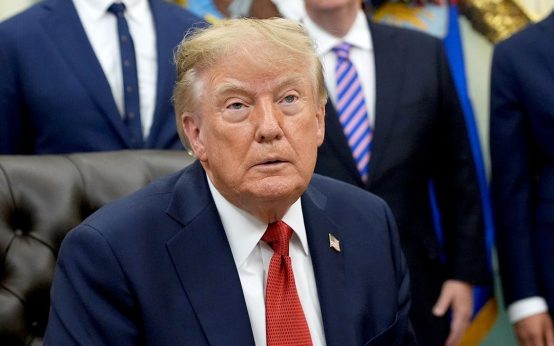 President Trump Bans CNN, MS Now, and Politico from White House