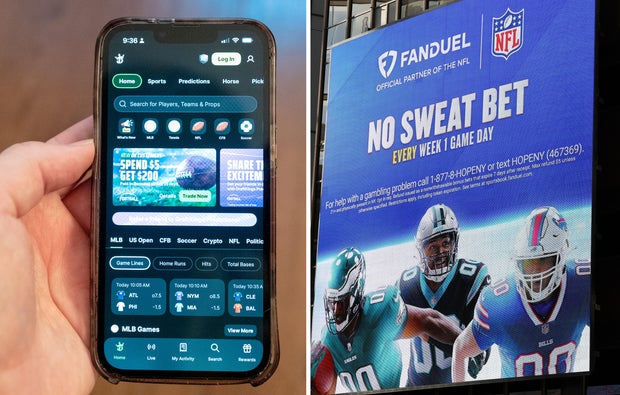
Recent legal actions highlight the growing concerns over the potential addictive nature of sports betting apps. Jennifer Hoekstra, a Florida attorney, has initiated lawsuits against major sports gambling platforms like FanDuel and DraftKings, claiming these apps are designed to foster addiction.
Concerns and Legal Proceedings
Hoekstra represents individuals deeply affected by gambling addiction, many of whom have suffered significant personal losses. Her lawsuits are filed at a time when online sports betting is increasingly popular, with $167 billion wagered last year. An American Gaming Association study revealed spikes in bankruptcies and credit card delinquencies in states that legalized online sports gambling.
According to the National Council on Problem Gambling, around 8% of American adults reported indicators of problematic gambling behavior recently. Gaming companies deny these claims, with FanDuel investing significant resources into responsible gaming and actively removing individuals from their platform due to risky gambling habits.
Despite claims to advance responsible gaming, investigators found gaming companies employ tactics that keep bettors engaged even during financial losses. Former employees disclosed strategies to slow down, but not cut off, problematic gambling.
VIP Perks and Data Collection
Sports betting apps use diverse strategies to retain bettors. Offering luxury experiences and personalized outreach, they keep high-rollers engaged. For example, Esteban Ruiz-Haynes became a VIP member at FanDuel, receiving exclusive access and signed sports memorabilia. He wagers between $80,000 to $120,000 annually, potentially risking his entire paycheck on single games.
Similar experiences are shared by Louis Ruggiero, who lost significant amounts, later offered VIP incentives. He criticizes this as exploitative, designed to maintain addictive behavior under the guise of hospitality.
Data operations play a crucial role. Companies collect detailed betting behavior, targeting bettors with push notifications to rekindle gambling interest during vulnerable moments.
Legal Parallel with Social Media
Hoekstra’s lawsuits mirror a landmark case against social media companies, where courts ruled them responsible for designing addictive platforms. Similar arguments are applied in the gambling domain, suggesting these apps are consciously addictive.
DraftKings asserts its commitment to responsible engagement, training employees and implementing tools to manage betting behavior. However, recovering addicts, like Ruggiero, emphasize the addictive design, recalling obsessive betting habits despite personal milestones.
Industry Stance on Responsible Gambling
Joe Maloney from the Sports Betting Alliance argues most users engage responsibly, categorizing gambling as entertainment rather than wealth generation. He points out available tools to help bettors control their habits.
If you need help, contact the National Problem Gambling Helpline at 1-800-MY-RESET or Gamblers Anonymous at 1-855-222-5542.
Statements from FanDuel and DraftKings reflect their stance on transparency and responsibility in the industry, highlighting investments in responsible gaming initiatives and tools. They stress the importance of maintaining customer trust while operating under stringent regulations.
 Concerns About Rapid Advancements in Artificial Intelligence
  Leading AI Companies Face Antitrust Lawsuit for Alleged Coordination
  Documentary Critiques Elon Musk’s Ambitions
  ChatGPT’s Trusted Contact Feature Aims to Support Users in Distress
  Anthropic CEO Dario Amodei Warns of AI Risks in U.S.-China Relations
  Scammers’ Strategic Tactics: When and Where You’ll Be Targeted