Trump’s Ambassador Withholds Timeline on Iran Conflict
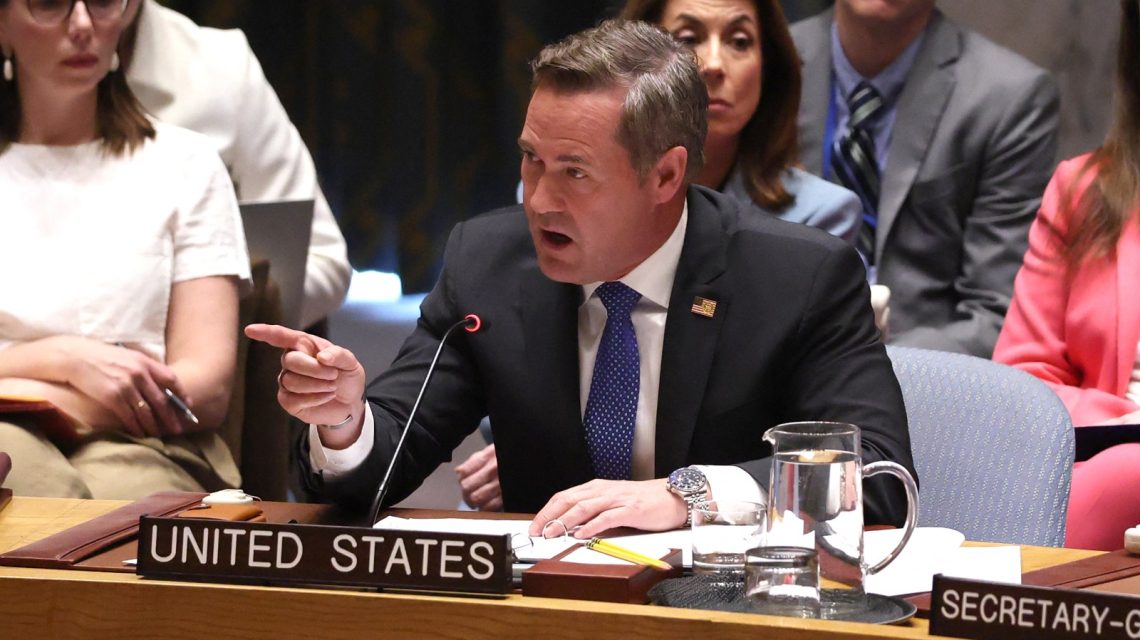
President Donald Trump’s ambassador to the United Nations, Mike Waltz, recently avoided providing a definitive timeline for ending the Iran war, which is nearing its seventh month despite Trump’s past comments implying it would conclude within weeks. Waltz’s remarks were made in response to rising skepticism among voters, as evidenced by a new NBC News poll revealing that 62 percent of voters feel the war has not been worthwhile, while 57 percent say they are less inclined to support candidates who endorse it. These opinions are coinciding with increasing Republican concerns about the war’s political consequences, particularly as midterm elections approach.
Appearing on CNN’s State of the Union, Waltz responded to discussions surrounding the potential for the Iran war to extend over several years. Reluctant to establish a timeline, he stated, “I wouldn’t necessarily put a timeline on it.” This stance contrasts with Trump’s earlier proclamation that the conflict, initiated on February 28, would be resolved swiftly. Waltz defended the U.S. approach, claiming economic pressure and a naval blockade against Iran are proving effective, arguing that time remains on the administration’s side.
The situation in the region is deteriorating, as Iran has warned of retaliation in response to any new U.S. attacks. Iran-backed Houthi forces have intensified their assaults in Saudi Arabia and near the strategic Bab al-Mandab shipping corridor. Despite these developments, Trump assured supporters in North Carolina, “That war is going to end very soon. Watch, you just watch.” However, skepticism lingers over these assertions.
Political Challenges and NBC Poll Findings
The NBC News poll indicates substantial voter skepticism toward the ongoing war, which poses a political liability for Republicans. Key findings include:
- 62 percent of participants believe the Iran war has not been worth it.
- A majority, 57 percent, express reluctance to support candidates backing the war.
- Only 24 percent are more likely to support such candidates.
- Democrats maintain a 4-point advantage in voter trust concerning handling the Iran conflict.
These sentiments reflect broader political challenges facing Republicans ahead of the November midterms. Trump’s approval rating is currently at 41 percent, with 56 percent disapproving of his performance. Additionally, 55 percent of respondents feel Trump’s policies have negatively impacted the economy. Critically, 43 percent of voters indicate their congressional vote is intended to signal opposition to Trump, and only 27 percent claim their vote is meant to show support—one of the highest figures recorded in pre-midterm polling over the past thirty years.
Republican Dissent and Internal Divisions
Visible dissent among Republicans is exacerbating internal divisions within the administration. Seven House Republicans joined Democrats in voting for a resolution intended to limit further military action against Iran without congressional authorization. Though symbolic and unlikely to immediately affect military operations, the resolution represents a significant Republican defection and underscores growing concern about a conflict that has expanded far beyond initial expectations.
Prominent among the Republicans supporting the measure are Iowa Representatives Zach Nunn and Mariannette Miller-Meeks, alongside South Carolina Representative Nancy Mace. Both Nunn and Miller-Meeks reside in tightly contested districts that Democrats aim to capture in November. Expressing opposition to another prolonged military engagement, Nunn stated, “Having deployed multiple times and flown over 700 combat hours in the Middle East, I will not support another open-ended war,” via X. Miller-Meeks called on the administration to provide a resolution plan to Congress and the public.
Economic Concerns Linked to War
The conflict’s political risks extend beyond foreign policy, with economic affordability emerging as a significant concern. The NBC poll confirms majority belief that Trump’s policies have damaged the economy, and prior polls have shown significant apprehension about the war’s impact on energy prices. Particularly affected are rural states, where massive diesel prices during harvest season have strained farmers.
The conflict’s repercussions on global energy markets remain a point of contention, as illustrated by ongoing disruptions in the Strait of Hormuz and the Bab al-Mandab shipping corridor, reported by Reuters. These disruptions are contributing to global energy market instability, amplifying concerns about affordability and its impacts on voters.
Trump Faces Increasing Midterm Pressure
With midterm elections approaching, issues like inflation, energy costs, and the Iran war have overshadowed other campaign topics. The conflict has exacerbated divisions within Trump’s coalition, highlighting disagreements over the permissible duration of U.S. involvement. Candidates in competitive races have attempted to distance themselves from the administration’s handling of the conflict, offering Democrats an opportunity to connect the war to broader economic challenges and governmental priorities.
As Waltz withholds a timeline for ending the conflict, pressures for a well-defined strategy are growing. Iran continues to pose threats, Houthi attacks are broadening, and global energy markets remain volatile. Nevertheless, the administration claims its strategy is yielding results, with economic pressure destined to compel Iran to make concessions eventually. As the war nears the seven-month mark, open discussions around exit strategies within Republican circles and persistent polling results signal considerable skepticism regarding both the war and its costs. Entering final weeks before the midterms, Republicans are tasked with convincing voters that a conflict originally presented as transient can still achieve a successful end.
 Trump Administration Seeks to Influence NIH Grantmaking
  Protests in Austin: Analyzing the Coordination Behind Anti-ICE Demonstrations
  Controversy Surrounds Inglewood Mayor Amid Allegations
  White House Launches Trump TV Amidst Press Dispute
  Media Organizations Sue Trump Administration Over Press Access
  VP JD Vance Trails Potential Democratic Contenders in Early Polling for 2028 Election