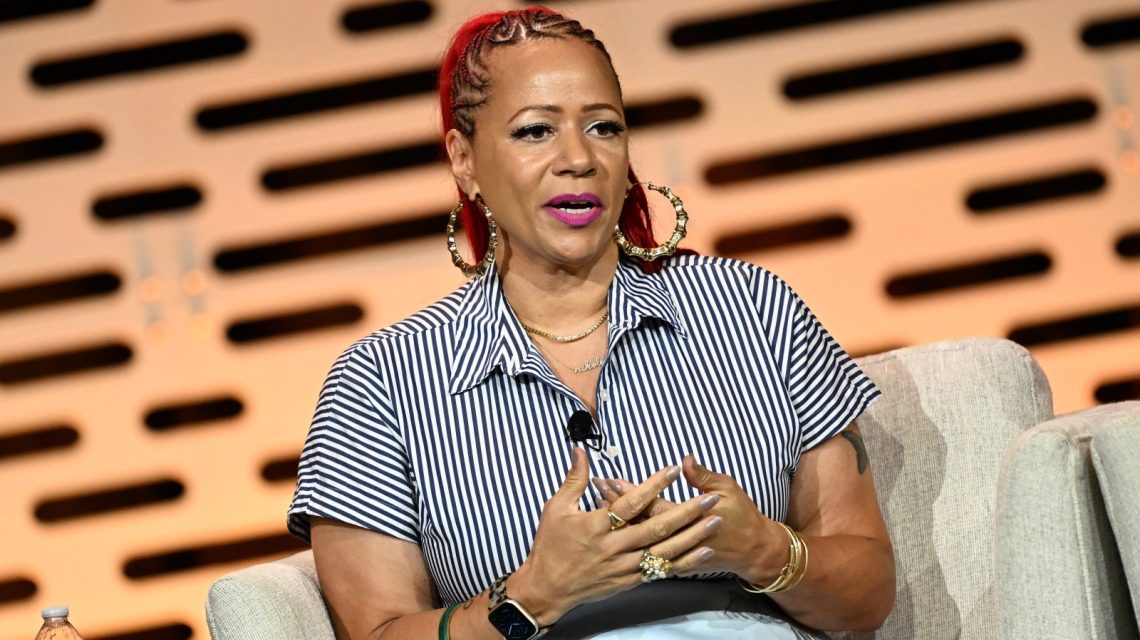
Ten years ago, Pulitzer Prize winner Nikole Hannah-Jones, known for The 1619 Project, made a bold decision. She enrolled her daughter, Najya, in a Brooklyn school known for its diverse student body. Her actions aligned with her belief in integrated schooling. But in a recent essay, she questioned if this choice truly benefited her daughter.
Najya attended Public School 307, situated near the Farragut Houses, a public housing project. At the time, 91 percent of students there were Black and Latino. In her latest essay, Hannah-Jones revisited her past decision, contemplating its effects on Najya’s education.
Reflecting on Educational Choices
Hannah-Jones acknowledged her concerns about whether she prioritized her values over her daughter’s education. She admitted the school had issues and expressed regret. The realization of her daughter’s struggles and academic gaps emerged clearly over the years. Najya excelled in class yet struggled with the state algebra exam, linking her difficulties back to elementary education.
Hannah-Jones described finding ungraded assignments in her daughter’s math folder, reflecting a systemic issue. A literacy coach revealed that mandatory assessments had not been done. Years of unaddressed problems accumulated, resulting in a subpar educational experience for Najya.
“I acknowledge to you that I didn’t do the best for you, and I am so sorry,”
Hannah-Jones candidly apologized to her daughter, recognizing the gap between her ideals and her daughter’s needs.
The Public Debate
The essay sparked discussions about progressive educational policies. Critics, such as Henry Mack and Maud Maron, offered scathing critiques of Hannah-Jones’ actions, pointing to broader issues around integration strategies. They argued that her daughter’s education suffered due to a focus on societal ideals over personal needs.
Supporters appreciated Hannah-Jones’ honesty. Monica Marks praised her willingness to confront past decisions publicly. The essay became a focal point for evaluating broader progressive educational policies.
Revisiting Progressive Policies
The term “Woke 1.0,” referring to early 2020s progressive politics, has gained attention. Numerous politicians have revisited their past stances, especially on issues like police funding and school admissions.
Figures such as Alexandria Ocasio-Cortez discussed the evolution of their views post-pandemic. Other politicians clarified or adjusted their positions, illustrating a shift within the Democratic Party.
With looming elections, Democratic candidates face scrutiny over past statements. Some focus on economic issues, weaving together institutional reform with economic concerns to enhance voter appeal.
Future Political Direction
The debate over integrating identity-driven policies with pragmatic political strategies continues. Certain topics, like transgender athletes in sports, pose challenges for Democrats, requiring careful narrative rebalancing.
Polling indicates significant voter concern, prompting strategic adjustments. Facts and figures from polls, such as 69 percent opposing transgender athletes competing according to gender identity, guide these shifts. The future of political messaging balances past lessons with present realities.
 Understanding School Shooting Preparedness Drills
  Evaluating College Value in the AI Era
  Understanding School Safety Drills: Lockdowns vs. Active Shooter Simulations
  The Value of Unsupervised Play in Child Development
  Universities and Federal Funding: A Question of Independence
  The Importance of Financial Responsibility in Higher Education