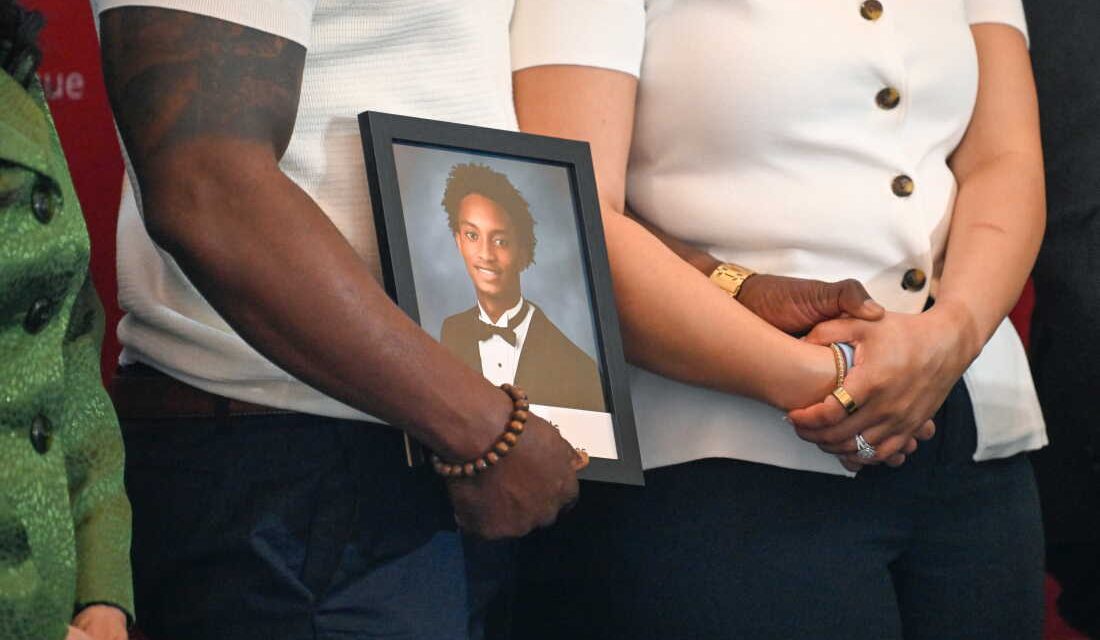
Christine Wonsley and Elmore Wonsley, the mother and stepfather of Nolan Wells, appeared at the National Urban League’s annual conference. They shared the latest details regarding their son’s death on July 30, 2026, in Nashville, Tennessee.
A Mississippi grand jury found insufficient evidence to pursue charges in the case of Nolan Wells. The Black teenager was discovered dead off the Mississippi coast in early July. Despite this decision, the family and activists continue to demand answers.
During a press conference, civil rights attorney Ben Crump noted a concerning detail from the medical examiner’s report: bruising on Wells’ head, though not fatal, raised questions. Crump urged the district attorney to keep investigating, asking, “What really happened to Nolan Wells? What caused the blunt force trauma to his head?”
Rev. Al Sharpton, who delivered Wells’ eulogy, stated that the absence of an indictment does not equate to having answers. Kristen Clarke from the NAACP also urged the district attorney’s office to release the full autopsy report and make the investigative file public, describing the need for a thorough investigation.
The grand jury, which convened in September, determined Wells’ death was “consistent with drowning” yet undetermined. Over 100 subpoenas were issued, and more than 40 witnesses were interviewed. Evidence ranged from GPS data to photos from Horn Island, where Wells was last seen.
Concerns linger due to Wells being the only Black teen among friends who traveled to Horn Island on July 4. The family questioned if the outcome would be the same had Wells been white. Jackson County District Attorney Angel Myers McIlrath dismissed the idea of racial motives affecting the investigation.
“The family, Crump’s team, and anyone close to Nolan knew that his disappearance and death were not the result of racial hate or violence,” said Myers McIlrath.
Wells’ body was found on Horn Island two days after an outing with friends. The grand jury report stated that speculations about Wells being the only Black person on the island were untrue and fueled misinformation.
Dr. Roger Mitchell performed an independent autopsy and agreed with the state examiner that the cause of death was undetermined, labeling drowning as a “diagnosis of exclusion.” Disputes about the autopsy remain, as Crump’s report indicates unexplained blunt force injuries found on Wells’ body.
Issues arose around Wells’ cellphone. Mississippi had no legal means to examine it, though the family offered to share its data. Myers McIlrath claimed data received from Crump’s team indicated nothing was deleted from the phone since Wells last used it.
Potential civil litigation persists. The family’s lawyers notified Wells’ friends about possible lawsuits related to defamation. Allegations against Wells’ friends stemmed from “public clamor and private malice,” according to the grand jury report.
Mississippi has no statute of limitations on homicide, so any new evidence could potentially be considered.