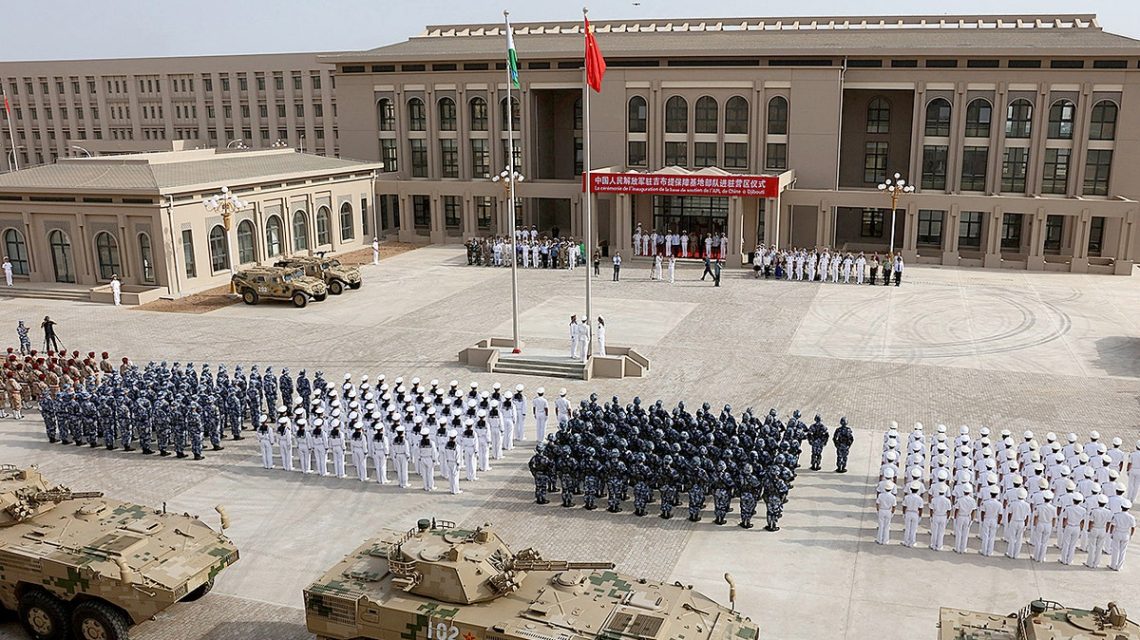
Beijing has developed the Red Sea into a significant surveillance hub, according to a former Pentagon official. Recent reports highlighted China’s enhanced military presence only six miles from a crucial U.S. military base in Djibouti, Africa.
The Center for Strategic and International Studies (CSIS) in Washington has reported new facilities in the region. This infrastructure likely allows China to monitor nearby military activities. Although not confirmed, whether China is intercepting communications remains unclear.
Experts suggest these developments could heighten U.S.-China tensions ahead of Chinese President Xi Jinping’s visit to the White House on September 24. China’s enhanced intelligence capabilities are already drawing scrutiny.
Beijing’s Ambitious Military Expansion
Morgan Murphy, a former Trump White House official, expressed concerns about China’s strategic positioning. He noted China’s decision to place its sole overseas base close to Camp Lemonnier, a major U.S. base, signifying potential eavesdropping intentions.
Murphy described the setup, mentioning a large satellite dish with a hidden dome, raising suspicion of China’s motives. The CSIS report detailed a facility featuring control buildings, various antennas for high-frequency communications, mobile satellite dishes, probable 5G towers, and a ‘radome’ covering an unidentified object.
Two newly identified communication facilities reportedly contribute to China’s C4ISR command architecture. This expansion strengthens China’s ability to intercept signals, track naval movements, and communicate effectively, all while monitoring other militaries in the area.
Escalating International Concerns
Commercial satellite images reveal China’s installation of advanced antennae and communication equipment at Djibouti — its sole acknowledged overseas military base. According to Murphy, this is crucial to understanding U.S. military operations and regional power dynamics.
Comparing global military presences, Murphy highlighted that while the U.S. has bases in over 51 countries, China’s solitary base in Djibouti sits at a strategic chokepoint, monitoring about a sixth of global sea trade. Historical examples like Britain’s control over Gibraltar emphasize the strategic nature of such locations.
Tensions Intensify Amid Technological Advances
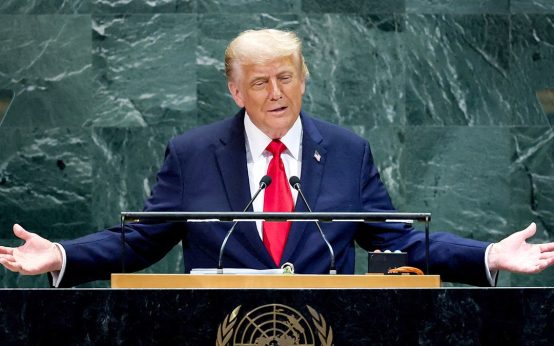
Reacting to these developments, President Donald Trump acknowledged ongoing espionage efforts between the U.S. and China. Both nations engage in intelligence activities, striving for geopolitical advantages.
The Djibouti base proximity to U.S., French, Italian, and Japanese installations has previously caused friction with U.S. forces. An incident in 2018 involving Chinese military lasers injuring U.S. pilots exemplifies the escalating tensions.
Murphy emphasized the importance of intelligence but noted China’s current limitations to project power due to a less-developed blue-water navy. While China lacks major combat assets outside its region, they are making rapid advancements, warranting vigilance from international counterparts.
 Diplomatic Complexities at the United Nations General Assembly
  Understanding Iran’s Political Struggle: The Path to Transition
  Kate Middleton: The Monarchy’s Brightest Star
  Prince Harry’s London Charity Event Amid Media Spotlight
  Converse Apologizes for Controversial Ad Sparked by Allegations of Racism
  Roman Empire’s Road Network Study Challenges ‘All Roads Lead to Rome’