The push by the United States to initiate negotiations with Iran has encountered challenges following the recent agreement to negotiate Tehran’s nuclear program and restore oil traffic through the Strait of Hormuz. Iranian officials did not attend the scheduled talks in Switzerland. They demanded a halt to Israeli attacks on Hezbollah militants in Lebanon as a condition for proceeding, according to several regional officials.
A fluid situation developed with Israel and Hezbollah recommitting to a ceasefire, potentially paving the way for discussions to resume. President Donald Trump expressed stern views amid intensified violence in Lebanon and the stalled nuclear talks, stating in a social media post that Iran is in a weak position.
Ready for Swiss Talks
Vice President JD Vance had prepared for a direct engagement with Iranian representatives at a resort in Switzerland. Journalists and staff had assembled at Joint Base Andrews, eager for the planned journey, but it was canceled. A White House statement attributed the delay to unpredictable logistics. However, internal messaging indicated Iran’s reluctance due to Israeli military actions in Lebanon.
Despite the postponement, a mediator from Qatar reached the Swiss location, highlighting ongoing diplomatic efforts. The Qatari Prime Minister met with Swiss officials to lay groundwork for future talks.
Conflict Escalates in Southern Lebanon
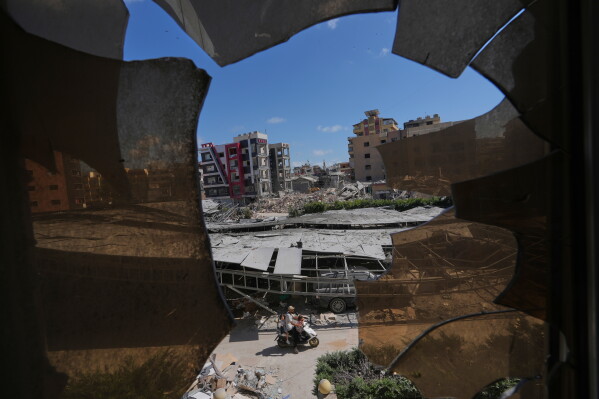
Violence surged in Lebanon, resulting in casualties on both sides. Israeli Prime Minister Benjamin Netanyahu reaffirmed that the military would maintain a presence in southern Lebanon to meet security needs. Although Iran demands Israeli withdrawal, the agreement’s language does not enforce this condition.
Vance expressed uncertainty regarding the timing of the planned technical negotiations, citing possible changes. Shortly thereafter, Iran’s Supreme Leader Ayatollah Mojtaba Khamenei articulated cautious approval for direct negotiations with the U.S., aiming to preserve Iran’s negotiation position.
Negotiation Background
The talks initially planned for a signing ceremony in Switzerland transpired otherwise, as Trump signed the agreement at an event in France, alongside French leadership. Iran’s representation signed separately. The deal mandates Iran to dilute its enriched uranium under international oversight and halt nuclear weapon development.
Iran’s Strengthened Position
Experts note Iran’s strengthened negotiating stance due to significant disruptions caused by the Strait closure. Rosemary Kelanic from Defense Priorities explained the U.S. seeks to restore pre-conflict conditions. Neil Quilliam from Chatham House remarked on Iran’s domestic signaling of an equal footing with the U.S. in negotiations.
Political Implications for Vance
The outcome of these negotiations carries political significance for Vance, a potential presidential candidate. As a critic of foreign wars, his role in these discussions reflects his broader political identity. Trump’s administration faces divided opinions, with some Republicans skeptical of the potential financial benefits to Iran.
Trump rebuked comparisons to Obama’s 2015 nuclear agreement, asserting his negotiations were conducted from a position of strength. Concerns arose within the Republican Party about provisions related to a $300 billion fund for Iran’s reconstruction, stipulating reforms and concessions from Tehran.
Associated Press journalist Magdy contributed from Cairo, with Toqa Ezzidin providing additional reporting.
 Ed Sheeran Expresses Regret Amid Controversy Over Macklemore’s Tour Exit
  Confronting China’s Religious Oppression: A Call to Action
  Diplomatic Complexities at the United Nations General Assembly
  Understanding Iran’s Political Struggle: The Path to Transition
  Kate Middleton: The Monarchy’s Brightest Star
  China’s Surveillance in the Red Sea Raises Concerns