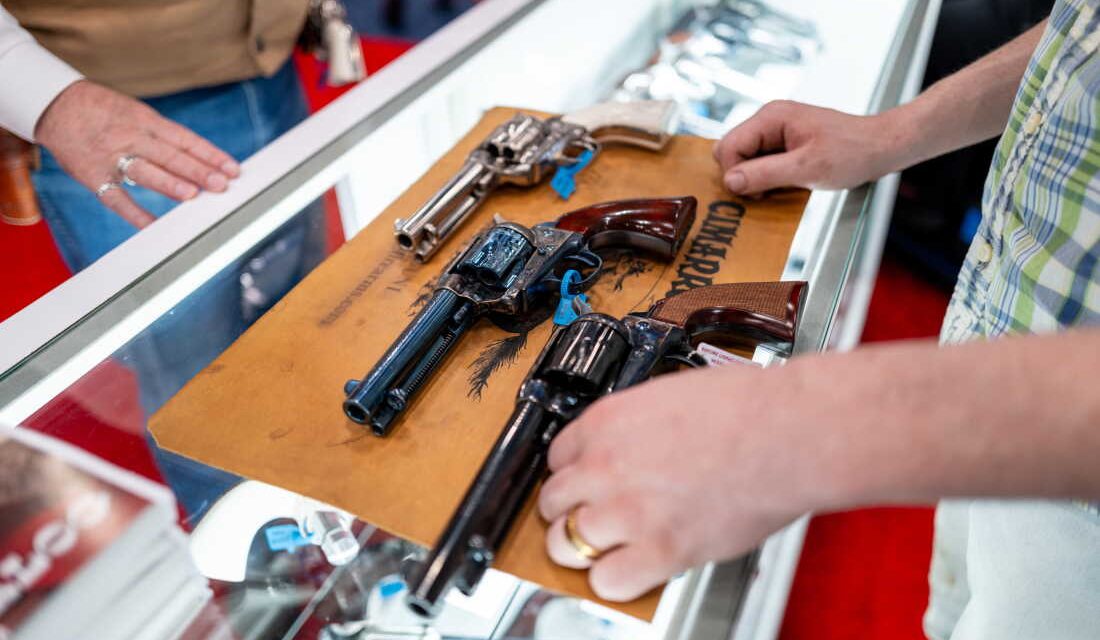
Displayed on a countertop during the NRA conference on April 18 in Houston, revolvers serve as a stark reminder of the firearms discussion. Normally, individuals convicted of a felony lose various rights, including the ownership of guns. Regaining this right typically requires a presidential pardon, according to clemency experts.
The Justice Department is taking steps to restore gun rights for nonviolent offenders. Through its Office of the Pardon Attorney, it is revamping a process last seen in the 1990s. The Second Amendment Foundation’s executive director, Adam Kraut, expresses relief at the availability of federal firearms relief for nonviolent offenders for the first time since 1992.
"We’re ecstatic that federal firearms relief will be available to nonviolent offenders," says Kraut.
Despite enthusiasm from gun rights groups, the initiative has raised questions and concerns about its implementation.
Eligibility Criteria and Application Process
The DOJ outlines that violent offenders, such as those convicted of rape or kidnapping, will be excluded. Individuals in prison or awaiting sentencing are also ineligible. Applicants must provide detailed crime and conviction records, character references, and fingerprints. A $30 fee will be required eventually. Approximately 330,000 applications are expected annually, with staff and attorneys evaluating them.
The DOJ aims to keep a flexible decision-making process. This week, applications open from invited candidates showing prior interest. The first 5,000 general public applications begin November 4, with more opening in January. Successful candidates will have their names published in the Federal Register, as legally mandated.
A complicating factor involves state laws. Federal restoration does not ensure state approval. The DOJ advises individuals to consult state, territorial, or tribal authorities regarding firearm possession regulations.
Concerns Over Safety
The 1992 Violence Policy Center report led to the termination of the ATF program. Out of over 2,000 restored gun rights cases, 69 individuals faced rearrest, with serious offenses such as attempted murder. The report prompted Congress to restrict funding for gun rights restoration.
Kristen Rand from the Violence Policy Center criticizes the program as "obviously dangerous," suggesting it should be permanently shut down. Clemency experts, however, endorse the initiative as supporting individuals who have served their time. Rachel Barkow, a law professor at New York University, asserts that the recidivism rate for pardoned individuals tends to be low.
Capacity of the Pardon Office
The 1992 report highlighted the strain placed on the ATF by pardon duties. Tom Chittum, a former ATF member, explains that it detracted from the agency’s focus on firearm misuse investigations.
The DOJ estimates 25 million eligible applicants. The pardon office is already burdened with increasing clemency requests and staffing challenges, further complicated by significant staff departures, including former head Ed Martin.
Liz Oyer, the former U.S. pardon attorney, voices deep concerns about the office’s capacity. With a staff reduced to less than half its previous size and a growing caseload, she warns of potential overwhelming pressure.
"This is a massive undertaking," says Oyer.
The DOJ acknowledges the complexity, as its clemency caseload stands at approximately 16,000 cases. Under the Biden administration, pending petitions ranged from 16,968 in 2021 to 10,418 when Biden left office in 2025.
To address these challenges, the DOJ requested a $16.5 million budget, seeking to create 50 new positions, including 23 attorneys, allocated specifically for gun rights restoration. The effort includes earmarked funds of $4.8 million.