
The Department of Homeland Security (DHS) asserted that mass deportations during the Trump administration have reduced rents in several Sun Belt cities such as Austin, Nashville, and Phoenix. In a social media post, the DHS claimed a correlation between cooperation with Immigration and Custom Enforcement (ICE) and lower rent costs.
The post highlighted various cities, stating that Texas accounted for a significant portion of ICE arrests in July. The result was notable rent drops, with specific figures quoted: San Antonio saw a 4.8% decrease, Austin 4.3%, and both Dallas and Houston around 3%. Miami’s rents decreased by 2.6%, Phoenix by 4.2%, Atlanta by 3.2%, Nashville by 5.3%, and New Orleans saw an 8% reduction.
The department did not disclose the data source or methodology for these figures. The claim of a causal link between illegal-worker inflows and increased rents was supported by unspecified research, possibly a paper cited by economists Daniel J. Wilson and Xiaoqing Zhou. However, some experts challenged the findings, noting methodological gaps and the omission of domestic migration impacts.
Supply Boom in the Sun Belt
DHS’s implication of ICE operations influencing rent overlooks other relevant factors. Metropolitan areas like Austin, Dallas, Houston, and San Antonio are witnessing significant price corrections due to a construction boom spurred by domestic migration. RentCafe identified these cities as top builders post-pandemic, with Dallas and Austin leading new apartment developments.
Economists attribute falling rents not to deportations, but to increased competition among landlords and available housing units. Zillow data shows rent decreases in these cities: Austin average rent is $1,990, Dallas $1,950, Houston $1,900, San Antonio $1,600, with similar trends in Miami, Phoenix, Atlanta, Nashville, and New Orleans.
DHS provided no detailed data on renters leaving due to deportations or how much rent downturn stems from enforcement versus changes in housing supply and demand dynamics.
Mass Deportations and Housing
Reducing housing costs via mass deportations was a campaign promise of President Trump. Nevertheless, housing market experts have raised doubts. Since January 2025, over 605,000 illegal aliens have been deported with another 1.9 million self-departures reported. Daryl Fairweather, Redfin’s chief economist, stated that mass deportations might free housing, but restrict the construction workforce.
1.6 million undocumented immigrants work in the U.S. construction industry. Reducing their presence affects the labor supply, raising building costs and slowing home production. Danielle Hale of Realtor.com added that immigration restrictions could complicate hiring, especially in a construction industry reliant on foreign-born workers.
The National Association of Home Builders emphasized that fewer workers result in construction delays, higher labor costs, and increased home prices. A Reuters investigation described how a $20 million project in Alabama faced delays after ICE raids prompted a workforce reduction. Construction personnel reported delays, cost overruns, and labor shortages due to deportation fears.
 Tensions Rise Between Trump and Florida Republican Maria Salazar
  Michigan Resident Faces Backlash Over Comments on Local Demographic Changes
  Democratic and Republican Strategies on Immigration Policy Debated as Midterms Near
 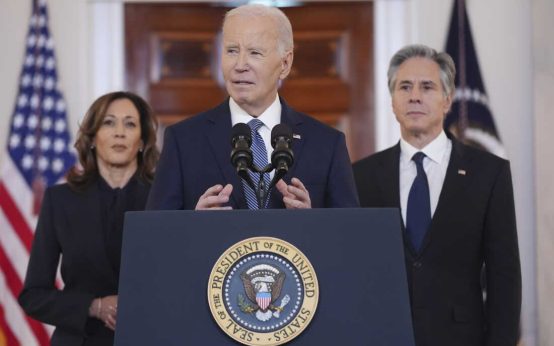 Biden Administration’s Role in Gaza Examined
  Nor’easter Pummels U.S. East Coast with Heavy Rain and Strong Winds
  Oregon’s Wildfire Crisis Calls for New Solutions