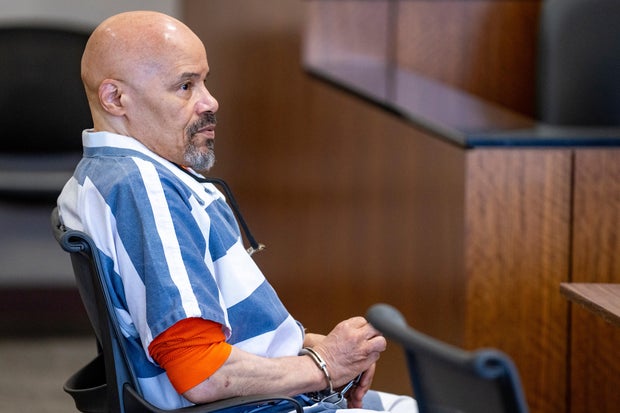
A Utah judge has ordered the release on bail of a 71-year-old man who had been on death row for over three decades due to a 1985 murder. Despite objections from the victim’s family, the decision was influenced by newly analyzed DNA evidence that did not match the man, Douglas Stewart Carter.
In 1985, Carter was sentenced to death after a jury found him guilty of murdering Eva Olesen, who was related to the Provo police chief at the time. Last year, the state Supreme Court mandated a new trial, highlighting misconduct by investigators. Throughout, Carter has insisted on his innocence, claiming his confession was coerced.
The conviction depended heavily on the confession and statements from two witnesses who claimed Carter bragged about the murder. Both witnesses have since recanted their statements.
I’m not guilty,
said Carter, maintaining his stance. Judge Derek Pullan emphasized that the new DNA evidence weakened the case against Carter but acknowledged that a reasonable jury might still find him guilty.
As part of the bail conditions, Carter must wear a GPS monitor and avoid any contact with Olesen’s family. His defense attorney, Neal Hamilton, noted that Carter will receive therapy to handle the trauma from years of incarceration.
It’s a complex situation,
said Hamilton. He underscored the severe impact of 41 years of imprisonment on Carter.
In preparation for Carter’s retrial scheduled for 2027, Utah County prosecutors decided not to seek the death penalty last week. They received DNA analysis results on Sept. 22, which excluded Carter from being connected with blood found on a doorknob and genetic material from the knife used against Olesen.
Hamilton explained that DNA found at the crime scene had been checked against an FBI database twice, producing no matches. Utah County prosecutor Erwin Petilos stated reassessing bail was reasonable and necessary. The investigation remains ongoing.
At the time of the 1985 murder, Carter was residing with his mother in Utah and was initially suspected of killing Olesen during a robbery. He fled, thinking he was a suspect in an unrelated assault case, before being caught in Nashville, Tennessee, where he signed a confession under interrogation by a Provo detective.
Hamilton shared that Carter had been detained alongside his friend, with Carter regretting the confession done to protect his friend. Both the friend and Carter were under pressure from law enforcement.
Carter had communicated to Hamilton that his confession was false and coerced by threats from police.
The original trial did not present any witnesses for Carter’s defense, resulting in his conviction and subsequent death sentence. After a 1992 retrial, the courts dismissed several appeals from Carter.
The two key trial witnesses later said they were bribed with cash and gifts, and threatened by police to testify against Carter. These developments led to legal battles until the Utah Supreme Court sanctioned a new trial last year. The decision was due to various instances of misconduct by police and the prosecutor involved.
Carter’s defense attorneys claimed other, unexamined suspects existed, including the victim’s husband. Witnesses reportedly saw a white man fleeing the scene, and evidence hinting at other suspects, like the husband Orla Olesen, was reportedly suppressed.
Theresa Olesen, Eva Olesen’s daughter-in-law, expressed during the hearing her family’s concerns regarding Carter’s release. She believes he should remain in custody pending the new trial.
We were hoping for a positive DNA match,
she stated, adding her belief that Carter could still be involved.