A concerning incident has highlighted vulnerabilities plaguing U.S. law enforcement personnel. According to a June 2025 report by the Justice Department’s inspector general, a hacker affiliated with the Sinaloa cartel identified an FBI assistant legal attaché in Mexico City. The hacker exploited the official’s phone number to obtain call records and location data, using Mexico City’s camera network to track their movements. This unsettling breach allowed the cartel to intimidate potential sources and witnesses, with some facing dire consequences.
The core issue lies in the ease with which adversaries can access commercial data. Today, they hardly need to engage in physical surveillance; the commercial data economy provides crucial information. An updated audit by the Department of Justice (DOJ) Inspector General emphasizes that this threat of ubiquitous technical surveillance (UTS) persists within the Department. It revealed a lack of a unified definition of UTS, uncoordinated efforts to address it, limited mitigation measures across components, and inadequate training.
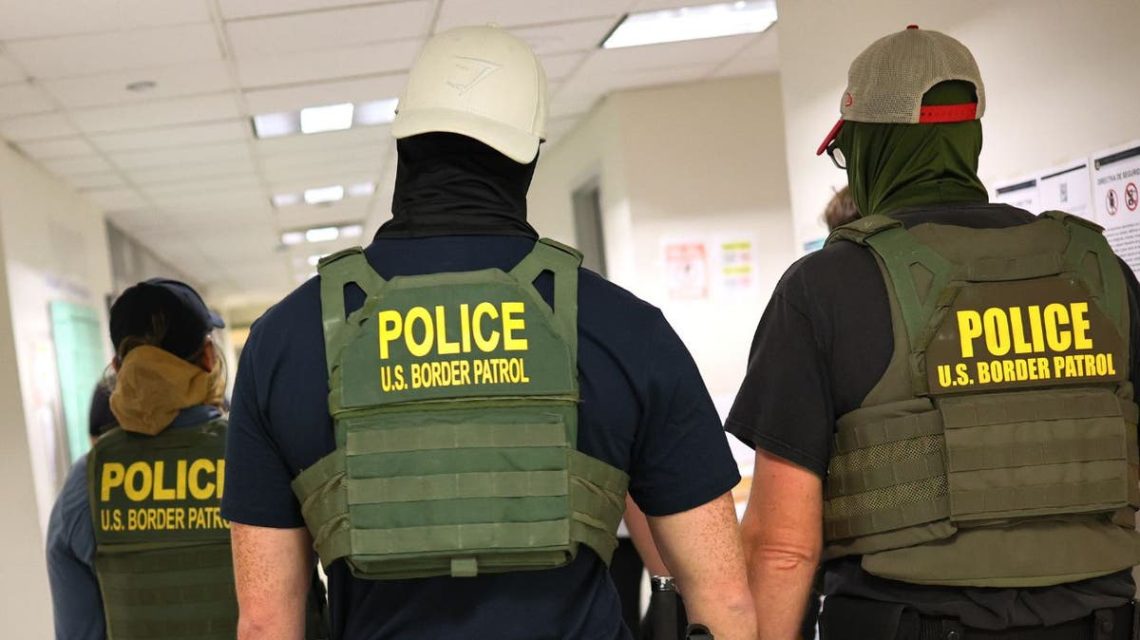
The audit’s conclusion reveals alarming deficiencies, placing the Department, its employees, investigations, operations, and sources at increased risk from UTS threats. Homeland Security and law enforcement officials must heed these warnings. Border Patrol agents have resorted to wearing masks or neck coverings to protect their identity during operations. The sudden escalation of technology use has drastically changed the threat environment facing these personnel.
In the position of acting director for Immigration and Customs Enforcement, direct encounters with these dangers made them unsettlingly real for me and my family. For instance, in October 2025, DHS reported cartels placing bounties on ICE and Customs and Border Protection officers in Chicago. The figures ranged from $2,000 for doxxing agents to up to $50,000 for targeting high-ranking officials.
Agents involved in cartel cases face perpetual risk, extending to their personal lives. Consider a task-force officer who raids a cartel stash house and returns home to the same community. Their routine—children’s school, church, and community engagements—builds a comprehensive profile that adversaries can exploit.
The commercial data economy reveals sensitive information with minimal effort. Duke University researchers uncovered sensitive records of U.S. military personnel at a mere 12 cents per entry, including names and home addresses. A WIRED investigation traced devices linked to U.S. military sites in Germany back to homes and schools.
The defense against this vulnerability must evolve. During the Global War on Terrorism, our data utilization skills improved immensely. We must now apply these skills to shield our personnel and their families from exposure.
A robust protection program is crucial. Agencies should remove addresses from broker sites, aid families in securing accounts, and provide clear avenues to report threats involving personal information. Protection should become an integral part of the job, with resources and accountability embedded.
Given historical threat levels—like the DHS report of bounties in Chicago—swift action is vital. The U.S. has already designated six Mexican cartels as foreign terrorist organizations. This acknowledgment necessitates safeguarding our workforce from cartel surveillance.
To achieve tangible protection, appoint a senior official to oversee the process. Focus on high-risk personnel including those handling cartel cases and overseas attachés. Assess what adversaries can access, help families mitigate exposure, and train agents to operate under constant visibility.
Congress must step up by granting clearer authority and consistent funding for these protective measures. The incident in Mexico City underscores the potential dangers when surveillance compromises American personnel. Exposed information like addresses and location histories can jeopardize entire households. Swift action is imperative to avoid tragic outcomes.
Todd Lyons now serves as senior vice president for U.S. Homeland Security and International Affairs at Navigators Security and Defense, having held the role of acting director of U.S. Immigration and Customs Enforcement.
 Dutch Euthanasia Case for Child with Disabilities Sparks International Debate
  Heroism Averts Disaster on FlyDubai Flight
  Illegal Immigrant Crimes Stir Policy Debate in Fairfax County
  Emergency Landing of Flydubai Plane Highlights Cockpit Security
  Passengers Prevent Mid-Air Crisis Amid Pilot Stabbing Incident
  Sensitive Discussions During Trump’s National Archives Visit with Xi Jinping