A frontier technology company, still developing and with uncertainty in profitability, is nearing a significant initial public offering. Its co-founder embodies a technology that confounds many individuals and governments. Recent discussions have highlighted the potential dangers of this technology, especially for young people. In Washington, opinions differ on solutions. A Democratic senator seeks prison time for sharing ‘indecent’ material accessible to children. Conversely, two congressmen propose legal immunity for technology companies, allowing them to self-regulate.
Silicon Valley’s strategy emphasizes rapid user growth without scrutinizing user activities or the product’s effects. Overregulation could hinder America’s core strengths: freedom, sovereignty, and profit pursuit. Yet, this scenario mirrors the internet’s context in 1995, focusing on Netscape and co-founder Marc Andreessen. At that time, Democratic Senator James Exon and Congressmen Chris Cox and Ron Wyden played notable roles. They introduced Section 230 of the Communications Act, aimed at solving legal issues dial-up services faced for content moderation.
This law intended to foster self-regulation became integral to the growth of social media platforms, allowing them to expand without being accountable for algorithm-induced harm. In 2026, similar demands arise from Silicon Valley, with requests for antitrust waivers and lawsuit protection for what systems and users produce. Dario Amodei, a key figure, advocated for an antitrust waiver recently, suggesting that companies collaboratively slow their advancements.
The U.S. Treasury Secretary opposed granting liability exemptions, highlighting creator responsibility for safety. Anthropic plans a $2 trillion IPO, vastly exceeding Netscape’s historical value. Pushback against these industry demands has bipartisan support. Antitrust specialists assert that companies can establish safety standards without special exemptions. There is consensus that companies must ensure their products’ safety, reinforcing that if control is unachievable, their development should pause.
History teaches that optimal policies weren’t established in 1996, and they aren’t achievable now. Unlike past technologies managed by government, private AI labs today hold immense market value. Asking Congress to manage AI development effectively is unrealistic. As AI remains misunderstood, regulations need flexibility and adaptability rather than permanence. A liability waiver might perpetuate protectionism for the current dominant players.
Private AI firms advocating for self-coordinated safety measures are also seeking monopoly-like privileges. Regulation should begin now, but with evolving rules adaptable to technological growth. Amodei, older and wiser than Andreessen when faced with similar challenges, could draw from historical experiences. An example from academia underscores the importance of foundational skills, as the University of Chicago restricted AI in core courses to enhance traditional learning.
The lesson is simple: protective measures can extend beyond their initial intent, placing lasting impacts on those governed by them. Accountability must accompany profit pursuits. Profits should remain private, losses should not be borne by society. The article suggests that if frontier AI technologies present significant threats, restraint is possible without external permission.
Zander Cowan, formerly associated with Lila Sciences, an AI lab focused on scientific superintelligence, provides these insights.
 Potential of Advanced Nuclear Power in Meeting U.S. Energy Demands
  Nike’s Stock and Identity: A Complex Interplay
  Venezuelan Man Accused of ATM Hacking in U.S. Custody
  History of Panic Surrounding Technological Innovations
  AI’s Influence on Critical Thinking in Knowledge Work
 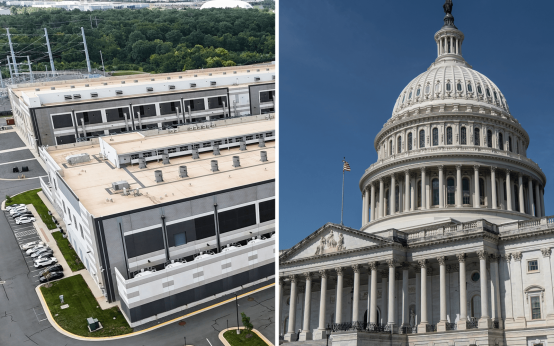 Virginia’s Shifting Political Landscape Ahead of Midterms Highlights Data Center Debate