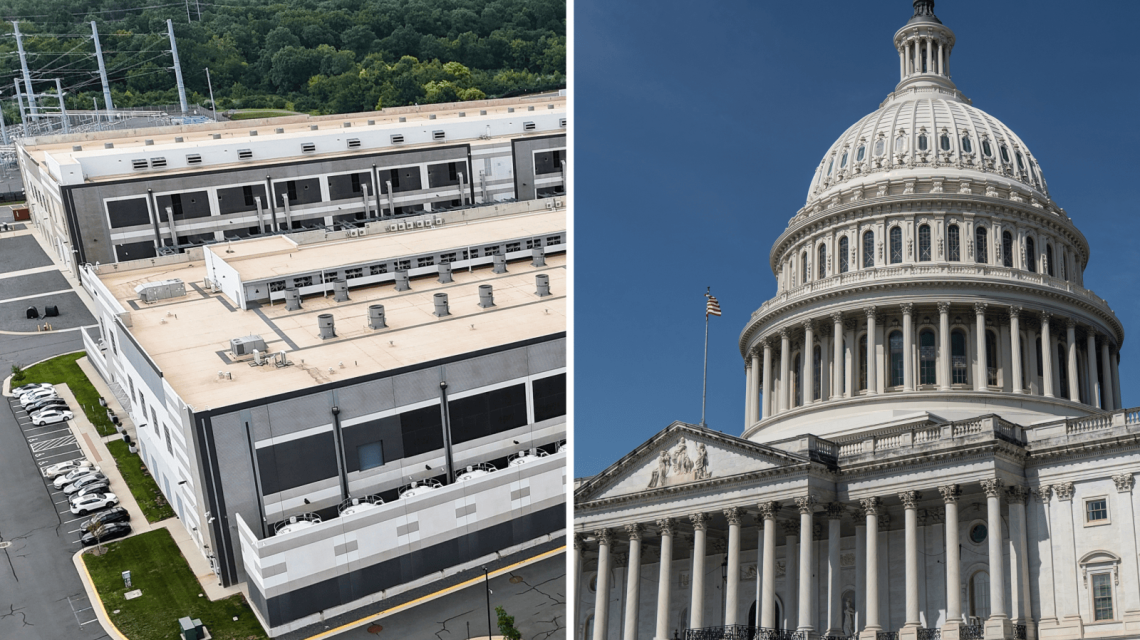
Recent changes in race ratings and internal polling have signaled that three Republican-held districts in Virginia, known as the nation’s data center capital, are becoming more competitive ahead of November’s midterm elections. Earlier in the year, Democratic hopes in Virginia seemed to wane after the state’s Supreme Court nullified a redistricting effort. The court’s decision maintained the congressional boundaries from 2022 and 2024, curtailing potential Democratic gains in four GOP seats.
A Democratic campaign operative noted Virginia as an ‘unexpected state’ in the House battlefield. Republicans thought the failed redistricting would secure their incumbents. However, Sabato’s Crystal Ball recently reevaluated district standings: Representative Jen Kiggans’ 2nd District moved from Toss-up to Leans Democratic, Representative Rob Wittman’s 1st District shifted from Leans Republican to Toss-up, and Representative John McGuire’s 5th District changed from Likely Republican to Leans Republican.
Surveys sponsored by Democrats also reflect these shifts, revealing narrow one-point Republican leads in the 1st and 5th districts. Consequently, Democrats and party groups are channeling funds toward these contests. Another key development sees Democrats targeting Republican Representative Ben Cline’s 6th District, added to their offensive list by the Democratic Congressional Campaign Committee.
One aspect influencing these dynamics is Virginia’s evolving data center industry. Democratic candidate Tom Perriello, competing in District 5, has criticized incumbent McGuire, claiming he supports corporate tax breaks for developers and opposes a transmission line that aligns with rising electricity needs in the data center sector.
Newsweek’s AI Policy Scorecard evaluates incumbents’ records in technology regulation and other subjects, ranking McGuire as ‘Lean Booster’ with a score of 3.5.
Polling reflects local opinions on data centers. A Washington Post-Schar School survey found 35% of Virginia voters hesitant about local data center construction. Nationally, the University of Massachusetts Amherst poll showed 65% opposition to local AI data centers. Participants cited environmental impacts and economic concerns, while some noted technological and economic advantages.
In a CBS News/YouGov poll, 54% of likely voters preferred congressional candidates who opposed data center development, highlighting its significance in the election.
A Prosecutor Challenges Virginia’s Suburban Shift
Virginia’s 1st Congressional District sees veteran Republican Wittman against Shannon Taylor, Henrico County’s Commonwealth Attorney. Taylor leveraged her legal background to court voters, advocating for stock trade bans for Congress members and lobbying restrictions for former lawmakers.
DCCC argues Taylor’s public-safety credentials resonate well in changing Richmond suburbs. An internal poll showed Wittman at 47% and Taylor at 46%, with a margin of error of 4.3%. The survey suggested Trump’s approval could affect outcomes more than direct candidate comparisons.
A Former Congressman Seeks Return
Perriello, who previously represented Virginia’s 5th District, aims for a comeback amid challenging terrain. An Expedition Strategies memo placed McGuire at 46% and Perriello at 45%, showing competitiveness despite Republican footing.
Perriello highlights federal policies impacting local economies, critiquing McGuire on issues like corporate tax incentives and Dominion Energy’s Valley Link transmission project. His strategy links local concerns to broader political discussions.
Trump’s Influence on AI Data Centers
Former President Trump supports data center expansion as countries vie for AI dominance. Despite intra-party reservations, Trump argues resistance leads to socioeconomic decline, suggesting areas hosting data centers experience prosperity.
Trump recently met with tech leaders to discuss AI’s future, signing an executive order renaming artificial intelligence to ‘Super Intelligence.’ This meeting underscored his stance on evolving technology and data center roles in national growth.
 Partisan Tensions in Congressional Hearings
  AI’s Influence on Critical Thinking in Knowledge Work
  Trump Defends Daily Aspirin Use Amid Health Scrutiny
  Senator Kennedy Warns GOP on Voter Concerns Over Cost of Living
  Senator Kelly Accuses Trump of Vote-Buying with Cash Proposal
  Angela Paxton Urges Support for GOP Amid Divorce and Tight Senate Race