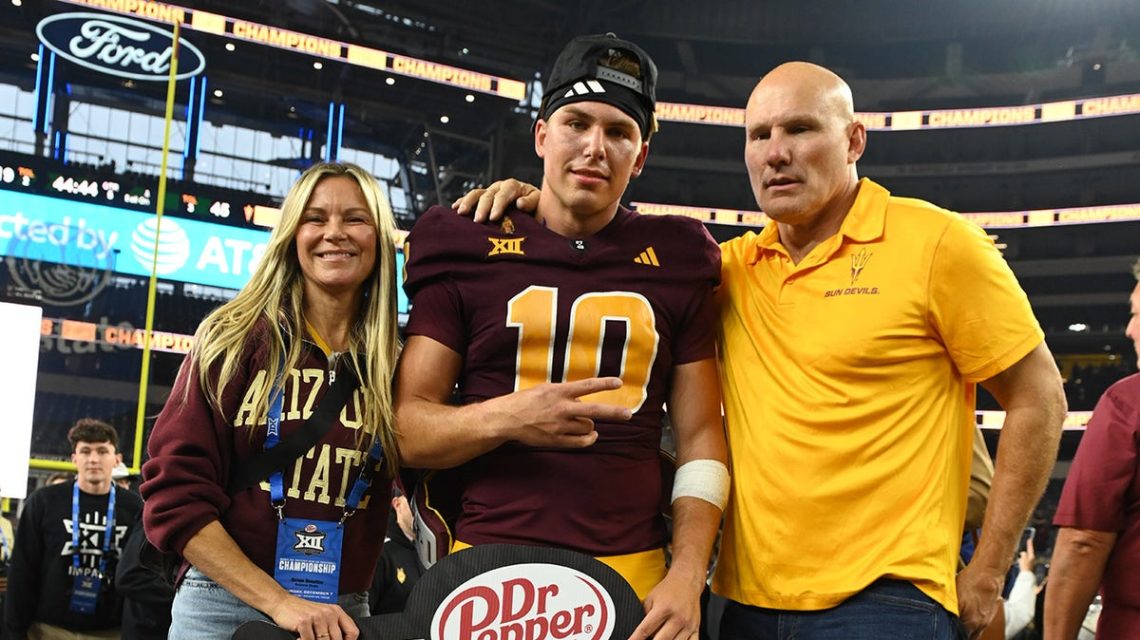
In January 2025, Arizona State Sun Devils made an unexpected leap into the College Football Playoff, marking a stark transition from the challenging era of Herm Edwards. Under head coach Kenny Dillingham’s guidance, in only his second year, the team navigated NCAA sanctions and moved from three-win seasons to a Big 12 championship. Key players like Cam Skattebo, Jordyn Tyson, and Sam Leavitt played significant roles in positioning the team for a possible victory over Texas in the Playoff.
Fast-forward to two years later, the Sun Devils’ record stands at 2-2, facing difficulties on offense after a loss to Baylor. Across the country, other coaches were shaping their programs. Jedd Fisch took over Washington in 2024, following a national championship run by his predecessor. Despite replacing nearly all the team’s production, Fisch led Washington to a nine-win season in 2025, featuring a bowl win with standout quarterback Demond Williams.
Similarly, Brent Key was revitalizing Georgia Tech in the ACC with an innovative offense spearheaded by quarterback Haynes King. The Yellow Jackets achieved their highest AP Poll ranking in decades and concluded the season with national recognition after years of absence.
Ten months onward, Washington, Georgia Tech, and Arizona State appear similar to their earlier years. These programs struggle to maintain peak performance consistently. Long-standing strong programs, like Ohio State and Georgia, have the resources and talent to sustain success, unlike Arizona State and others who must seize fleeting opportunities.
Coaches such as Dillingham, Fisch, and Key were previously seen as candidates for major coaching positions after successful seasons. Offers for positions at top-tier schools arose during hiring cycles, yet they remained loyal to their schools. Contributing factors include Dillingham and Key’s alma mater status, and Fisch’s interest in a potential return to Florida if conditions align.
Future opportunities depend on upcoming season outcomes. If the programs face significant losses, calls for these coaches for tier-one jobs may lessen. Dillingham, despite expressing dissatisfaction with Arizona State’s financial support, shows loyalty that might affect long-term career prospects.
Coaches in similar positions, reflecting on patience and loyalty, may consider those traits as beneficial yet potentially limiting. Athletic directors often focus on the latest performances, influencing hiring decisions. The future of Dillingham, Key, and Fisch remains uncertain. Will they secure prestigious positions or continue facing challenges at their current institutions?
These dynamics reflect broader trends in college football coaching, where success, loyalty, and timing significantly impact career trajectories.
 Indiana Fever and Caitlin Clark: A Magnet for WNBA Viewership
  White Sox Prepare for Key Postseason Game Amid Locker Room Tensions
  Dodgers vs. Braves: NLDS Game 3 Live Updates
  Dodgers vs. Braves NLDS Game 3 Updates
  Tatjana Genrich Transitions to Professional Boxing
  Remembering Sam McDowell: A Baseball Legacy and Redemption Journey