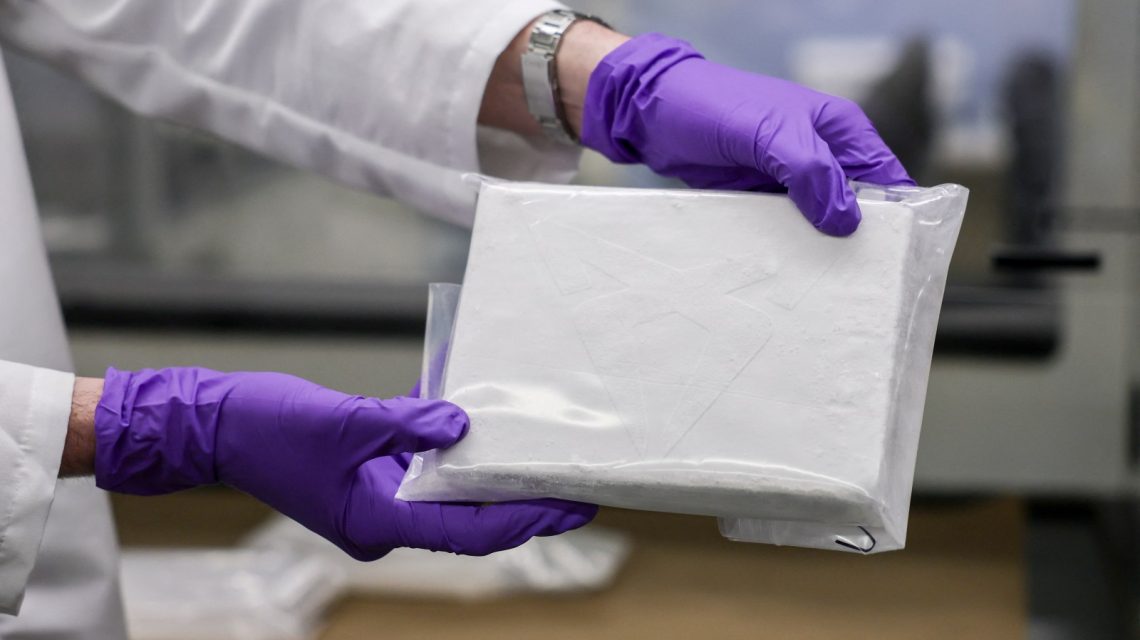
Emergency calls for opioid overdoses are rising in Austin, Texas, driven by a synthetic drug known as cychlorphine. This drug is reportedly ten times more potent than fentanyl and is spreading across the United States. In late September, Austin-Travis County EMS (ATCEMS) reported 98 opioid overdose calls in a 30-day period, an increase from the 73 calls recorded the previous year.
According to Captain Christa Stedman of ATCEMS, nine patients required more than two doses of Narcan to reverse the overdose, whereas one to two doses is more typical. Last September, only two cases needed such extensive treatment. Although ATCEMS does not test for specific opioid types during treatment, cychlorphine is suspected in cases necessitating multiple Narcan doses.
Understanding Cychlorphine
Cychlorphine, also known as N-propionitrile chlorphine, is a synthetic opioid linked to numerous deaths in the U.S. since last year. Although not a new drug, its presence in illegal drug markets has surged recently. Initially synthesized in the 1960s by Belgian scientists exploring synthetic opioids for potential pain relief, cychlorphine was never approved for medical use. However, its synthesis was documented in academic literature, making the recipe available online. This accessibility has facilitated its production and distribution, noted by Keith Humphreys, a Stanford psychiatry professor.
Comparison to Fentanyl
The Drug Enforcement Administration (DEA) alerts that cychlorphine often appears mixed with fentanyl and in counterfeit pills, complicating detection. Experts estimate cychlorphine’s potency to be up to ten times greater than fentanyl, making it extremely hazardous.
Spread of Cychlorphine
Cychlorphine first surfaced in the U.S. in Florida in April 2024. The drug’s prevalence has quickly expanded from the East Coast to the West Coast. In 2025, it was detected 106 times across ten states, with significant concentrations in the South, Midwest, and Northeast. Between 2025 and early 2026, at least 55 deaths nationwide were linked to cychlorphine, according to the Office of National Drug Control Policy (ONDCP).
In Tennessee, the Knox County Regional Forensic Center reported 64 deaths related to cychlorphine from July 2025 to September. While Tennessee may not be the hardest-hit state, increased surveillance has heightened awareness. Drug-related deaths in Knox County decreased by 16% in the first half of 2026.
Awareness campaigns have been critical in educating communities about cychlorphine’s dangers. The Knox County Regional Forensic Center collaborates with various agencies to track drug trends and aid in law enforcement efforts. Cychlorphine’s impact is not limited to the U.S., as the United Nations Office on Drugs and Crime (UNODC) reported detections in 17 countries across Europe and North America.
If you or someone you know struggles with substance abuse, contact the Substance Abuse and Mental Health Services Administration (SAMHSA) National Helpline at 1-800-662-HELP (4357).
 Fauci’s Diaries Reveal Criticism of Trump and More
  Understanding Rising Stroke Rates in Younger Populations
  Julie’s Sudden Medical Emergency: A Brain Aneurysm Case Study
  Growing Support for Government-Run Health Insurance Revealed by New Poll
  Resilience: Preparing Health Systems for Unexpected Crises
  President Trump to Discuss Health Alert with Putin Amid Pneumonic Plague Concerns in Siberia