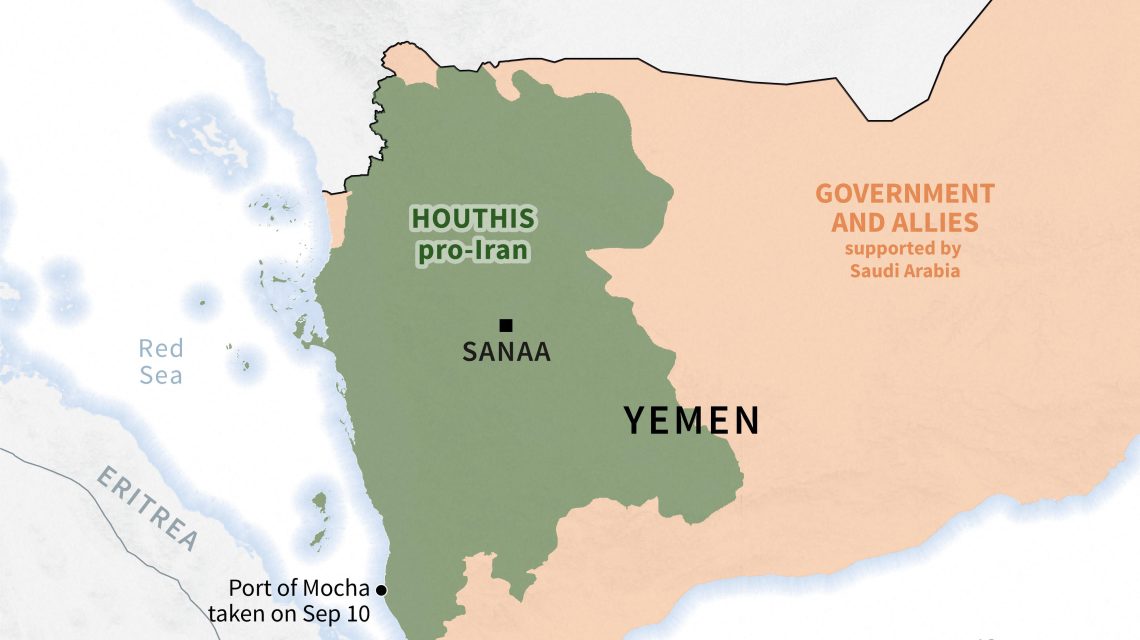
Over the past decade, Yemen’s Houthi rebels have transformed from a little-known group in northwestern Yemen to a major ally of Iran and a formidable opponent to the United States and its allies across the Middle East. As Iran’s other proxy forces have weakened, the Houthis have played a central role in regional conflicts, demonstrating the impact a smaller, guerrilla-style force can have through difficult-to-defend aerial attacks.
Conflict and Impact
Supporting their Iranian partners, the Houthis launched attacks on Israel shortly after the U.S. joined Israel in strikes against Iran on February 28. This action helped escalate ongoing hostilities in the region. Saudi Arabia, a key U.S. ally, has been a primary target, suffering considerable casualties at its airports and from attacks on its oil infrastructure.
Along with allied groups, the Houthis have heightened tensions in the Bab el-Mandeb Strait, vital for global oil and gas transportation. Despite Saudi efforts, including appealing to the U.S. for military support, President Trump has only recently begun to reconsider involvement in these operations.
Iran’s “Most Powerful Proxy”
The Houthis receive substantial financial and military backing from Iran, significantly enhancing their capabilities. Initially a lesser force in Iran’s Axis of Resistance, which includes Hamas and Hezbollah, the Houthis have rebounded after Israeli counterattacks weakened their allies.
“The Houthis are the most powerful proxy within the Iranian network,” noted Mohammed Al-Basha, founder of the Basha Report.
Iran has provided the Houthis with advanced weaponry and the training needed to penetrate air defenses. This support has enabled them to employ complex attack strategies involving drones, cruise missiles, and ballistic missiles against formidable military defenses.
Strategic Objectives
The Houthis utilize Yemen’s socioeconomic challenges as leverage, drawing support from a base willing to endure hardships for the broader impact on Saudi and global economic interests. Their military campaigns are aligned with broader objectives of power and recognition, including control over Yemen and acknowledgment from Saudi Arabia.
Evolution of the Houthi Movement
The Houthi movement has deep roots in the Zaydi Shiite sect of northern Yemen, a minority in the largely Sunni Muslim country but still significant. Initially focused on preserving Zaydi culture, it has transformed into a formidable military force with strong anti-American and anti-Israeli sentiments.
Analysts estimate the Houthis have access to hundreds of thousands of combatants. Their rise to power began in 2012 amid the political upheaval in Yemen post-Arab Spring. By 2014, they had captured the capital, Sanaa, igniting a civil war.
Continued Support from Iran
Despite some self-sufficiency in weapon production, the Houthis remain reliant on Iran for advanced technologies. Iran has shifted from direct provision to supporting local manufacturing capabilities within the Houthi ranks.
Ongoing War in Yemen
Yemen’s civil war has resulted in catastrophic humanitarian impacts, with the U.N. estimating 377,000 deaths since 2015 due to conflict-related causes, including starvation and disease. Over 201,000 people are displaced, with a significant number fleeing abroad.
Health organizations report high casualties attributed directly to the current fighting, reflecting the severe and ongoing humanitarian crisis within Yemen.
 White House Requests Resignation of U.S. Ambassador Kimberly Guilfoyle
  Ambassador Guilfoyle Asked to Resign Amid Allegations
  US Withholding Funds Endangers Chemical Weapons Oversight
  The Persistence of Global Threats and Strategic Responses
  Pope Leo XIV to Undergo Surgery in Rome
  Trump-Putin Diesel Deal Sparks Political Tensions