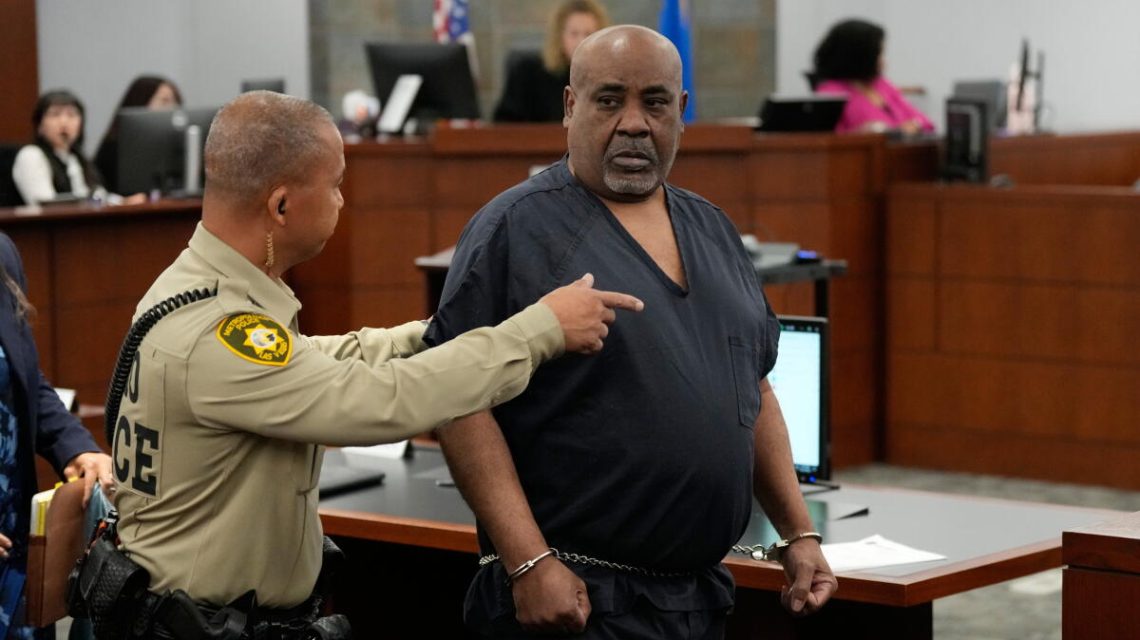
Sentencing of Duane ‘Keffe D’ Davis
The man responsible for organizing the murder of rapper Tupac Shakur has been sentenced to 40 years to life in prison. Duane ‘Keffe D’ Davis received this sentence after being convicted of murder and using a deadly weapon. The sentencing was carried out by Clark County District Court Judge Carli Lynn Kierny, who highlighted the lasting impact of Shakur’s death on the world and Las Vegas.
Details of the Crime
During the trial, prosecutors provided evidence that linked Davis, acting as a leader of his gang, to the orchestration of Shakur’s killing. He is said to have handed a .40-caliber handgun to fellow members of the Southside Crips-Burris Street gang. The gang members then carried out the murder as they drove near the Las Vegas Strip.
Davis had incriminated himself through interviews, a documentary, and his 2019 memoir describing the event. Despite his conviction, Davis expressed intentions to appeal the case.
The Context of Shakur’s Murder
The killing occurred amid a tense rivalry between Death Row Records, managed by Marion ‘Suge’ Knight, and Bad Boy Records, led by Sean ‘Diddy’ Combs. Shakur’s murder fueled conspiracy theories and prompted widespread introspection in the music industry. Following his death, a 10-day gang conflict erupted in Compton.
For Shakur’s family, the consequences were devastating. His sister, Sekyiwa Shakur, spoke about the personal impact, citing mental health struggles and the void left by her brother, who supported a large family.
Arguments Presented During the Trial
Prosecutor Marc DiGiacomo argued that Davis benefited financially from Shakur’s death through his memoir, advocating for the harshest sentence. The prosecution presented Shakur’s murder as a revenge killing following an attack on Davis’s nephew, Orlando Anderson, involving Shakur and associates at the MGM Grand.
The defense, led by Anthony Michael Sanft, contended the case was built on hearsay without forensic evidence. They argued Davis was not present at the crime scene and said the accusations were based on rumors.
Investigation Insights
The case progressed due to an investigation into the murder of Christopher ‘Biggie Smalls’ Wallace in 1997. A former Los Angeles Police Department detective testified about Davis’s admission during a federal inquiry in 2008, which pointed to his involvement in Shakur’s killing.
Prosecutors played a recorded interview from the task force where Davis implicated himself and others in the event. However, Davis’s attorney tried to convince the jury that the memoir was an exaggerated narrative intended to sell books.