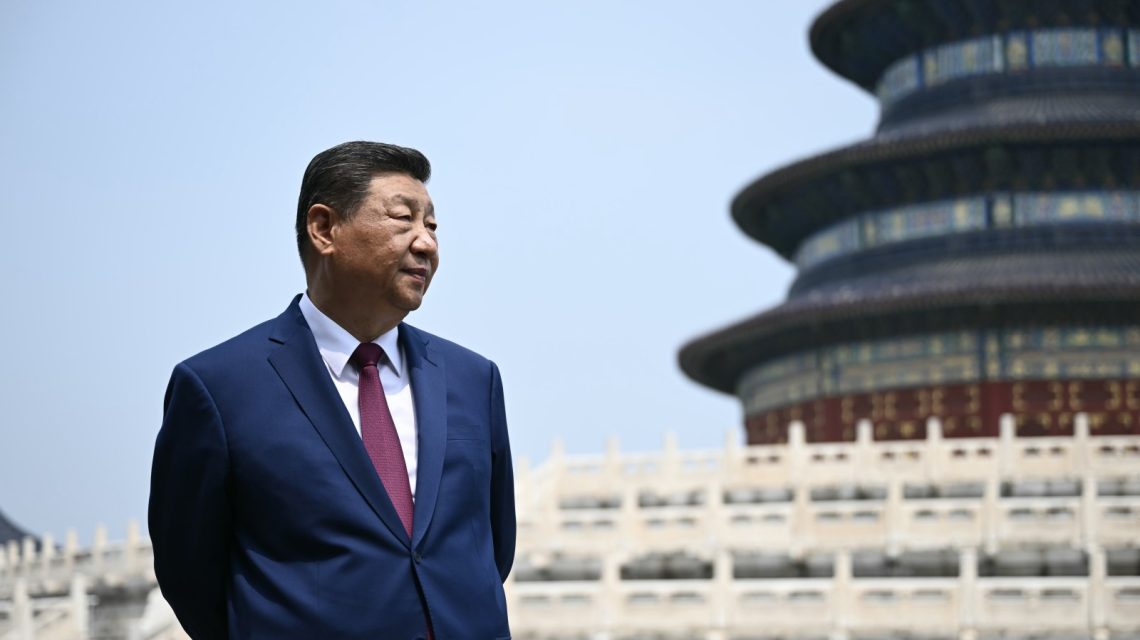
The prospect of a war with China over Taiwan remains a concern for U.S. officials, although they now believe such an event is unlikely to occur before 2028. Initially, analysts warned of a possible Chinese invasion in 2027, a year of significance due to the 100th anniversary of the Chinese People’s Liberation Army (PLA) and Xi Jinping’s anticipated fourth term. Taiwan, a democratic entity China claims as its own, holds great importance for the U.S. due to its role as a top trading partner and a key supplier of advanced computer chips. A conflict in the Taiwan Strait could have devastating impacts on the global economy.
Despite Xi’s order for the PLA to be ready for an assault by 2027, U.S. officials estimate that Beijing isn’t prepared to mount such an attack. The question arises whether China’s leaders have ever truly been willing to risk such a move.
The ‘Davidson Window’
In 2021, Admiral Philip Davidson warned of a potential Taiwan Strait crisis by the decade’s end, marking 2027 as a pivotal year. His warning highlighted the need for increased defensive readiness in the Pacific, where U.S. territories like Guam could be at risk from Chinese missile strikes meant to deter U.S. involvement. This timeframe, known as the “Davidson window,” established a strategic landmark for U.S. defense planning.
While having military capability is crucial, the political intent to use it is a separate issue. Former CIA Director Bill Burns emphasized this distinction. Other officials, including former Defense Chief Lloyd Austin, noted that while tension exists, conflict is neither imminent nor inevitable. China’s modernization goals for the PLA aim for a cutting-edge force by 2035 and a dominant military by 2049, the centennial of the People’s Republic.
Challenges for Beijing
China faces significant operational challenges in potentially invading Taiwan. Successfully executing such a large-scale amphibious assault requires crossing 110 miles of challenging seas, navigable only in April and October. Taiwan’s limited coastal areas suitable for invasion, compounded by the likely U.S. and allied military response, add to China’s hurdles. Strategic ambiguity in U.S. policy adds complexity, giving American leaders flexibility to respond to crises.
Xi Jinping’s leadership has also been marked by extensive military purges aimed at eliminating corruption and consolidating loyalty within the Central Military Commission. These changes could impact the PLA’s progress towards its 2027 modernization objectives, though the long-term effects might enhance readiness.
China’s Diplomatic Maneuvers
Xi Jinping has worked to improve U.S.-China relations, as evidenced by several meetings with Donald Trump. Beijing’s willingness to negotiate favorable trade conditions has contributed to a shift in American public sentiment, with fewer Americans expressing support for military intervention in Taiwan. However, Xi remains under pressure, particularly with the upcoming Communist Party congress.
China’s objective remains consistent: to unify Taiwan with the mainland, potentially through force. However, Beijing aims to win without combat, undermining Taiwan’s resolve and eroding its democratic structures. A preferred outcome for China would be Taiwan electing a Beijing-friendly government in 2028.
Preparing for the Long Haul
Despite these dynamics, the U.S. and Taiwan need to remain vigilant and prepared. China’s military advances include developments in sixth-generation aircraft, ship launches, and missile capabilities with impressive range and accuracy. Admiral Samuel Paparo, current PACOM commander, emphasized a proactive stance to deter conflict rather than engage in one.
Efforts focus on maintaining readiness and providing a strong deterrent, aiming to avoid conflict entirely. The strategic goal involves preparing thoroughly to ensure that the potential for conflict remains hypothetical, safeguarding stability in the region.
 Hurricane Simon and Storm Rachel Cause Destruction in Mexico and the U.S.
  President Trump Shares Disturbing Wildlife Incident
  Pope Leo XIV Undergoes Lung Surgery for Cancer Treatment
  News Highlights: Guilfoyle Scandal, Turek vs. Hinson, Trump Heads to Alaska
  U.S. Faces Challenges in Global AI Race Against China
  Houthi Rebels: Iran’s Key Ally in the Middle East