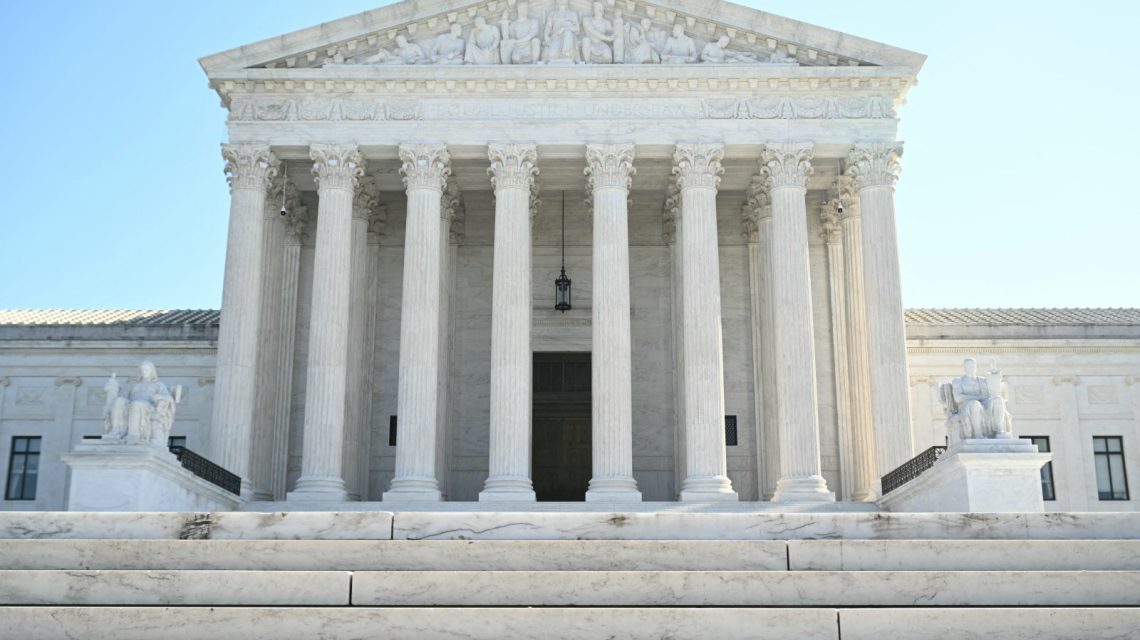
The Supreme Court delivered a significant victory for the Trump administration in a case concerning political advertising rates. The Court’s 7-2 decision blocked a ruling from the Fourth Circuit that would have forced the Federal Communications Commission (FCC) to resolve a challenge to its advertising policy within 48 hours.
The case revolves around the FCC’s ‘lowest unit charge’ regulations, which require broadcasters to offer discounted advertising rates in the lead-up to an election. Several Democratic candidates, including Sherrod Brown and Jon Ossoff, challenged the FCC’s guidance that extended these rates to political parties involved in coordinated spending and some joint fundraising committees.
The Supreme Court criticized the Fourth Circuit’s decision to mandate a quick resolution from the FCC. The Court stated that the law obliges the FCC to respond to applications but does not specify any timeframe for a decision. Justices Sonia Sotomayor and Ketanji Brown Jackson dissented.
Federal law gives political candidates access to a broadcaster’s lowest advertising rates during specific periods before elections. In March, the FCC expanded this to include certain political parties and joint fundraising committees. The Democratic candidates contested this interpretation, arguing that the discounts were intended for candidates only.
After the Fourth Circuit sided with the candidates in August, the Supreme Court stepped in on September 4, halting the decision. The Court argued that the candidates should have awaited the full FCC review.
Why the Supreme Court Stepped In Again
This recent ruling marks the Supreme Court’s second intervention. The Court stayed an earlier Fourth Circuit decision on FCC guidance, maintaining that the Communications Act required the FCC to complete its administrative process first.
The Fourth Circuit had directed the FCC to resolve the application quickly, which the Supreme Court said could infringe on constitutional boundaries and the separation of powers. The FCC argued that adhering to the court’s timetable would disrupt its ongoing deliberations.
The majority voiced that forcing the FCC into an expedited decision was inappropriate. The ruling emphasized the judiciary’s limits in influencing another government branch’s operations. The Supreme Court noted potential irreparable harm to the FCC if obliged to issue a prompt final order.
Justices Sotomayor and Jackson disagreed, preferring to let the Fourth Circuit’s order stand. However, Wednesday’s decision maintains the status quo while the potential for a Supreme Court review looms. Should the justices decide against hearing the case, the stay will end. If accepted, the stay persists until the Supreme Court rules.
Impact on Upcoming Midterm Elections
This decision means the FCC need not rush its decision-making process before the midterms. As such, the FCC’s current policy remains, allowing political parties and joint fundraising committees to benefit from the discounted rates.
With midterm elections approaching, this ruling is significant. While Republican groups back the FCC stance, the Campaign Legal Center and Democratic candidates critique extending discounts beyond candidates.
The Supreme Court focused on the procedural question rather than deciding on the substantive legality of the FCC’s interpretation. The broader issue—who should receive the lowest advertising rates—remains undecided.
 Chinese Viewers Perceive American Political Chaos as a Lesson in Civics
  Midterm Polls Show Competitive Senate Races
  Trump’s Approval Among Non-MAGA Republicans Declines Amid Economic Concerns
  Ukraine’s Satellite Access Crisis: Starshield Restrictions and Implications
  Cook County MWRD Election: A Closer Look
  The States Project Raises Over $100 Million for Democratic State Legislature Campaigns