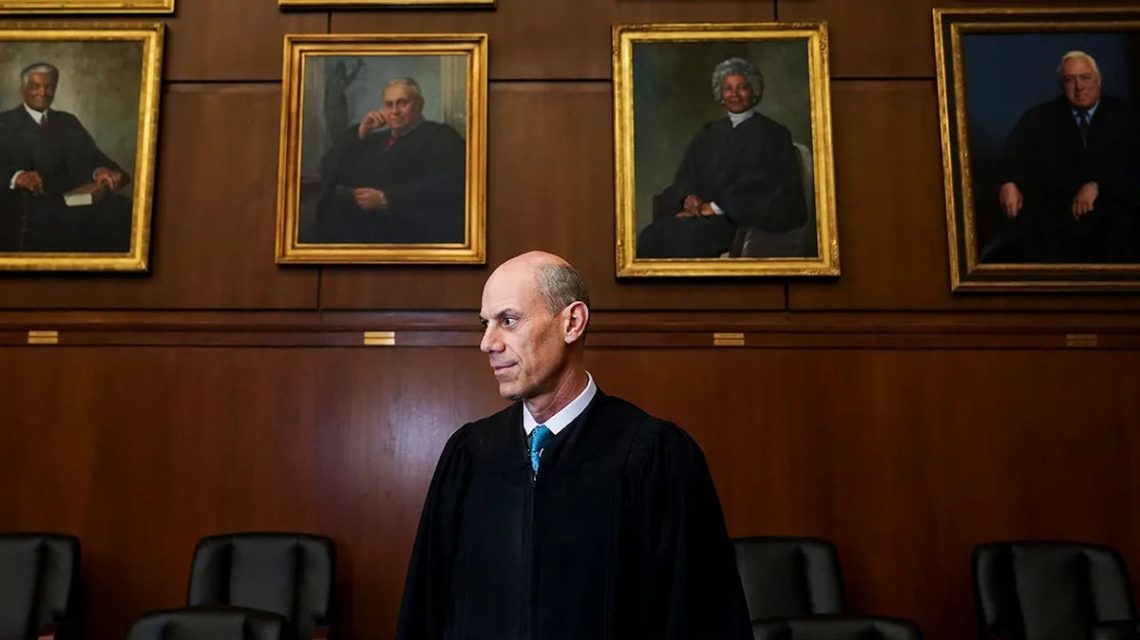
A federal judge, with a history of challenging President Donald Trump and his allies, is now overseeing a case involving an attempt to unseal the warrant used to search the residence of Representative Ilhan Omar, D-Minn. This dispute over the warrant is part of broader federal investigations into Omar concerning financial disclosure discrepancies and allegations of immigration fraud committed by her father.
Omar immigrated from Somalia to the United States in 1995 at the age of 12. Investigators are currently examining whether her father inaccurately reported her age on his citizenship documents in 2000, potentially affecting her citizenship status as a minor. Trump, known for his criticism of Omar, has aggressively accused her of immigration fraud and has suggested incarceration following the October 12 search of her Washington D.C. home.
U.S. District Judge James Boasberg, an appointee of former President Barack Obama, is managing the request to unseal the warrant. Trump has previously labeled Boasberg as a leftist and has criticized him for being biased, notably after Boasberg temporarily halted deportation flights of alleged Venezuelan gang members in March 2025. Trump demanded Boasberg’s impeachment, alleging a lack of fairness in D.C. rulings.
The search of Omar’s home occurred before the midterm elections, coinciding with Minnesota’s concerns about fraud in social services programs. This led to three requests to unseal the warrant, coming from the New York Times, Judicial Watch, and a coalition of 14 press organizations. Boasberg has asked the Justice Department to justify the warrant’s sealing and has allowed for an extension upon their request, awaiting the full execution of the search warrant.
The Justice Department argues that disclosing the warrant could jeopardize the investigation. They have advised that the request to unseal the warrant is premature, suggesting the court revisit it post-execution and public charging decisions. Meanwhile, media groups insist that, as the physical search took place weeks ago, sensitive information should be redacted rather than the entire document withheld.
Omar is simultaneously involved in another legal skirmish with the Justice Department over the return of property taken during the search. Her legal team contends that the agents breached congressional protections and did not provide her with a copy of the warrant, nor allow her to contact her legal counsel during the operation.
Boasberg’s handling of the request to reveal the warrant is part of a sequence of decisions drawing criticism from Trump. Notably, he has required federal agencies to preserve Signal messages of senior officials for potential records in military strike discussions, enforce nondisclosure orders in cases involving Republican lawmakers, and delivered a lenient sentence to Kevin Clinesmith for altering an email tied to surveillance applications.
Boasberg, previously serving on the FISA Court, noted that Clinesmith’s actions compromised the court’s integrity but deemed them a mistake lacking personal gain, sentencing Clinesmith to probation and community service. The judge’s controversial rulings have kept him a frequent target of Trump’s criticisms.