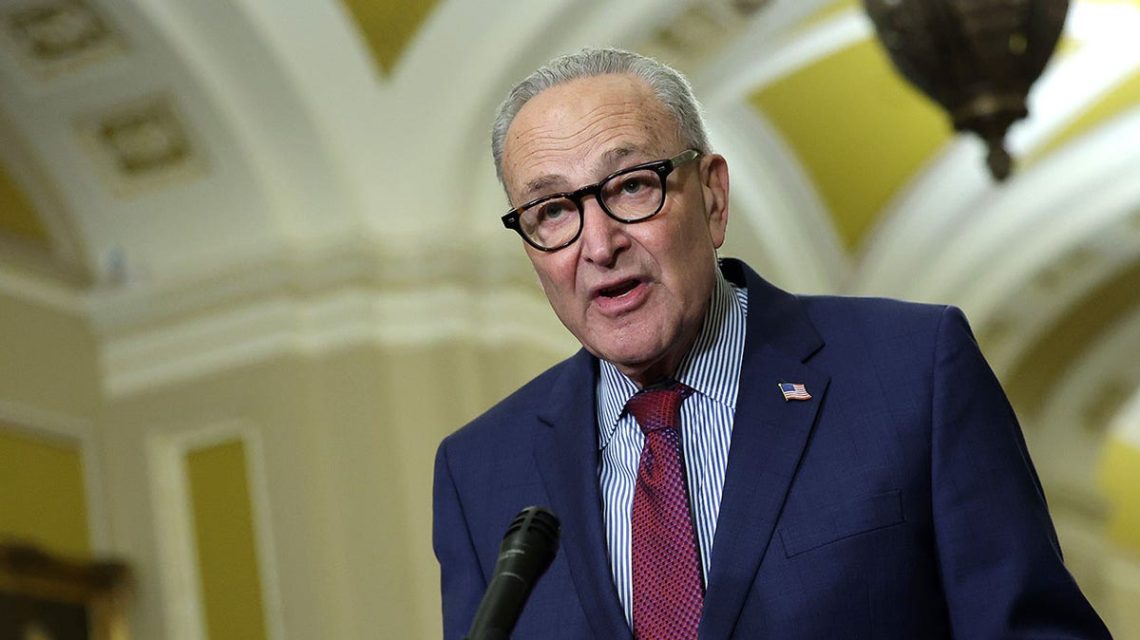
Senate Republicans are undertaking initiatives to conduct test votes on two major issues: safeguards for consumers against increased utility costs linked to data centers and the voter identification requirements of the SAVE America Act. The GOP aims to compel Democrats to state their positions publicly on these matters. This strategy gains importance in light of Senate Democrats’ recent refusal to back voter ID, a stance that diverges from a practice prevalent across the United States and supported by many voters from both parties.
Republicans criticize Democrats for their stance, suggesting that political motivations underlie the rejection of voter ID laws. According to Sen. Jim Banks, R-Ind., Democrats, led by Senate Minority Leader Chuck Schumer, D-N.Y., may resist such measures to deny the GOP a legislative victory as midterm elections approach.
“Democrats are gonna vote against it because they don’t want to give the president a win,” said Sen. Jim Banks.
Rep. Chuck Schumer opposes including voter ID legislation within the initial framework of the Trump-supported funding deal. This legislation, combined with a proposition to halt insider trading among Congress members, is an ongoing GOP effort under the SAVE America Act. Schumer has rebuffed the initiative, labeling it as “Jim Crow 2.0” and arguing that it would disadvantage minority voters.
While Democrats express theoretical support for voter ID — reportedly incorporating it in their previous Freedom to Vote legislation — opposition continues. The debate revolves if a federal standard is necessary when many states already mandate voter ID. Of the 36 states with ID requirements, 23 demand photo identification, and 13 accept other forms such as bank statements. Notable among these are nine states represented by Democratic senators.
Sen. Tim Kaine, D-Va., indicated that Virginia’s own voter ID laws have broad acceptance, questioning the necessity of applying a nationwide uniform standard. Yet, some Republicans argue that Democrats’ opposition aims to protect parts of their voter base, including undocumented immigrants, from potential disenfranchisement.
Senate Majority Whip John Barrasso, R-Wyo., highlighted that identification is common for everyday activities and stressed the importance of maintaining electoral integrity. He underlines the need for photo identification in voting processes, equating such measures to widely accepted practices.
“It’s evident Democrats want to make it easier to cheat,” Barrasso remarked, advocating for Republican gains to champion voter ID laws.
In the context of the upcoming elections, Republicans emphasize increasing their representation would align legislative outcomes with public sentiment regarding voter identification laws.
 Randy White Endorses Ken Paxton in Texas Senate Race
  Trump Announces New Federal ‘Super Intelligence Force’
  Analysts Predict Democratic Gains in Upcoming Midterm Elections
  A New Chapter for Britain’s Economy: Analyzing Andy Burnham’s Promises
 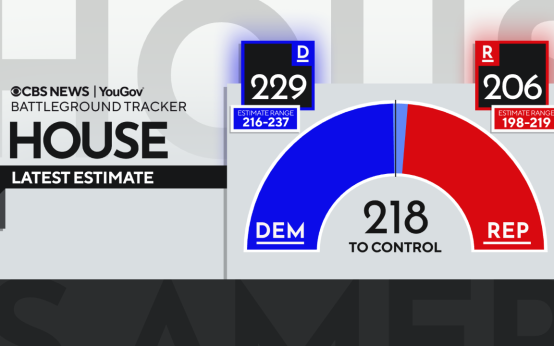 Key Insights from CBS News House Model Estimate on Midterms
  Trump’s Influence on Executive Power