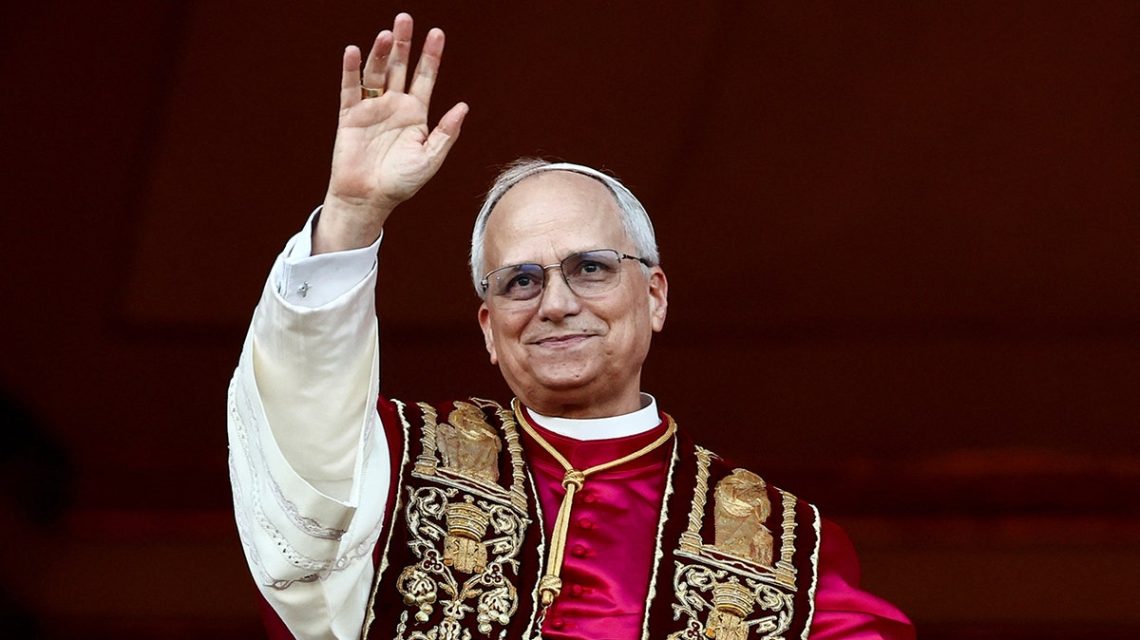
Pope Leo XIV, originally Robert Prevost, made waves when he participated in a U.S. election. Jokingly referring to the Villanova and Notre Dame basketball game, Prevost noted that while the Pope doesn’t take sides, he might. This humorous comment highlights a serious issue: can a Pope, as the head of a foreign state, vote in U.S. elections?
The historic milestone came as Pope Leo XIV, hailing from Chicago, became the first Pope to vote in an American election. He mailed an absentee ballot to Will County, with officials confirming his inclusion on the list of voters requesting mail-in ballots.
There is no doubt that the Pope votes in the Vatican, holding the ultimate decision-making power there. But does this mean he can also vote in Illinois for races such as the gubernatorial contest involving Democrat J.B. Pritzker? Legally, it seems possible, yet this situation poses new questions and concerns.
Some might question my neutrality given my Catholic upbringing in Chicago. My stance does not stem from the sports rivalry between the Cubs and the White Sox; in fact, I jestedly regard the Pope as a latent Cubs fan.
More intriguing is the concept of a foreign nation’s leader voting in U.S. elections. The Vatican is a sovereign state with its own government structure and military, the Swiss Guards. The Holy See Press Office stated that Pope Leo is a U.S. citizen and has every right to vote as such. This view finds backing, as dual citizens are recognized by the State Department, which acknowledges their dual loyalties.
Surprisingly, the Vatican does not prevent such voting, though this situation is unusual. The Holy See maintains previous popes’ national citizenship, allowing leaders like Pope Leo to retain theirs while serving.
The UOCAVA already permits military personnel and overseas citizens to vote. But should this extend to the head of a foreign government? Dual citizenship raises complex issues, especially when it involves high-ranking officials with potentially conflicting interests with the U.S.
Governor Pritzker’s past meeting with Pope Leo held additional significance, as he met with a voter. The potential for foreign leaders to vote in U.S. elections presents an interesting quandary, particularly if a nation with opposing interests were involved.
Academics and politicians may debate this issue’s implications, but for now, Pope Leo assures that, unlike basketball games, he will not take sides in U.S. politics. Robert Prevost, however, stands as a different case. This discussion remains relevant, with dual citizenship’s complexities underscoring the nuanced relationship between personal and public roles.
Jonathan Turley, a Shapiro Professor of Public Interest Law, offers insight into this unique situation. With extensive experience and numerous published works, he provides a valuable perspective. Turley’s illustrious career includes testifying before Congress over 50 times and contributing significantly to public interest law.
 President Trump Comments on Jensen Huang and Chinese Spy Concerns
 Colombia’s President Leads Aggressive Anti-Cartel Campaign
 Cyberattacks on South Korean Banks Expose Thousands
 The Campaign for Pardoning Maidstone’s Convicted Witches
 United States and Canada Warn of Terror Threat in Moscow
 Visa Granted for Mother to Mourn Son in NYC