The Democratic Socialists of America (DSA) propose healthcare policies that, critics argue, could negatively affect rural hospitals and increase taxpayer burdens. Their ‘Medicare for All’ plan is a primary focal point, suggesting a move towards nationalized healthcare. Detractors believe this marks a shift towards a more controlled system, altering the healthcare landscape significantly.
For rural areas, like Wyoming, accessing specialists already requires long travel times. Implementing a single-payer system may introduce extended wait times, alongside travel inconveniences, with costs distributed among taxpayers. This argument is supported by a report from the White House Council of Economic Advisers titled ‘The Real Cost of Socialism in America.’
The report estimates that the DSA’s policies, including ‘Medicare for All,’ would contribute $47.4 trillion to a projected $49 trillion deficit over the next ten years. This places an estimated $355,000 burden on each American household, primarily due to Medicare for All.
In contrast, Republicans advocate for targeted investments. For instance, Congress recently allocated $50 billion to enhance rural healthcare, exemplified by Wyoming’s $205 million gain through the Rural Health Transformation Program. This program aims to expand primary, preventive, maternal, emergency, and behavioral health services, along with workforce improvements and facility upgrades.
Critics argue that a wholesale adoption of Medicare for All could undermine these advances. The proposed plan would remove personal healthcare choices by mandating enrollment in a government-managed system, potentially increasing middle-class taxes. This mirrors concerns raised over the Affordable Care Act’s promises versus outcomes.
Part of Medicare for All could also use funds for surgeries related to gender transitions, which some citizens oppose on moral grounds. The Council of Economic Advisers projects that these costs could reach $68 billion over ten years.
The extension of healthcare to illegal immigrants under this plan raises additional fiscal concerns. Private insurance often helps cover the operational shortfalls faced by rural hospitals. However, Medicare for All might replace this with fixed-government reimbursement rates, which could financially strain facilities already operating on minimal resources.
For example, Wyoming’s Critical Access Hospitals depend heavily on private insurance for balance. Loss of this revenue could lead to downsizing or closure, impacting service availability and wait times. As the demand for healthcare increases, patients might encounter longer delays, replicating issues seen in other nations with single-payer systems.
The discussion extends to the financial burden on taxpayers, particularly in Wyoming. Analyses by groups such as the Committee for a Responsible Federal Budget suggest many might pay more in taxes than they save on lower premiums. Advocates for private coverage emphasize the importance of sustaining personalized, state-focused healthcare solutions, as seen in existing rural health programs.
The overarching narrative from critics of the DSA’s healthcare plans focuses on maintaining freedom of choice and minimizing economic impact on local communities. They argue for continued investment in rural healthcare infrastructure and oppose the transition to a single-payer system, especially where it could lead to increased taxpayer costs and reduced healthcare accessibility.
 Democratic and Republican Candidates Clash Ahead of Michigan Election
 Polls and Prediction Markets Face a Test in Upcoming Elections
 Political Events and Campaign Highlights
 Trump Hosts Halloween Event Amid Political Spotlight
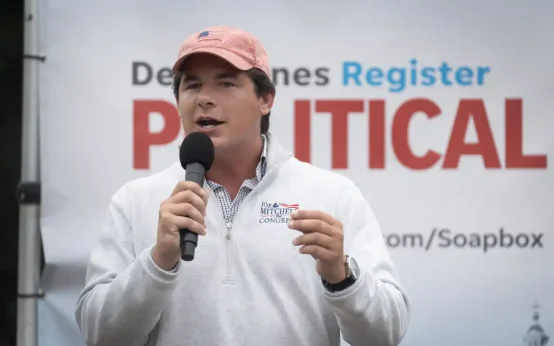 Gen Z Republicans Enter the Political Arena
 ACA Open Enrollment for 2027: Key Changes and Implications