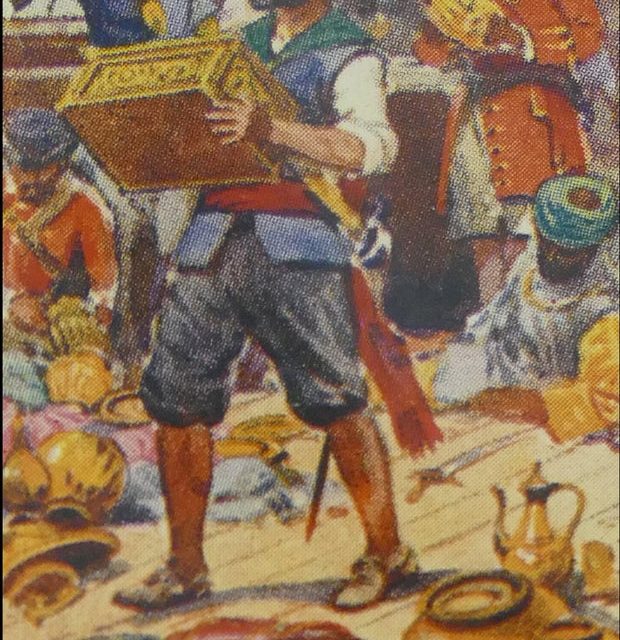
An amateur historian has uncovered a clue related to the mystery of a notorious pirate, Capt. Henry Every, and his connection to a New York figure. James Bailey, who previously discovered ancient coins suspected to be linked to Every, now reveals that colonial documents implicate Thomas Jones in the pirate’s notorious activities.
Bailey explains that these documents indicate Jones played a crucial role in helping Every and his crew, notorious for their violent raid on the royal Indian treasure ship Ganj-i-Sawai in 1695. The raid involved horrific acts of torture and murder, generating global outrage and leading to the first worldwide manhunt for pirates. Some were caught and executed, but Every and many of his crew evaded capture.
Bailey’s research into depositions from Every’s associates suggests that Jones, whose name graces Jones Beach State Park, served as a ‘wheelman.’ He helped the pirates avoid authorities after stealing significant amounts of gold and silver. Historical documents further show that New York’s governor investigated Jones years later. By then, he had become a prominent landowner on Long Island, gaining his fortune through a whaling operation.
“You have millions of visitors and generations of New Yorkers going to this beach,” Bailey noted, “Nobody knew that he was actually a major player in arguably the biggest heist in the history of piracy.”
Jones was a major in the English military before moving to the American colonies and becoming a businessman in New York. Despite persistent rumors of his pirate connections, a family history published in 1906 dismissed these as ‘slander.’ However, John Hanc, author of ‘Jones Beach: An Illustrated History,’ suggests Jones could have dabbled in piracy after his time as a privateer.
Meagan Schulman, a Fordham University doctoral candidate, explains that privateers were authorized by the English crown to raid rival commercial ships during wartime. After the war, many continued these activities and were labeled pirates. “So maybe the short answer is, yes. Jones can be called a pirate, by some people, but he probably did not ever see himself as one,” Schulman remarked.
Bailey claims Jones briefly returned to Rhode Island after assisting Every, before his father-in-law gifted him land on Long Island. This allowed Jones a fresh start as authorities searched pirate-friendly New England for Every’s crew. Jones’ pirate ties reportedly resurfaced when New York’s governor described how a ‘barrel of money’ linked to piracy ended up at Jones’ home.
Richard Blakemore, a maritime history professor, cautions that while Bailey’s findings are intriguing, they aren’t definitive. However, Kevin McDonald, a history professor, notes that this connection highlights piracy’s role in building wealth for Northeast families. “Popular images of pirates show them as outcasts, but many historians have argued the opposite,” Blakemore commented. The research sheds light on the significant role piracy played in the socioeconomic fabric of early British colonies.
 Social Media’s Influence on Halloween Celebrations
 The Role of Green Plantain in Ecuador’s Renowned Breakfast Dish, Tigrillo
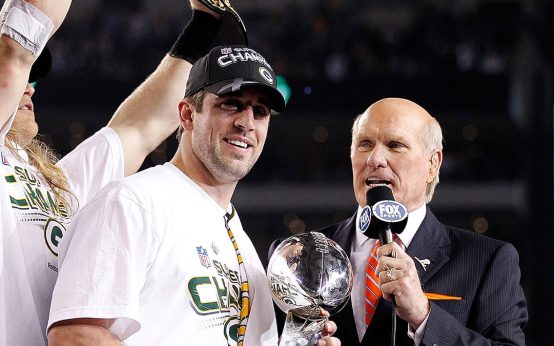 Terry Bradshaw Shares His Battle with Depression
 Church Community Finds Renewal After Fire Damages Stained Glass
 Ghost Stories and Their Lasting Impact
 Celebrating 45 Years of iO Theater’s Long-Form Improv Excellence