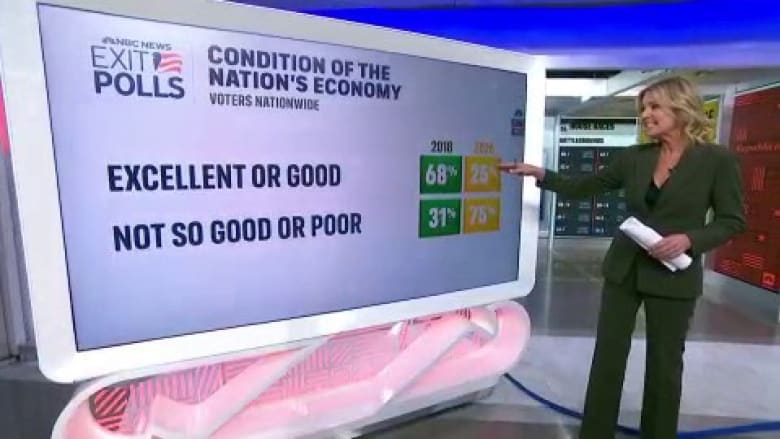
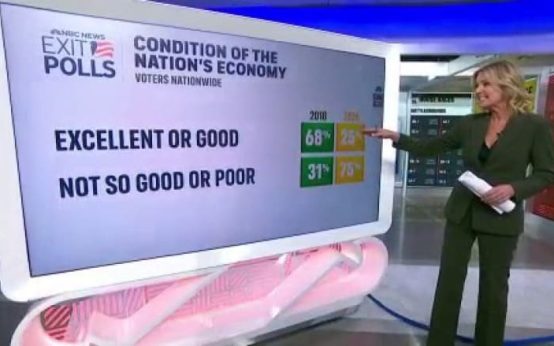
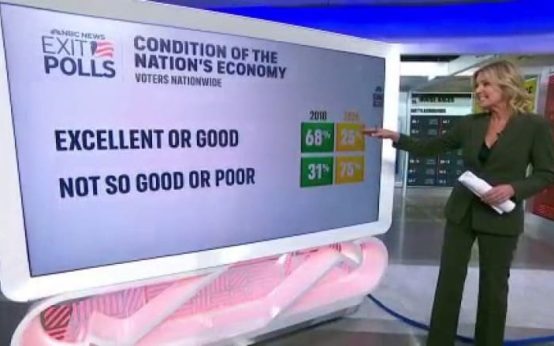
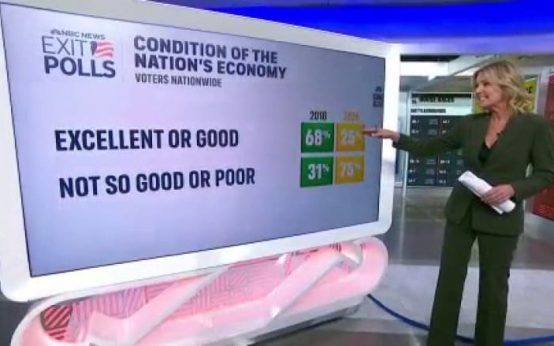
Voter sentiment regarding the U.S. economy has shifted significantly since Trump’s first term. In 2018, during the midterms, 68% believed the economy was in excellent or good condition. Currently, NBC News’ Exit Polls indicate only 25% share that view, with 75% feeling the economy is not so good or poor.
Financial outlooks have also darkened. In 2018, 85% of families felt their financial status was better or unchanged compared to two years prior. Presently, 82% state their situation is worse or unchanged. Consumer prices have outpaced wage growth, with inflation at 3.7% against a 3% rise in wages. In 2025, families spent $1,988 more on essentials like food and housing than in 2024, posing financial challenges for many.
Significant voter blame is directed at Trump’s policies. Over 60% cite his policies for rising prices, and nearly two-thirds say tariffs negatively impacted the national and local economies.
American consumers feel economically stressed, influencing their electoral choices.
In Texas, four voters at Klein Multipurpose Center shared their perspectives. Cindy Bonilla Candanedo, a nurse practitioner and new citizen, voted Democratic, emphasizing public school funding and healthcare. Beth Burgess opted for both parties, citing a history of voting Republican. Her key issues included school funding and political effectiveness in Washington.
Democratic supporter Charlie Beal focused on high costs impacting his grandchildren’s future and criticized Republican Gov. Greg Abbott’s immigration policies. Curtis Lorn, a predominant Republican voter, expressed general dissatisfaction, highlighting the need for stable prices within a year.
In Indiana’s 5th District, early voting data shows a Democratic lead, suggesting a promising start for Democrats trying to flip generally Republican counties.
Alaska’s election sees a significant turnout with 105,423 early and absentee ballots, breaking previous records. The Senate race is notable, involving a complex matchup with legal implications concerning candidate Dan J. Sullivan Jr.
NBC News Exit Polls indicate heightened negative views of the Republican Party since 2022, while Democratic sentiments remained stable. Economic viewpoints vary widely, with 57% favoring capitalism and 32% socialism, illustrating generational divides among young voters.
In Michigan, voters for Abdul El-Sayed emphasize economic issues and values. Local residents voice concerns about high costs and systemic issues affecting daily life.
The battle for Senate control is fierce, with tight races in key states like Georgia and Michigan. Success would influence presidential prospects and future policy directions.
Exit polls suggest voters are increasingly wary of AI’s societal impact, with notable opposition to local data center developments. A divide exists on party capabilities to manage AI, reflecting broader uncertainty about technological advancements.
Throughout the country, voter engagement reflects widespread concern over corruption and the perceived ineffective handling of these by either major party.
 Election Day Developments Across the United States
 Polling Updates and Voter Concerns as Midterms Progress
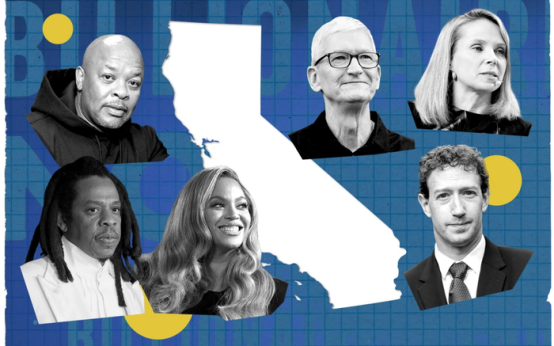 California’s Billionaire Influence in the 2026 Election
 Voter Sentiment on Economy and Impact on Midterm Elections
 Widow of Air Force Major Votes Against ‘Illegal’ War, Supports Doug Jones
 AI Firms and Election Day Vigilance