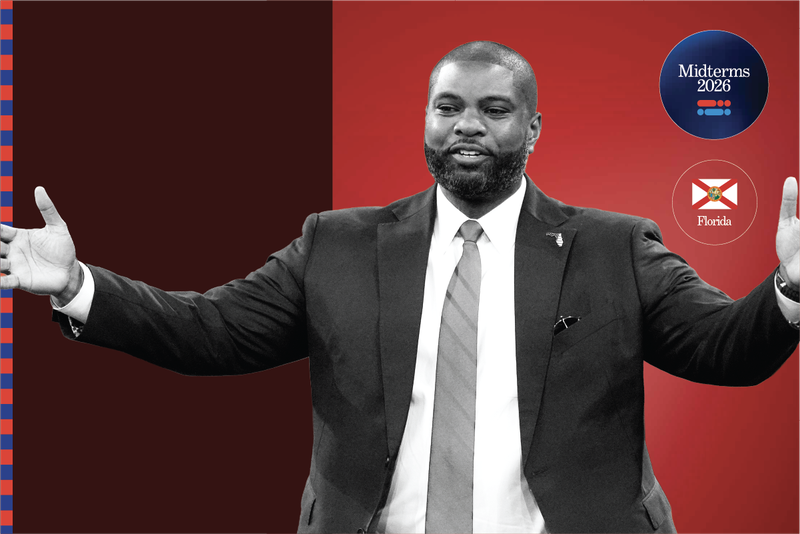
Republican Byron Donalds emerged victorious in the highly anticipated gubernatorial race in Florida against Democrat David Jolly. The Associated Press declared Donalds the winner at 9:09 p.m. ET, showing him with 50.1% of the vote compared to Jolly’s 48.7%. This was one of the most closely followed gubernatorial contests this year.
Governor Ron DeSantis faced term limits, so he could not run for reelection. President Donald Trump’s support for Donalds added a national perspective to the race. Jolly, a former Republican congressman turned independent and then Democrat, presented a unique challenge for the GOP.
In the previous election, Trump won Florida by a margin of 13.1 points in 2024.
Florida’s Historic Gubernatorial Race
The candidates aimed to make history with their campaigns. Jolly sought to become the first Democrat elected as governor since Lawton Chiles in 1994. Donalds hoped to become Florida’s first Black governor.
Throughout most of the race, polls favored Donalds. He consistently maintained a 4 to 6 percentage point lead over Jolly in recent surveys. A poll conducted by The New York Times and Siena University from October 19 to 25 among 813 likely voters showed Donalds leading 48% to 44%, with a margin of error of 3.9 percentage points.
On Election Day, VoteHub’s polling aggregator gave Donalds a 4.4-point lead, matching his sustained advantage throughout the campaign, and assigned him a 68% chance of winning. Prediction markets also showed confidence in Donalds, with Polymarket users giving him a 66% chance of victory.
Main Issues in the Contest
The Florida gubernatorial contest mainly revolved around affordability. The candidates addressed key issues like AI data centers, property insurance, and taxes in line with the Trump administration’s agenda.
Elevated property insurance costs remained a significant issue for Florida homeowners. Both candidates proposed different ways to address this problem. Additionally, the emergence of data centers became a notable political topic in the state.
Jolly proposed a one-year moratorium on constructing new facilities to allow time for assessing energy and environmental impacts. Donalds favored continued data center development but believed local authorities should decide, and developers should cover utility costs.
The state’s rightward shift in recent years complicated Donalds’ campaign. Governor DeSantis won his reelection in 2022 by 20 points, and Trump claimed victory in Florida in 2024. Donalds navigated challenges related to his proximity to the Republican president. Tensions arose over the Trump administration’s economic and cost-of-living issues. Jolly often referred to Donalds as “Donald Trump’s guy.”
In September, Donalds removed Trump’s images from his campaign website, possibly to distance himself from the president. Nonetheless, they campaigned together in late October.
Donalds’ victory coincides with Republican Ashley Moddy’s successful U.S. Senate re-election and unexpected wins for Florida Democrats in congressional races amid redistricting efforts within the state.
For inquiries related to this story, contact Newsweek editors Daniel Orton and Dave Siminoff.
 Porter County Prosecutor Race: Germann Leads in Preliminary Votes
 Election Night Sees Major Shifts and Unexpected Outcomes
 Democrat Annie Andrews’ Victory in South Carolina Shakes Up Senate Dynamics
 Florida Elections Show Mixed Results in Palm Beach County
 Gen Z Woman Melat Kiros Elected to Congress, A First for Colorado
 Keisha Lance Bottoms Becomes First Black Female Governor in Georgia