
US stocks experienced a significant rise following the Democratic party’s success in securing control of Congress during the midterm elections. This development led to the Dow Jones Industrial Average achieving a 3% increase, marking its most substantial gain in 18 months. Additionally, the S&P 500 saw a 1.6% rise, while the Nasdaq Composite climbed by 1.4%. Investors anticipated that a split government would prevent substantial policy changes that previously unsettled the markets.
The market reaction indicated investor perception of the election results as a potential restraint on fiscal expansion, international conflicts such as the situation in Iran, and various other actions from the White House that had previously caused market instability.
Impact of Democratic Control
Steven Blitz, chief US economist at GlobalData TS Lombard, offered cautious insight regarding the influence of a Democratic-controlled Congress. While acknowledging the Democrats’ win, he highlighted that the influence over market conditions might be overstated. Democrats will not officially assume control until January and will lack the two-thirds majorities in both congressional chambers required to override presidential vetoes.
Despite this, Democrats may still impact budget negotiations, healthcare spending, and regulations affecting data centers and artificial intelligence policy. However, significant areas like trade, foreign policy, and executive actions will largely remain under White House control, continuing to shape companies and market conditions.
Economic Implications and Market Risks
Blitz raised doubts about Democratic control leading to reduced government borrowing or lower Treasury yields, emphasizing that the party’s focus is on reallocating budget deficits rather than reducing them. He also noted that the valuations of technology stocks do not represent the primary risk to the market. Instead, he sees stocks as reasonably valued when compared to GDP and the benchmark 10-year Treasury yield, with the VIX not indicating unusual market volatility.
Blitz observed sector rotation rather than a looming broad bear market, with gains in consumer-discretionary stocks and hospital operators, while data-center and semiconductor stocks saw declines. He predicts economic improvements by 2027 despite rising underlying inflation.
Future Outlook for Investors
For equity investors, the primary consideration will be how fiscal policies, inflation, Federal Reserve actions, trade, and geopolitical events influence different market sectors. Blitz pointed out that future equity returns will depend more on policy dynamics than revaluation of tech stocks.
By late Wednesday, US stock futures showed mixed performance. Dow futures increased 0.3%, while S&P 500 futures decreased 0.3%, and Nasdaq futures fell 1.1%.
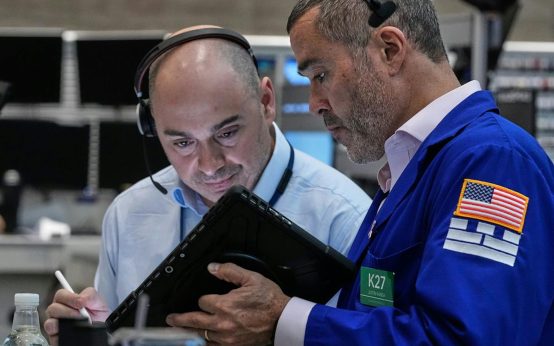 Wall Street Reacts to Midterm Election Results
 Gold’s Challenging Year Amid Rising Interest Rates and Market Shifts
 Expert Opinions on Nasdaq 100 Correction
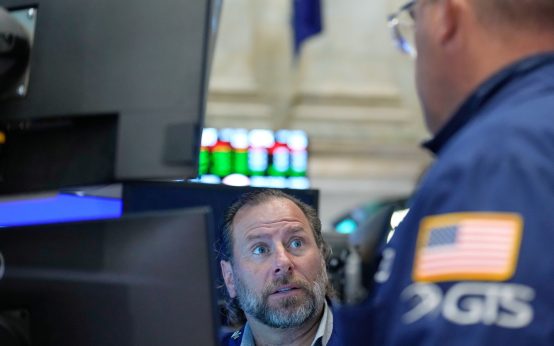 Wall Street Sees Relief Amid Oil Price Drop and Resilient Stocks
 Maximize Savings with New Interest Rate Hikes
 Maximizing Returns with Short-Term CDs