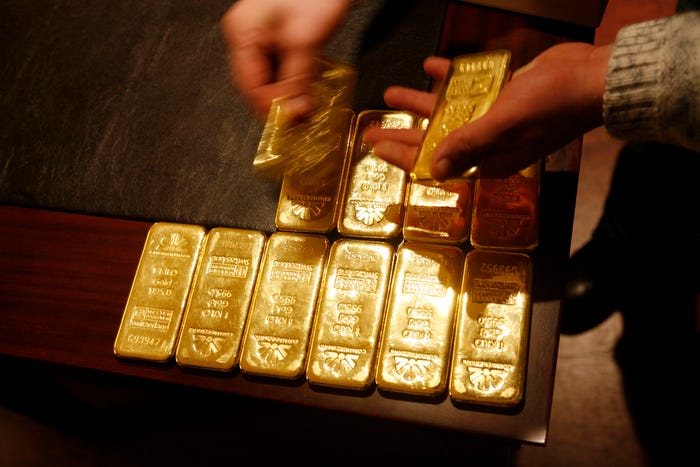
Gold is set for its worst year in over a decade. While attention focused on the correction in AI stocks, gold prices experienced a dramatic decline. Once a top investment in 2025, gold has fallen about 29% from its January high, now trading below $4,000 an ounce. This downturn is due to several factors affecting the US economy and markets, including higher interest rates and a shift in investment sentiment.
Gold has decreased by 9% this year, heading towards its worst annual performance in eleven years since its 10% drop in 2015. It also fell over 3% in October, marking its worst October since the Great Financial Crisis, according to economist David Rosenberg.
Typically, gold does not decline alongside stocks. It usually slowly appreciates, serving as a safe haven during stock volatility or geopolitical events. When inflation fears rise, demand for gold as a hedge against currency devaluation tends to increase. Yet, this trend faltered in 2026 even as the Iran war pushed oil and gas prices higher. Rosenberg noted that gold now shows unpredictable behavior, acting more like a risk asset.
Understanding the Decline
Several unusual circumstances have driven gold’s decline this year. Analysts provide insight into what this means for the US economy and markets.
Higher Yields and Rates
Rising rates have increased the opportunity cost of holding gold. Higher rate expectations lift Treasury yields and the US dollar’s value, both competing with gold for investment. The 10-year US Treasury yield reached about 4.91%, rising 77 basis points this year. The US Dollar Index rose to 101, a 3% increase since January.
Adam Perry, a senior market analyst at Capital.com, emphasized that higher rates make holding gold costly. The Fed paused its rate hikes recently, but investors expect further tightening into 2027.
Falling Gold Demand
Consumer demand for gold jewelry has dipped, contributing to gold’s price decline. While central banks remain key buyers, demand from other segments decreased. The World Gold Council reported a 19% drop in bar and coin demand and a 17% fall in global jewelry demand.
In the US, gold jewelry revenue rose, but unit sales declined. Growth concentrated at higher price points while lower-priced merchandise lagged. Tenoris noted a split in consumer spending, influenced by inflation and a worldwide jewelry market slowdown.
Market Sentiment Shifts
The AI stock sell-off affects gold as investors adopt a risk-off attitude. Michael Nagle of Bloomberg suggested that gold selling could relate to extreme market sentiment and margin calls in technology holdings.
Jose Torres, a senior economist at Interactive Brokers, highlighted that investors’ heavy exposure to gold after the 2025 rally might be impacting current trends. As risk-off sentiment grows, gold is liquidated instead of used as a safe haven.
Technical Holding Patterns
Historically, gold encounters periods of stagnation after significant rallies. Torres noted this pattern following the 2025 rally and compared it to past trends. Investors now perhaps seek better returns elsewhere, such as in stocks and real estate.
 Expert Opinions on Nasdaq 100 Correction
 Wall Street Sees Relief Amid Oil Price Drop and Resilient Stocks
 Maximize Savings with New Interest Rate Hikes
 Maximizing Returns with Short-Term CDs
 Debate Over Mortgage Accessibility Continues Amid Lender Standards
 Maximize Savings with the Right Interest-Bearing Account