As personal AI agents like Muse and Claude integrate into daily routines, an increasing number of people are relying on them for shopping tasks. However, these agents often struggle with the complexity of making effective purchasing decisions. A unique study by Visa aimed to explore this issue by tasking 22 different AI agents with buying three common items: a TV, a laptop, and a hair appliance.
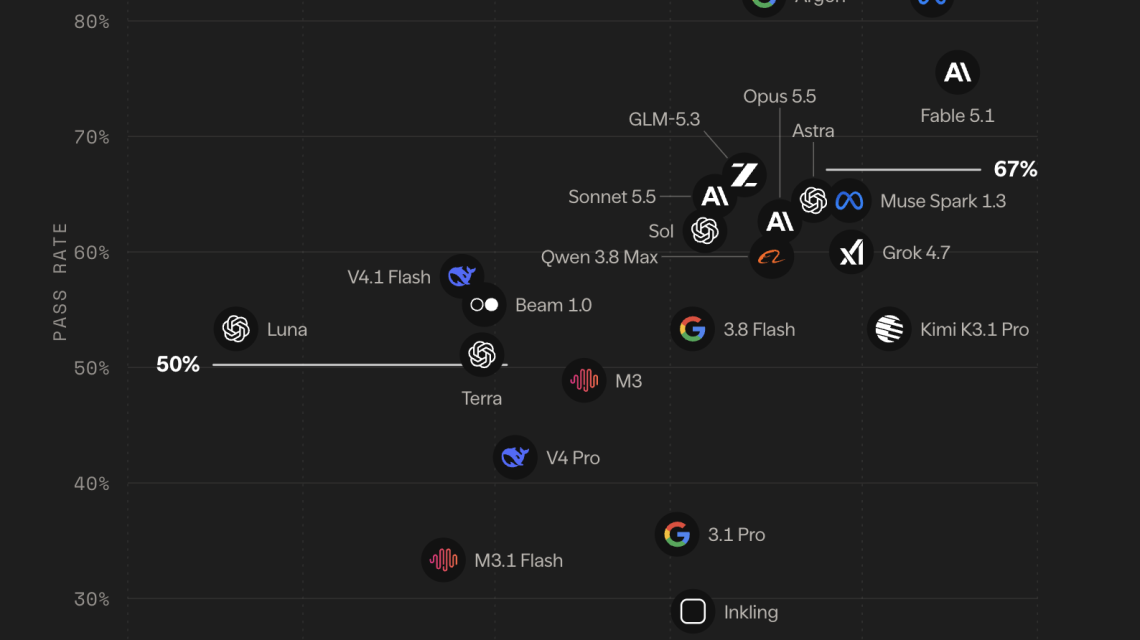
The study revealed a significant variation in performance among the agents. Although some outperformed others, the overall success rate was about 57%. Visa has shared the findings on a new website, detailing the outcomes of 15 separate shopping tasks for each agent. Unsurprisingly, agents using state-of-the-art AI models emerged as the top performers. Google’s Gemini with Aragon 4 and Meta’s Making with Wonder both achieved a success rate of 82%. A Claude agent followed with 76%, while an OpenAI agent ranked sixth with a 64% success rate.
The agents’ performance was assessed on two axes: the success rate (vertical) and the cost of executing each shopping task (horizontal). Visa noted that while the five most expensive models averaged a 67% success rate, the cheapest five achieved only 50%.
The core issue lies in the complexity of shopping motivations. Consumers often have vague or incomplete information about their needs. Visa’s experiment aimed to simulate this by assigning specific attributes for TV shoppers to consider, such as compatibility with children’s gaming consoles, 30-day return policies, and Dolby Vision models. Agents had to elicit missing information from hypothetical shoppers to succeed, yet they often selected wrong products or failed to offer any suitable suggestions.
Rubail Birwadker, Visa’s Global Head of Growth, acknowledged the current limitations but expressed optimism about the future. He suggested that as technology advances, consumer trust in AI-driven shopping will grow. The focus of Visa’s study was on product discovery—a critical component that retailers and AI developers are keen to improve.
For AI agents to gain mainstream acceptance in shopping, seamless and secure payment processes must be established. Visa and Mastercard are already working to address these challenges by providing merchant education and developing tools for agent-based commerce.
There are also legal uncertainties surrounding AI shopping agents. A prominent concern is liability for rogue purchases or fraud. Birwadker believes these issues will resolve over time, much like the adoption of ecommerce in the past. Nonetheless, agent-based shopping will markedly differ from traditional online shopping experiences.
To complement the experiment’s results, Visa launched a website where consumers can engage with the AI agents featured in the study.
 Meta Phases Out Fruit-Inspired AI Model Names
 Agility Robotics’ IPO Marks Milestone in Humanoid Robotics
 Elon Musk Faces Political Shift and Challenges in Texas
 AI Personal Assistant Trust and Its Implications
 Cyberattacks Hit European Grocery Stores, Highlighting Risks of Smart Devices
 Apple Unveils New MacBook Pro with Touchscreen Feature