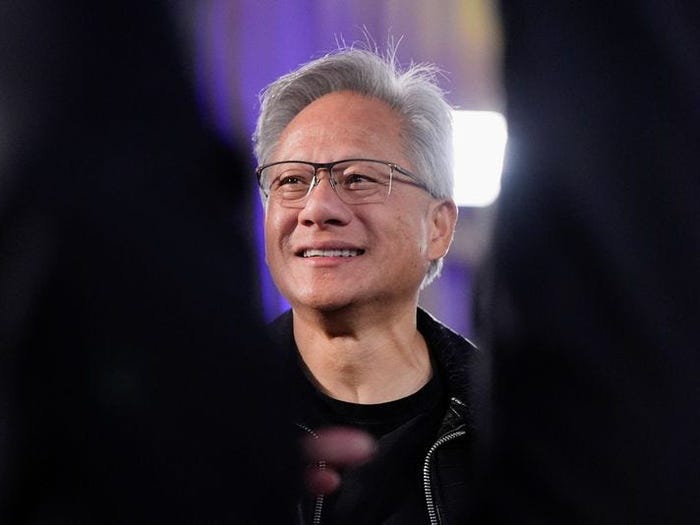
In 2025, Jensen Huang, CEO of Nvidia, oversaw a leadership team of 36 direct reports, a detail originally reported by Business Insider. This structure reflects Huang’s preference for a flatter organization, which contrasts with the hierarchical setup preferred by other tech leaders. The aim is to facilitate fluid communications and empower employees with timely information.
Huang has previously spoken about his approach, explaining that a larger number of direct reports reduces organizational layers. This structure is intended to ensure that information circulates freely among top executives and helps maintain Nvidia’s dynamic environment.
This approach to leadership at Nvidia contrasts with other tech giants. For instance, Meta’s Mark Zuckerberg prefers a smaller core group, while Elon Musk manages a significantly lower number of direct reports at Tesla and xAI.
Nvidia’s top executives include individuals like Ian Buck, who developed the company’s CUDA software, and Chief Technology Officer Michael Kagan. Key figures also include Chief Scientist Bill Dally. Recent years have seen turnover among these ranks, with some executives like Jay Puri and Laura Fay departing, yet the list remains a window into Nvidia’s core leadership.
“The more direct reports the CEO has, the less layers are in the company,” said Jensen Huang during The New York Times DealBook Summit in 2023. He emphasized the importance of keeping information flowing freely and empowering employees through open communication.
The company’s rapid growth, driven by advances in artificial intelligence, highlights the impact of Huang’s leadership. Nvidia’s increased workforce is part of this growth, fostering a culture known for its strong work ethic and commitment to innovation.
A notable feature of Huang’s leadership style is his approach to meetings. He avoids scheduling one-on-one meetings, allowing information to spread organically unless a specific meeting is requested, at which point he prioritizes it.
The direct reports to Jensen Huang as of October 2025 are:
- Alexis Bjorlin: VP and General Manager for DGX Cloud
- Amit Krig: SVP of Software and NIC Product Line
- Andrew Bell: SVP of Engineering
- Arjun Prabhu: VP of GPU ASIC Engineering
- Bill Dally: Chief Scientist
- Charlie Boyle: VP of DGX Systems
- Chris Malachowsky: Cofounder
- Colette Kress: EVP and Chief Financial Officer
- Debora Shoquist: EVP of Operations
- Deepu Talla: VP and General Manager of the Mobile Business Unit
- Dror Goldenberg: SVP of Network Software Architecture
- Dwight Diercks: SVP of Software Engineering
- Edie Fischer: CEA
- Eyal Babish: SVP of Hardware Engineering
- Gilad Shainer: SVP of Networking
- Howard Wright: VP of Nvidia Inception
- Ian Buck: VP of Hyperscale and High-Performance Computing
- Jay Puri (departed): EVP of Worldwide Field Operations
- Jeff Fisher: SVP of the GeForce Business Unit
- John Spitzer: VP of Developer and Performance Technology
- Jonah Alben: SVP of GPU Engineering
- Joseph Greco: SVP of the Advanced Technology Group
- Justin Boitano: VP of Enterprise AI
- Kari Briski: VP of Generative AI Software for Enterprise
- Kevin Deierling: SVP of Networking
- Kristin Major: SVP, Head of Human Resources
- Laura Fay (departed): VP of Enterprise Marketing, Corporate Communications, and Global Events
- Michael Kagan: CTO
- Mylene Mangalindan: VP of Corporate Communications
- Patrick Whitgrove: VP of Creative and Communications
- Rev Lebaredian: VP of Omniverse and Simulation Technology
- Ronnie Vasishta: SVP of Telecom
- Sameer Halepete: VP of VLSI Engineering
- Sonu Nayyar: SVP and Chief Information Officer
- Tim Teter: EVP, General Counsel, and Secretary
- Xinzhou Wu: VP of Automotive
 Understanding and Managing the Rising Cost of Car Insurance
 Daimler Truck’s Advanced Safety Tech for Big Rigs
 Understanding Pet Insurance: Costs, Coverage, and Considerations
 Common Hiring Mistakes According to Spara’s CEO
 PwC to Certify Employees in Critical Thinking Amid AI Advancements
 Elizabeth Warren’s Return to Senate Banking Could Shake the Crypto World